How to Start a Blog and Make Money: A Beginner’s Blueprint for 2026
If you want to learn how to start a blog and make money, you don’t need to be a professional writer, web developer, or marketing expert. Thousands of successful blogs began with someone sharing knowledge about a topic they genuinely enjoyed. The difference is that profitable bloggers treat their websites like long-term digital assets rather than quick-money projects.
Blogging is no longer about writing random articles and hoping visitors appear. Today’s successful blogs solve real problems, target specific search intent, and build trust over time. When done correctly, a blog can generate income through advertising, affiliate marketing, digital products, sponsored content, and other revenue streams that continue growing long after an article is published.
This guide walks you through the complete process from choosing the right niche to publishing your first post and building multiple income streams so you can create a blog with genuine earning potential instead of making the common mistakes that cause most beginners to quit.
Quick Answer
Starting a blog and making money involves choosing a profitable niche, registering a domain, setting up reliable hosting, installing WordPress, publishing high-quality content, attracting targeted visitors, and monetizing your traffic through methods such as display ads, affiliate marketing, digital products, and services. While blogging isn’t a get-rich-quick business, it can become a valuable source of long-term online income when approached consistently.
Can You Really Make Money From Blogging?
Yes but it’s important to have realistic expectations.
Many beginners believe they’ll publish a few articles and start earning within weeks. In reality, blogging rewards consistency, patience, and quality.
Successful blogs earn money because they:
- Solve problems people actively search for.
- Publish helpful, trustworthy content.
- Build authority within a specific niche.
- Attract organic traffic from search engines.
- Recommend products or services that genuinely help readers.
Think of your blog as a business rather than a hobby. Every article you publish becomes another opportunity to attract visitors and generate income over time.
Editor’s Insight: The blogs that earn the most aren’t always the ones publishing the most content. They’re the ones creating content that answers search intent better than everyone else.
Step 1: Choose a Niche With Long-Term Potential
Your niche is the foundation of your entire blogging business.
A common mistake is choosing a topic simply because it seems profitable. Instead, look for the balance between three factors:
- Something you enjoy learning about.
- Topics people actively search for.
- Monetization opportunities through products, services, or advertising.
Strong blogging niches include:
- Personal finance
- Technology
- Health and fitness
- Home improvement
- Travel
- Education
- Software and AI
- Gaming
- Food and recipes
- Parenting
Avoid choosing a niche that’s too broad.
Instead of creating a blog about technology, narrow it down to something like AI productivity tools, PC gaming, or cybersecurity for beginners.
The more focused your niche is, the easier it becomes to build authority and attract the right audience.
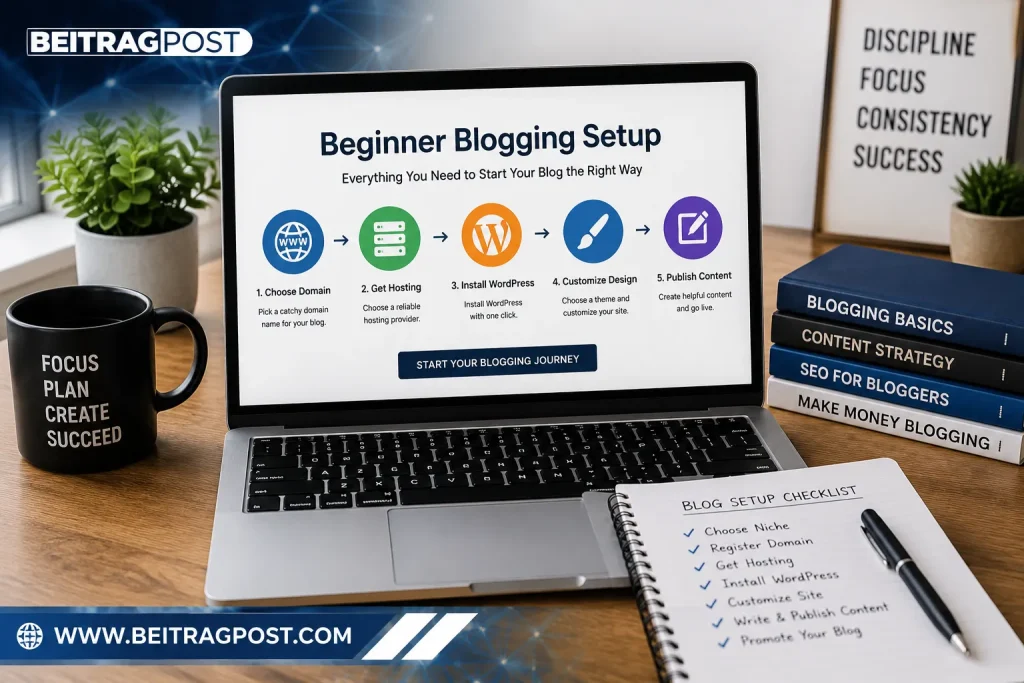
Step 2: Register Your Domain Name
Your domain is your blog’s online identity.
Choose a name that’s:
- Easy to remember.
- Simple to spell.
- Relevant to your niche.
- Short and brandable.
- Available with a .com extension whenever possible.
Avoid:
- Hyphens
- Numbers
- Unnecessarily long names
- Trendy spellings that become confusing later
A strong domain makes your blog easier to remember and helps build trust with readers.
Step 3: Choose Reliable Web Hosting
Your hosting provider stores your website and makes it available to visitors around the world.
When selecting hosting, prioritize:
- Fast loading speeds.
- Excellent uptime.
- Responsive customer support.
- Easy WordPress installation.
- Room to grow as your traffic increases.
Cheaper hosting isn’t always the best value if slow performance hurts your search rankings or user experience.
Step 4: Install WordPress
WordPress powers a large percentage of websites on the internet—and for good reason.
It gives beginners complete control over their blog without requiring coding knowledge.
After installation, you’ll be able to:
- Publish blog posts.
- Customize your design.
- Install useful plugins.
- Optimize for SEO.
- Manage images and media.
- Track your website’s growth.
Most hosting providers offer one-click WordPress installation, making this step straightforward even for complete beginners.
Step 5: Publish Helpful Content People Are Already Searching For
This is where many blogs succeed—or fail.
Don’t start by writing whatever comes to mind.
Instead, identify questions your audience is already searching for and create the best answer available.
Every article should:
- Solve a specific problem.
- Match search intent.
- Be easier to understand than competing content.
- Include real examples where appropriate.
- Leave readers with actionable advice.
Publishing one outstanding article is often more valuable than publishing five average ones.
If your long-term goal is to build a sustainable online business, our guide to How to Make Money Online explores additional income strategies that work alongside blogging and can help diversify your earnings over time.
Step 6: Create Content That Can Rank on Google
Publishing random articles isn’t enough anymore.
If you want your blog to generate consistent income, every post should target a keyword that people are already searching for.
Before writing, ask yourself:
- What problem is the reader trying to solve?
- What information do they expect?
- Can I explain it better than the current top-ranking pages?
Google rewards content that genuinely helps users, answers their questions completely, and demonstrates experience and expertise.
A simple publishing strategy could look like this:
- Publish one in-depth article each week.
- Focus on low-competition keywords first.
- Keep updating older content as information changes.
- Build related articles around the same topic to establish topical authority.
Over time, this creates a library of content that continues attracting visitors from search engines.
Step 7: Drive Traffic to Your Blog
Even the best article won’t make money if nobody sees it.
Successful bloggers focus on building sustainable traffic rather than chasing short-term spikes.
The most reliable traffic sources include:
Google Search (SEO)
Organic traffic is one of the most valuable sources because visitors are actively searching for answers.
Although SEO takes time, it can deliver consistent visitors for years after an article is published.
Social Media
Platforms like Facebook, Pinterest, LinkedIn, X, and Instagram can help you reach new audiences and promote fresh content.
Rather than posting links everywhere, share useful tips that encourage people to visit your blog for more information.
Email Marketing
Start collecting email subscribers as early as possible.
Unlike social media platforms, your email list belongs to you.
Even a small list of engaged subscribers can generate repeat visitors every time you publish a new article.
Step 8: Choose the Right Monetization Strategy
There isn’t just one way to make money from blogging.
Most successful bloggers combine multiple income streams instead of relying on a single source.
Display Advertising
Advertising networks pay you when visitors view or click ads on your website.
Popular options include:
- Google AdSense
- Ezoic
- Mediavine
- Raptive (formerly AdThrive)
Display ads work best once your blog receives consistent traffic.
Affiliate Marketing
Affiliate marketing allows you to recommend products or services and earn a commission when someone purchases through your referral link.
The key is to recommend products you genuinely trust and that are relevant to your audience.
For example:
- Software reviews
- Web hosting
- Online courses
- Tech products
- Books
- Productivity tools
Helpful recommendations build trust, while forced promotions usually have the opposite effect.
Digital Products
Many bloggers eventually create their own products, such as:
- E-books
- Templates
- Printables
- Online courses
- Checklists
- Premium guides
Because you own the product, digital downloads often provide much higher profit margins than advertising alone.
Services
If you have a valuable skill, your blog can become a source of clients.
Common examples include:
- Freelance writing
- Graphic design
- SEO consulting
- Web development
- Coaching
- Virtual assistance
For many beginners, offering services becomes the fastest way to earn income while organic traffic continues growing.
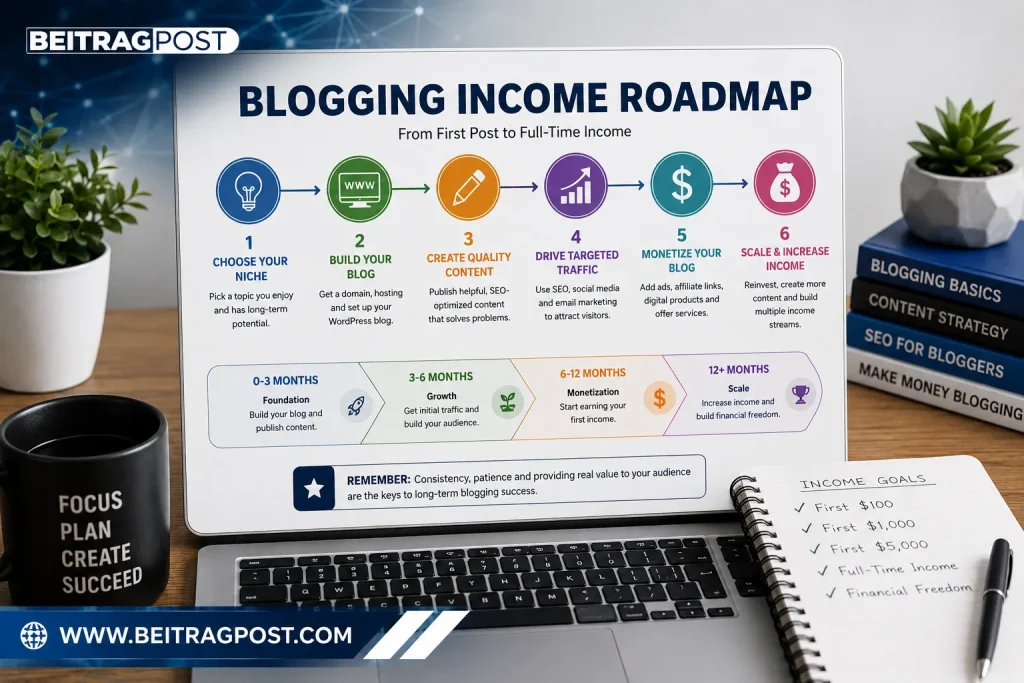
How Long Does It Take to Make Money Blogging?
This is one of the most common questions beginners ask.
The honest answer is:
It depends on your niche, content quality, consistency, and SEO strategy.
Here’s a realistic expectation:
| Timeline | What to Expect |
|---|---|
| First 1–3 months | Building your website and publishing content |
| 3–6 months | Initial search traffic may begin to appear |
| 6–12 months | First meaningful income for many consistent bloggers |
| 12+ months | Opportunity to scale traffic and multiple income streams |
Some blogs grow faster, while others take longer.
The bloggers who succeed are usually the ones who keep publishing even before they see results.
Editor’s Insight: Blogging is less like winning a lottery ticket and more like building a valuable asset. Every helpful article you publish has the potential to bring visitors and income for years.
Common Blogging Mistakes That Cost Beginners Money
Avoiding mistakes is often just as important as following best practices.
Some of the biggest mistakes include:
- Choosing a niche only because it seems profitable.
- Publishing thin or AI-generated content without adding value.
- Ignoring SEO and keyword research.
- Expecting immediate results.
- Writing without understanding search intent.
- Focusing on quantity instead of quality.
- Giving up after a few months.
Successful bloggers improve continuously instead of chasing shortcuts.
Can Blogging Become Passive Income?
Yes but only after you’ve put in the work.
Blogging isn’t passive when you’re building your website, writing articles, or learning SEO.
However, once your content starts ranking, it can continue generating traffic and revenue with minimal daily effort.
That’s why many people consider blogging one of the most scalable forms of passive income. If you’re exploring other long-term income ideas alongside blogging, our guide to Passive Income Online covers additional strategies that can complement your website and help diversify your earnings.
Essential Tools Every New Blogger Should Consider
You don’t need dozens of expensive tools to build a successful blog. Start with the essentials and upgrade only when your blog begins growing.
Content Management System
WordPress remains the best choice for most bloggers because it’s flexible, SEO-friendly, and supported by thousands of themes and plugins.
Keyword Research
Understanding what people are searching for is one of the biggest advantages you can have.
Useful keyword research tools include:
- Google Keyword Planner
- Google Trends
- Ahrefs
- Semrush
- LowFruits
- Ubersuggest
Even if you’re on a budget, free tools can help you discover valuable content opportunities.
SEO Plugin
An SEO plugin helps optimize your content for search engines by checking readability, metadata, internal links, and keyword usage.
Popular choices include:
- Yoast SEO
- Rank Math
These tools don’t replace good writing, but they help you avoid common on-page SEO mistakes.
Analytics
If you don’t measure your progress, you won’t know what’s working.
Set up:
- Google Analytics
- Google Search Console
These free tools show where your visitors come from, which pages perform best, and which keywords are driving traffic.
Your First 90-Day Blogging Plan
Starting a blog feels much easier when you focus on one milestone at a time.
Month 1: Build the Foundation
- Choose your niche.
- Register a domain name.
- Set up hosting and WordPress.
- Create essential pages (About, Contact, Privacy Policy).
- Publish your first 5–10 high-quality articles.
Don’t worry about earning money yet. Focus on creating valuable content.
Month 2: Build Authority
Continue publishing consistently.
Aim to:
- Target low-competition keywords.
- Improve internal linking.
- Optimize existing articles.
- Share content through social media and email.
Your goal is to become a trusted resource within your niche.
Month 3: Prepare for Monetization
By this stage, you should have a growing content library.
Now begin to:
- Add relevant affiliate links where appropriate.
- Apply for an advertising network if traffic allows.
- Create a lead magnet to grow your email list.
- Analyze your best-performing articles and expand related topics.
Remember, blogging success comes from continuous improvement—not overnight results.

Frequently Asked Questions
How much does it cost to start a blog?
You can start a blog for a relatively small investment. Your main costs are usually a domain name and web hosting. As your blog grows, you may choose to invest in premium themes, plugins, or SEO tools, but they’re not essential in the beginning.
Can you start a blog without any experience?
Yes.
Many successful bloggers started with no technical background or professional writing experience. The most important skills writing helpful content, understanding your audience, and learning basic SEO can all be developed over time.
How many blog posts should I publish?
Quality matters far more than quantity.
A realistic goal is publishing one well-researched, helpful article every week. Consistency builds authority and gives search engines more opportunities to discover your content.
When will my blog start getting traffic?
Most new blogs begin seeing organic traffic within a few months, although competitive niches can take longer. Consistently publishing high-quality, SEO-focused content greatly improves your chances of ranking.
What’s the best way to make money from a blog?
There’s no single best method.
Many successful bloggers combine:
- Affiliate marketing
- Display advertising
- Digital products
- Sponsored content
- Freelance services
Diversifying your income streams creates a more stable blogging business over time.
Is blogging still profitable in 2026?
Absolutely.
While blogging is more competitive than it was years ago, there are also more monetization opportunities than ever before. Blogs that publish helpful, trustworthy, and intent-focused content continue to attract search traffic and generate sustainable income.
Final Verdict
Learning how to start a blog and make money is easier today than ever before—but building a profitable blog still requires patience, consistency, and a willingness to create genuinely helpful content.
Instead of chasing shortcuts or publishing hundreds of low-quality articles, focus on solving real problems for a specific audience. Choose a niche with long-term potential, learn the basics of SEO, publish content consistently, and diversify your income as your traffic grows.
The bloggers who succeed aren’t necessarily the fastest writers or the biggest experts. They’re the ones who keep improving, understand what their readers need, and treat their blogs as long-term digital assets rather than overnight success stories.
Key Takeaways
Choose a focused niche with long-term earning potential.
Build your blog on WordPress with reliable hosting.
Create content that matches search intent and solves real problems.
Learn SEO to attract consistent organic traffic.
Monetize through affiliate marketing, ads, digital products, and services.
Stay consistent successful blogs are built over months and years, not weeks.