How to Start Freelancing: A Beginner’s Guide to Finding Your First Clients
If you’re wondering how to start freelancing, you’re already taking the first step toward building an independent career. Freelancing allows you to work with different clients, choose projects that match your skills, and often enjoy greater flexibility than a traditional full-time job. However, getting started can feel overwhelming when you don’t know where to begin.
The good news is that you don’t need years of experience or a large network of contacts to become a freelancer. Many successful freelancers started with basic skills, a willingness to learn, and a commitment to delivering quality work. What matters most is choosing the right service, building trust with clients, and improving your skills over time.
This guide explains how to start freelancing from the ground up. You’ll learn how to choose a profitable skill, build a portfolio, find your first clients, set competitive rates, and avoid common beginner mistakes.
What Is Freelancing?
Freelancing is a way of working where you provide services to clients on a project or contract basis instead of being employed by one company full-time.
As a freelancer, you’re responsible for finding clients, completing projects, managing your schedule, and handling your own business operations. Some people freelance full-time, while others use it to earn extra income alongside a regular job.
One of the biggest advantages of freelancing is flexibility. You can often decide:
- Which projects to accept
- Who you want to work with
- Your working hours
- Your pricing
- Where you work
Although freelancing offers more freedom, it also requires discipline, consistency, and good communication skills.
Why More People Are Choosing Freelancing
Freelancing has become more popular because businesses increasingly hire independent professionals for specialized work instead of maintaining large in-house teams.
At the same time, remote work has made it easier for freelancers to work with clients from different countries without relocating.
Some of the main benefits include:
- Flexible working hours
- Opportunity to work from anywhere
- Multiple income sources
- Greater control over your career
- Ability to specialize in work you enjoy
While freelancing isn’t a shortcut to instant success, it offers long-term opportunities for people who consistently develop valuable skills.
How to Start Freelancing by Choosing the Right Skill
One of the biggest mistakes beginners make is trying to offer every possible service.
Instead, focus on one skill that solves a real problem for clients.
Popular freelance skills include:
- Content writing
- Graphic design
- Web development
- Video editing
- Search engine optimization (SEO)
- Social media management
- Virtual assistance
- Translation
- Digital marketing
- UI/UX design
You don’t need to master every skill before getting started.
Choose one area, build your knowledge, and improve through real projects.
How to Pick the Best Freelance Skill
Ask yourself these questions:
- What skills do I already have?
- What services are businesses actively hiring for?
- Am I willing to keep learning this skill?
- Can I build a portfolio within a few weeks?
Selecting a skill that matches both market demand and your interests makes it easier to stay motivated as you grow your freelance career.
Learn the Fundamentals Before Looking for Clients
Clients expect freelancers to solve problems professionally.
That doesn’t mean you need a university degree, but you should understand the basics of your chosen field before charging for your services.
You can build your knowledge through:
- Online courses
- YouTube tutorials
- Industry blogs
- Practice projects
- Official documentation
- Community forums
The goal isn’t perfection.
It’s becoming confident enough to deliver quality work and continue improving with each project.
Build a Portfolio That Demonstrates Your Skills
Many beginners believe they can’t start freelancing because they don’t have previous clients.
Fortunately, clients care more about seeing what you can do than how many jobs you’ve completed.
If you don’t have client work yet, create sample projects.
For example:
- Writers can publish sample articles.
- Designers can redesign existing logos or websites.
- Developers can build demo websites or applications.
- Video editors can produce short editing samples.
- Social media managers can create mock content calendars.
A portfolio should demonstrate the quality of your work, your attention to detail, and your ability to solve real problems.
Even a small portfolio with strong examples is often more convincing than a large collection of average work.
est Freelancing Platforms for Beginners
Once you’ve developed your skills and created a portfolio, the next step is finding clients. For most beginners, freelancing platforms are the easiest place to start because they connect freelancers with businesses looking for specific services.
Each platform works differently, so choosing the right one depends on your goals and the type of work you want to do.
Fiverr

Fiverr is a good choice if you want clients to discover your services through pre-defined gigs. It’s beginner-friendly for creative services like writing, graphic design, video editing, and digital marketing. Success often depends on creating an attractive profile and well-optimized service listings.
Upwork
Upwork allows freelancers to apply for projects posted by clients. It’s ideal if you’re looking for long-term contracts or professional clients. Although competition can be higher, it offers opportunities across hundreds of categories.
Freelancer.com

Freelancer.com gives beginners access to projects in writing, programming, design, marketing, and many other fields. Since freelancers compete through bidding, writing personalized proposals can improve your chances of winning projects.
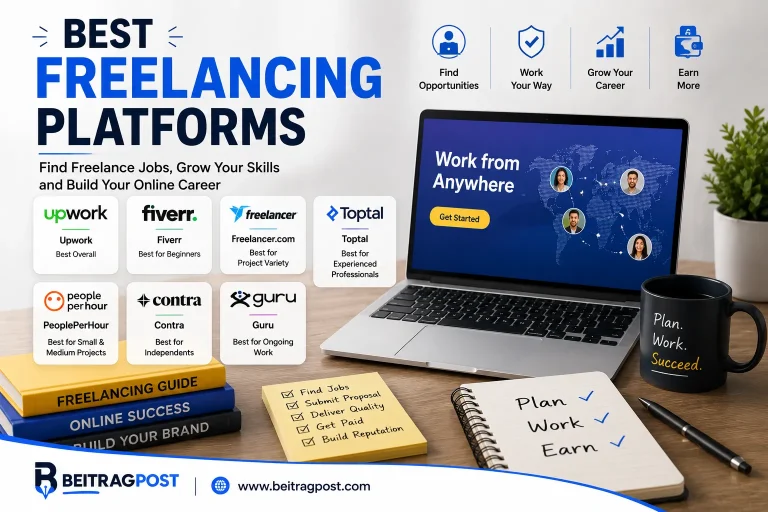
If you’re comparing these and other marketplaces in more detail, read our guide to Best Freelancing Platforms, where we explain their features, pricing, and the types of freelancers they’re best suited for.
Create a Freelance Profile That Builds Trust
Your freelance profile is often the first thing a potential client sees. A well-written profile can increase your chances of getting invitations, while a weak profile may cause clients to move on without reading your proposal.
Instead of trying to impress clients with complicated language, focus on explaining how your skills can solve their problems.
A strong profile should include:
- A clear professional headline
- A short introduction about your expertise
- Services you offer
- Relevant skills
- Portfolio samples
- A professional profile photo, if the platform supports it
Keep your profile easy to read and update it regularly as you complete more projects.
How to Write Better Freelance Proposals
Many beginners lose opportunities because they send the same proposal to every client.
Clients can usually recognize generic proposals within a few seconds.
Instead, take a few minutes to understand the project before writing your response.
What Makes a Good Proposal?
A strong proposal usually includes:
- A greeting that feels natural
- A brief explanation showing you’ve read the project description
- A simple solution to the client’s problem
- Relevant experience or portfolio examples
- A polite closing with a call to continue the conversation
Avoid making unrealistic promises or copying proposal templates from the internet. Personalized proposals often receive better responses because they demonstrate genuine interest in the project.
How to Price Your Freelance Services
Pricing is one of the most confusing parts of learning how to start freelancing.
Many beginners either charge too little because they lack confidence or charge too much without having enough experience to justify their rates.
A practical approach is to research what other freelancers with similar skills and experience are charging.
When setting your rates, consider:
- Project complexity
- Estimated time required
- Your experience level
- Market demand
- The value you’re providing to the client
Remember that your rates don’t have to stay the same forever. As your skills, portfolio, and client reviews improve, you can gradually increase your prices.
Deliver Quality Work and Build Long-Term Client Relationships
Getting your first client is an important milestone, but keeping clients is often even more valuable.
Satisfied clients frequently return with additional projects or recommend freelancers to others.
To build long-term relationships:
- Deliver work on time.
- Communicate clearly throughout the project.
- Ask questions if requirements are unclear.
- Be honest about deadlines.
- Accept feedback professionally.
- Look for ways to exceed expectations without overpromising.
A reliable reputation often becomes your strongest marketing tool.
Common Mistakes New Freelancers Should Avoid
Almost every freelancer makes mistakes in the beginning, but learning from them early can save time and frustration.
Applying for Every Job
Sending hundreds of proposals without reading project requirements usually produces poor results.
Focus on jobs that genuinely match your skills.
Ignoring Communication
Clients value clear communication as much as technical ability.
Responding professionally and asking thoughtful questions helps build trust from the start.
Underpricing Your Services
Charging extremely low rates may attract clients, but it can also make it difficult to build a sustainable freelance business.
Instead, price your work fairly and increase your rates as your experience grows.
Stopping After a Few Rejections
Rejection is a normal part of freelancing.
Many successful freelancers submitted dozens of proposals before landing their first project.
Treat every application as an opportunity to improve rather than a sign to quit.
Can You Start Freelancing Without Experience?
Yes.
Most experienced freelancers started with little or no professional experience.
The key is demonstrating your ability through practice projects, personal work, certifications, or volunteer assignments.
For example:
- A writer can publish blog articles.
- A designer can create branding concepts for fictional businesses.
- A web developer can build personal portfolio websites.
- A video editor can edit practice footage.
- A digital marketer can create sample marketing strategies.
Clients often care more about your ability to solve their problem than whether you’ve worked for dozens of companies.
How Freelancing Can Become a Long-Term Career
Many people begin freelancing to earn extra income, but it can also develop into a full-time business.
As your reputation grows, you’ll likely receive more referrals, repeat clients, and higher-value projects.
Some freelancers eventually:
- Build small agencies
- Hire subcontractors
- Sell digital products
- Offer consulting services
- Launch online courses
Freelancing can become more than project-based work when you continue investing in your skills and professional relationships.
If your goal is to diversify your income, you may also enjoy our guide on How to Make Money Online, which explores additional ways to earn beyond freelance services.
Frequently Asked Questions About How to Start Freelancing
How do I start freelancing with no experience?
You can start by learning one marketable skill, creating sample projects, and building a portfolio that showcases your abilities. Many clients are willing to hire beginners if they can demonstrate quality work, communicate professionally, and show a genuine understanding of the project.
What is the best skill for beginners?
There’s no single “best” freelance skill because it depends on your interests and strengths. However, content writing, graphic design, virtual assistance, web development, video editing, SEO, and social media management are consistently in demand across many industries.
Choose a skill you’re willing to improve over time instead of chasing short-term trends.
How long does it take to get the first freelance client?
The timeline varies from person to person.
Some freelancers find their first client within a few days, while others may need several weeks of learning, improving their portfolio, and sending personalized proposals.
Consistency is usually more important than speed.
Which freelancing platform is best for beginners?
The right platform depends on the services you offer and the clients you want to attract.
Some platforms are better for creative work, while others focus on professional services or long-term contracts. Comparing features, fees, and competition before creating your profile can help you make a better choice.
Can freelancing become a full-time career?
Yes.
Many freelancers eventually earn a full-time income by developing specialized skills, building strong client relationships, and maintaining a professional reputation. Like any career, long-term success requires continuous learning, reliability, and consistent effort.
Final Verdict
Learning how to start freelancing isn’t about finding a secret formula or earning money overnight. It’s about developing a valuable skill, building a portfolio that demonstrates your abilities, and consistently delivering quality work to clients.
Every successful freelancer starts somewhere. Some begin with small projects, while others spend time improving their skills before applying for paid work. What separates long-term success from short-term frustration is the willingness to keep learning, communicate professionally, and focus on solving real client problems.
Whether you want to earn extra income, replace a traditional job, or build your own business, freelancing offers the flexibility to create a career on your own terms. By taking one step at a time and improving with every project, you’ll be in a much stronger position to attract better clients and grow your income over time.
Key Takeaways
- Freelancing means providing services to clients on a project or contract basis.
- Choose one in-demand skill instead of trying to offer every service.
- Learn the fundamentals before looking for paid projects.
- Build a portfolio with sample work if you don’t have client experience.
- Create a professional profile and write personalized proposals.
- Price your services based on your skills, experience, and project value.
- Focus on delivering quality work to earn repeat clients and referrals.
- Treat freelancing as a long-term career that improves with consistent learning and experience.