How to Sell Digital Products Online: A Beginner’s Guide to Building Real Income
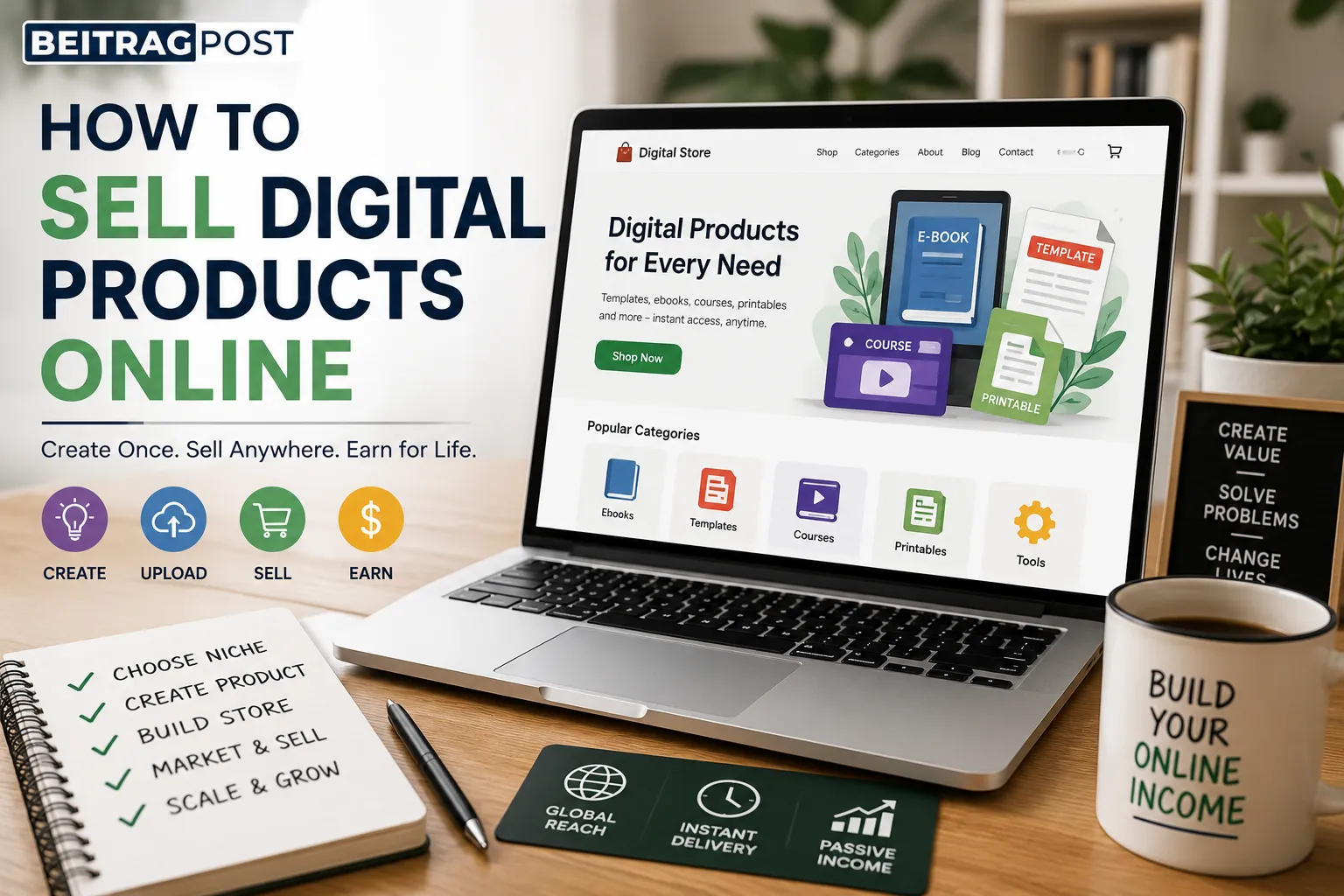
Learning how to sell digital products online is one of the most practical ways to build an online business because you create a product once and can sell it repeatedly without worrying about inventory, packaging, or shipping. Whether you want to earn extra income, start a side hustle, or build a full-time business, selling digital products allows you to reach customers worldwide with relatively low startup costs.
From ebooks and online courses to templates, digital planners, printables, stock photos, and software, the opportunities continue to grow every year. This guide explains how to sell digital products online step by step, including choosing the right product, finding customers, pricing effectively, and avoiding the mistakes that stop most beginners from making their first sale.
How to Sell Digital Products Online: Quick Answer
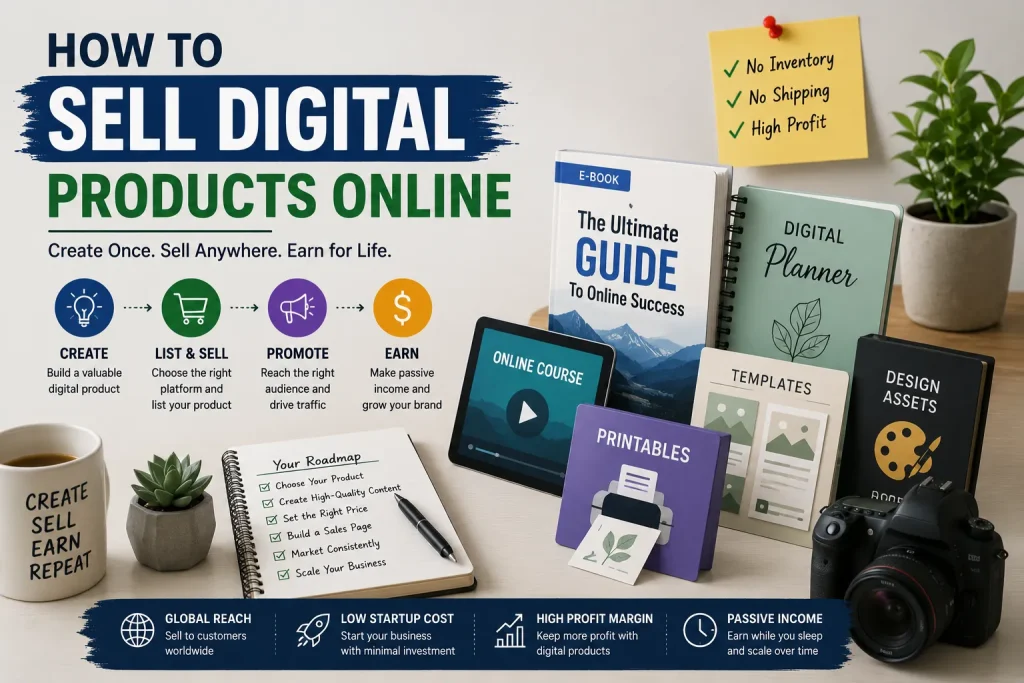
If you’re looking for the fastest overview, here’s the basic process.
- Choose a digital product people actually want.
- Create a high-quality product that solves a real problem.
- Select a platform to sell it.
- Set a competitive price.
- Build a simple sales page.
- Promote your product consistently.
- Collect feedback and improve over time.
Those seven steps sound simple, but success depends on making the right decisions at each stage. The rest of this guide explains exactly how to do that.
Before You Sell Digital Products Online, Understand What You’re Really Selling
Many beginners believe they’re selling an ebook, template, or course.
They’re not.
Customers don’t buy digital files.
They buy solutions.
Someone purchasing a budgeting spreadsheet isn’t paying for rows and columns. They’re paying for better control over their finances.
Someone buying an online course isn’t purchasing videos. They’re investing in a new skill that could improve their career or business.
The more valuable the outcome, the easier it becomes to sell your product.
Solve One Specific Problem
The most successful digital products focus on one clear challenge.
For example:
- A resume template helps job seekers create professional applications.
- A meal planner saves busy families time every week.
- A social media template helps businesses publish content faster.
- A photography preset improves image editing in minutes.
The clearer the problem you solve, the easier it becomes to attract the right buyers.
Don’t Create Products for Everyone
One of the biggest mistakes beginners make is trying to reach every possible customer.
Instead, focus on a specific audience.
Examples include:
- College students
- Small business owners
- Freelancers
- Teachers
- Fitness coaches
- Graphic designers
- Content creators
Products designed for a clearly defined audience usually perform much better than generic products aimed at everyone.
Why Selling Digital Products Online Is Still Worth It
Some people think the market is already saturated.
The reality is different.
Every day, thousands of people search for tools, templates, guides, and educational resources that help them save time or solve problems.
Digital products remain attractive because they offer several advantages.
- Low startup costs.
- No physical inventory.
- Instant delivery.
- High profit margins.
- Global customer reach.
- Easy to update and improve.
- Potential to generate recurring income over time.
While no business is completely passive, digital products can become an excellent long-term income stream once they begin attracting consistent customers.
If you’re exploring different income opportunities beyond digital products, our guide on How to Make Money Online compares several proven business models and explains how they differ in terms of startup costs, scalability, and earning potential.
Choose the Right Digital Product Before You Create Anything
One of the biggest reasons new sellers fail isn’t poor marketing.
It’s creating a product that very few people actually want.
Before investing weeks into creating your first product, spend time validating your idea.
Ask yourself:
- Are people already searching for this solution?
- Does it solve a real problem?
- Would someone happily pay to save time or improve a result?
- Can I create something better, easier, or more useful than existing alternatives?
Successful creators don’t guess what customers want.
They research demand first and build products second.
Best Digital Products to Sell Online
Some digital products consistently perform well because they solve everyday problems and require no physical delivery.
Popular examples include:
- Ebooks
- Online courses
- Printable planners
- Resume templates
- Business templates
- Website themes
- Digital artwork
- Stock photography
- Spreadsheets
- Notion templates
- Design assets
- Music and sound effects
- AI prompt libraries
- Software and plugins
You don’t need dozens of products to succeed.
One excellent product that solves a genuine problem often earns more than ten average products with little real value.
How to Create Your First Digital Product
The biggest mistake beginners make is trying to create the perfect product.
Instead, focus on creating a product that solves one specific problem well.
Start small.
For example, instead of creating a 200-page ebook about personal finance, create a simple budgeting template or a guide that helps freelancers track monthly expenses.
A smaller product is easier to finish, easier to improve, and much faster to launch.
Focus on Quality, Not Quantity
Your first product doesn’t need dozens of features.
It needs to deliver a clear result.
Ask yourself:
- What problem am I solving?
- Who is this product for?
- What outcome will buyers achieve?
If those questions have clear answers, you’re already ahead of many new sellers.
Where to Sell Digital Products Online
Choosing the right platform is just as important as creating a great product.
Each platform serves different types of sellers.
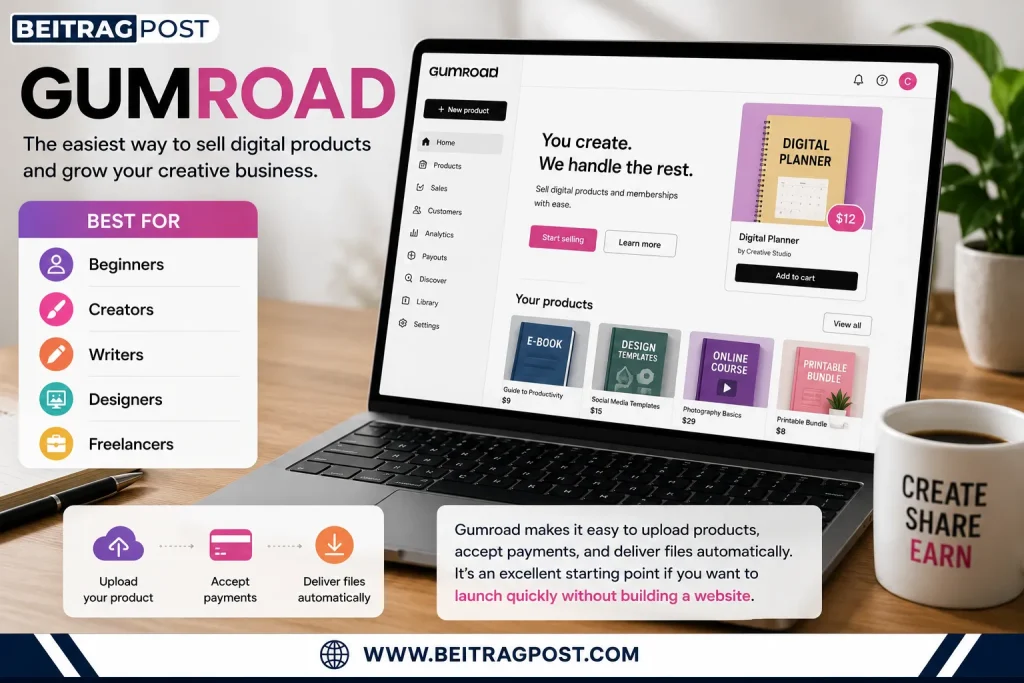
Gumroad
Best for:
- Beginners
- Creators
- Writers
- Designers
- Freelancers
Gumroad makes it easy to upload products, accept payments, and deliver files automatically.
It’s an excellent starting point if you want to launch quickly without building your own website.
Etsy
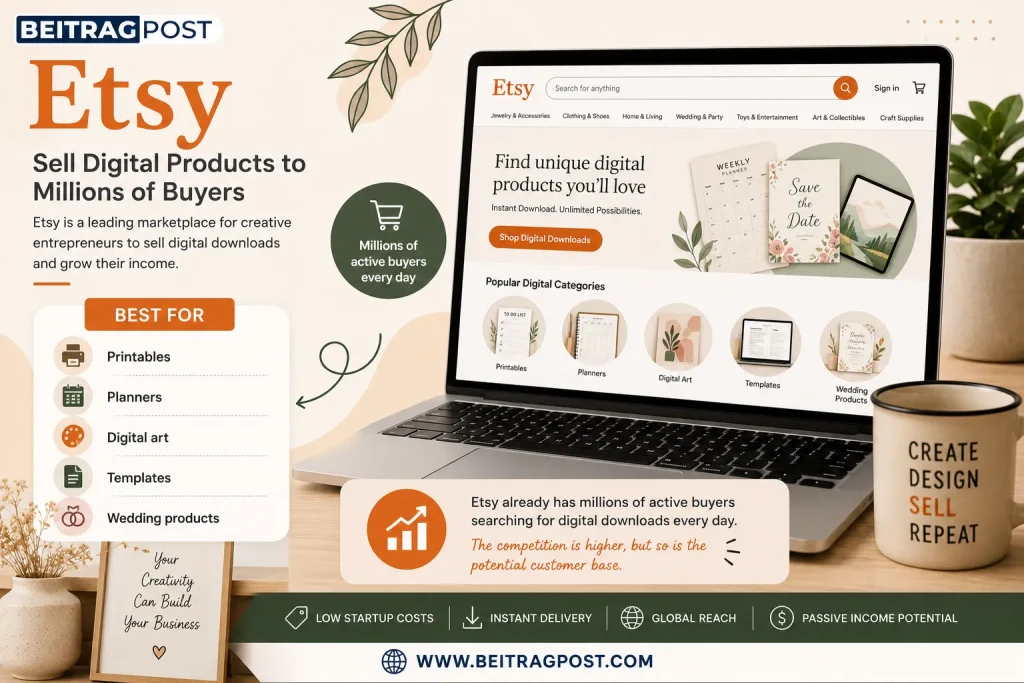
Best for:
- Printables
- Planners
- Digital art
- Templates
- Wedding products
Etsy already has millions of active buyers searching for digital downloads every day.
The competition is higher, but so is the potential customer base.
Shopify

Best for:
- Building your own brand
- Long-term businesses
- Multiple digital products
Shopify requires more setup than marketplaces like Gumroad or Etsy, but it gives you greater control over branding, customer relationships, and marketing.
Payhip
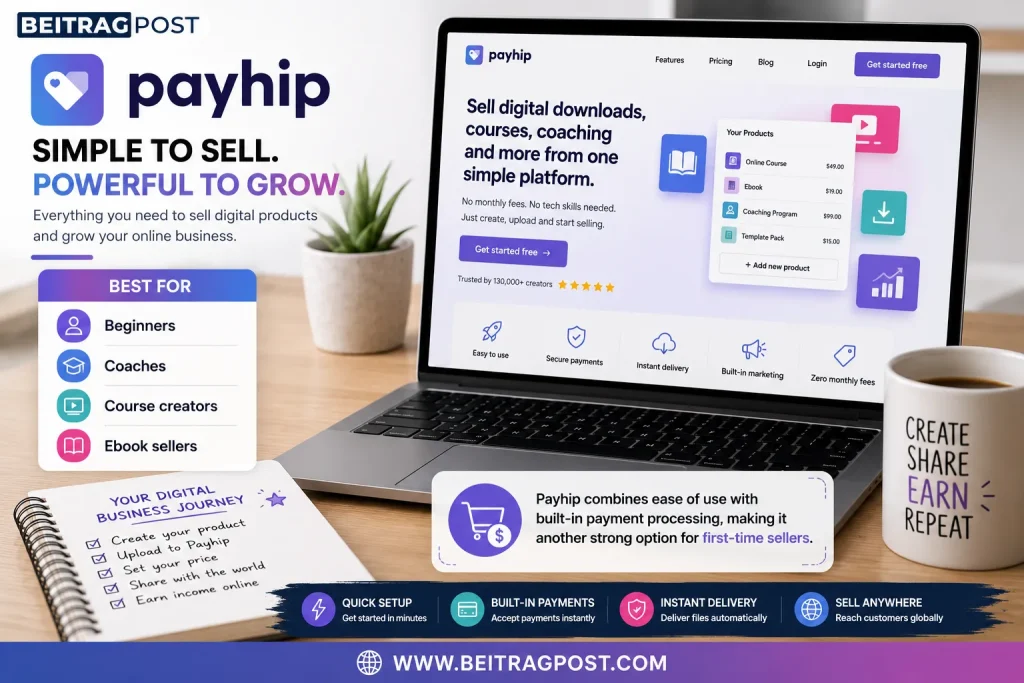
Best for:
- Beginners
- Coaches
- Course creators
- Ebook sellers
Payhip combines ease of use with built-in payment processing, making it another strong option for first-time sellers.
How to Price Digital Products
Pricing is where many beginners lose confidence.
Some price their work so low that customers question its quality.
Others set unrealistic prices without offering enough value.
A better approach is to research similar products and position your offer based on the value it delivers.
Here’s a general starting point:
| Product | Typical Starting Price |
|---|---|
| Ebook | $10–$30 |
| Printable | $5–$20 |
| Resume Template | $10–$40 |
| Notion Template | $15–$75 |
| Spreadsheet | $15–$50 |
| Online Course | $50–$300+ |
Your pricing should reflect the problem you solve not simply the number of pages or files included.
How to Write a Product Page That Converts
Many creators spend weeks building a product and only a few minutes writing the sales page.
That should be the other way around.
A strong product page should answer four questions.
What Is It?
Explain exactly what the customer receives.
Avoid vague descriptions.
Who Is It For?
Clearly identify your ideal customer.
People should immediately recognize that the product was created for them.
What Problem Does It Solve?
Don’t list features first.
Explain the transformation.
For example:
Instead of saying:
Includes 50 Canva templates.
Say:
Create professional social media posts in minutes without hiring a designer.
Benefits always sell better than features.
Why Should Buyers Trust You?
Include evidence whenever possible.
Examples include:
- Customer reviews
- Testimonials
- Portfolio examples
- Screenshots
- Sample pages
- Results you’ve achieved
Trust reduces hesitation and increases conversions.
How to Get Your First Sale
Most beginners assume they need thousands of followers before selling anything.
That’s simply not true.
Your first customer often comes from consistent promotion rather than a large audience.
Good places to promote include:
- YouTube
- Facebook groups
- Reddit communities (where appropriate)
- Your email newsletter
- Your own blog
Rather than posting sales links repeatedly, publish helpful content that naturally leads people to your product.
Teaching first and selling second usually produces better long-term results.
Common Mistakes That Stop Digital Products from Selling
Even excellent products can struggle if you make these common mistakes.
Creating Before Researching
Never assume people want your idea.
Validate demand before spending weeks creating your product.
Competing Only on Price
Lower prices don’t always lead to more sales.
Customers often associate extremely cheap products with lower quality.
Focus on delivering better value instead.
Ignoring Product Presentation
Professional screenshots, attractive graphics, and clear descriptions create a stronger first impression.
Presentation influences buying decisions almost as much as the product itself.
Launching Once and Disappearing
Publishing a product isn’t the finish line.
Continue improving it, collecting feedback, updating content, and promoting it consistently.
Successful creators treat their products like growing businesses rather than one-time projects.
Realistic Earnings: What Should Beginners Expect?
One of the biggest misconceptions about digital products is that they generate instant passive income.
In reality, your first few months are usually spent learning what customers want, improving your product, and refining your marketing strategy.
Some creators make their first sale within days, while others take several months. Consistency matters far more than speed. A product that earns only a few sales initially can grow into a reliable source of income as you expand your catalog, improve your visibility, and build trust with your audience.
How to Scale Your Digital Product Business
Making your first sale is exciting.
Building a business that generates consistent income is the real goal.
Once your first product begins attracting customers, don’t immediately create ten new products. Instead, improve what already works and expand strategically.
Here are some proven ways to grow.
Create Complementary Products
Successful creators rarely rely on a single product.
For example:
- An ebook can lead to a workbook.
- A budgeting spreadsheet can become a complete finance toolkit.
- A Notion template can expand into a productivity bundle.
Selling related products increases the average value of every customer without constantly searching for new buyers.
Build an Email List
One of the biggest mistakes new sellers make is depending entirely on marketplace traffic.
Instead, encourage customers and website visitors to join your email list.
Email marketing allows you to:
- Announce new products.
- Offer exclusive discounts.
- Collect customer feedback.
- Build long-term relationships.
- Generate repeat sales.
Unlike social media algorithms, your email list is an audience you control.
Keep Improving Your Products
Digital products aren’t finished after launch.
Update them regularly by:
- Fixing customer pain points.
- Adding bonus resources.
- Refreshing outdated information.
- Improving the design.
- Including new examples and templates.
Regular updates increase customer satisfaction and encourage positive reviews.
Can Selling Digital Products Become Passive Income?
One of the biggest myths online is that digital products generate money without any effort.
The truth is more balanced.
After creating your product, you’ll still spend time on:
- Marketing
- Customer support
- Product updates
- SEO
- Content creation
- Email marketing
However, unlike physical products, you don’t need to manufacture, package, or ship every order.
That makes digital products one of the most scalable online business models available.
If your long-term goal is building multiple income streams, our guide to Best Ways to Make Passive Income explores other business models that can complement a digital product business.
Frequently Asked Questions About How to Sell Digital Products Online
What are the easiest digital products to sell?
Templates, printable planners, ebooks, Notion templates, spreadsheets, digital art, and online courses are among the easiest digital products for beginners because they require little or no physical inventory.
Do I need a website to sell digital products?
No.
Platforms like Gumroad, Etsy, and Payhip allow you to start selling without building your own website.
However, owning a website gives you greater control over branding, marketing, and customer relationships as your business grows.
How much money can you make selling digital products?
Income varies widely.
Some creators earn a few hundred dollars each month, while others build businesses generating thousands of dollars in monthly revenue.
Your results depend on product quality, market demand, pricing, and consistent promotion.
What is the best platform for beginners?
For most beginners, Gumroad and Payhip are excellent starting points because they’re easy to set up and require very little technical knowledge.
If your products fit Etsy’s marketplace, it can also provide valuable exposure to existing buyers.
Can I sell AI-generated digital products?
Yes, but only if you comply with the platform’s policies and add genuine value.
Simply generating content with AI isn’t enough. Buyers expect products that are accurate, well-designed, useful, and professionally presented.
Final Verdict
Learning how to sell digital products online is about much more than uploading a file and hoping someone buys it. Success comes from solving a real problem, creating a product people genuinely find useful, and consistently improving both your product and your marketing.
Start with one high-quality digital product instead of trying to launch an entire catalog at once. Validate demand, listen to customer feedback, refine your offer, and promote it through valuable content rather than relying on aggressive sales tactics. Over time, each improvement compounds, helping you build a stronger reputation and more consistent revenue.
Whether you choose to sell ebooks, templates, online courses, printables, or digital tools, the principles remain the same: understand your audience, deliver real value, and keep improving. That’s how small digital products grow into sustainable online businesses.
Key Takeaways
- Choose a digital product that solves one specific problem.
- Research demand before creating your product.
- Start with beginner-friendly platforms like Gumroad or Payhip.
- Focus on benefits when writing your product page.
- Build an email list to encourage repeat customers.
- Improve existing products before creating new ones.
- Treat digital products as a long-term business, not a quick-money shortcut.