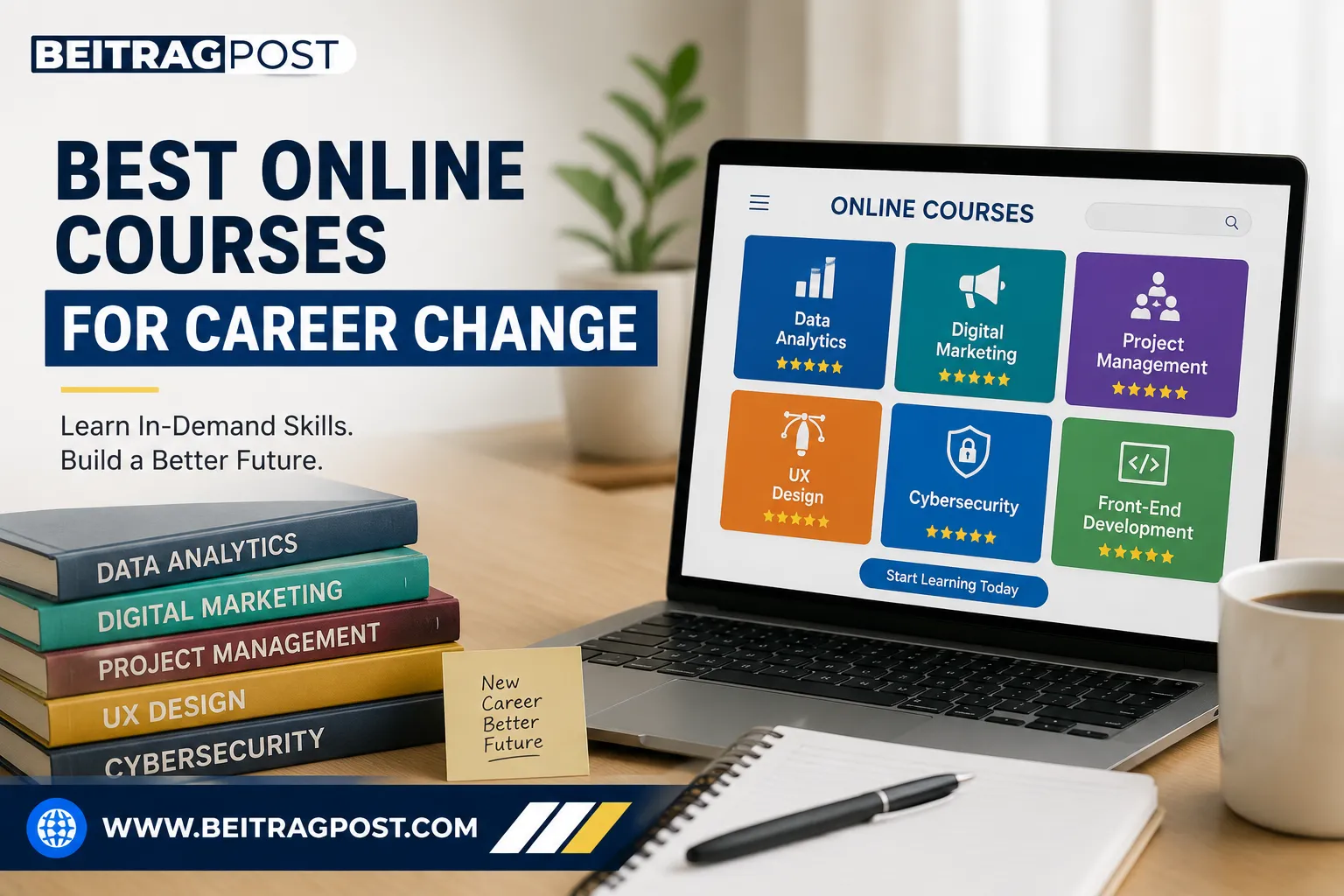
Best Online Courses for Career Change: Choose a Career, Not Just a Certificate
If you’re looking for the best online courses for career change, don’t make the mistake most people do.
They spend months earning a certificate…
…and then realize they don’t actually enjoy the career it leads to.
A successful career change starts with choosing the right career path, not the most popular online course.
Maybe you’re tired of low pay. Maybe your industry has limited growth. Or perhaps you simply want a job that offers remote work, better flexibility, or stronger long-term security.
Whatever brought you here, this guide is designed to help you make one smart decision instead of wasting months learning the wrong skill.
Rather than throwing dozens of random course recommendations at you, we’ll compare today’s best career options, explain who each one is best suited for, show expected salary ranges, discuss hiring demand, and recommend the online courses that give you the strongest chance of landing a new role.
Before you enroll in any program, it’s worth comparing where you’ll actually study. Course quality, pricing, instructor support, and certification recognition can vary significantly between providers. If you’re still deciding where to learn, our guide to Best Online Learning Platforms compares the most trusted platforms and explains which one is right for different career goals.
Quick Answer
If you’re in a hurry, these are the strongest online courses for most career changers in 2026.
| Career Goal | Recommended Course | Beginner Friendly | Job Demand | Average US Salary* |
|---|---|---|---|---|
| Data Analytics | Google Data Analytics Professional Certificate | ⭐⭐⭐⭐⭐ | Very High | $70k–$100k |
| Digital Marketing | Google Digital Marketing Certificate | ⭐⭐⭐⭐⭐ | High | $55k–$90k |
| Project Management | Google Project Management Certificate | ⭐⭐⭐⭐☆ | High | $75k–$120k |
| UX Design | Google UX Design Certificate | ⭐⭐⭐⭐☆ | High | $80k–$120k |
| Cybersecurity | Google Cybersecurity Certificate | ⭐⭐⭐☆☆ | Very High | $85k–$130k |
| Front-End Development | Meta Front-End Developer Certificate | ⭐⭐⭐☆☆ | High | $75k–$115k |
*Salary ranges vary by location, experience, and employer but represent typical entry-to-mid career expectations in the U.S.
Editor’s Pick: If you have absolutely no idea where to begin, Data Analytics offers one of the best combinations of accessibility, remote opportunities, employer demand, and long-term salary growth.
Before You Spend Money on Any Course, Answer These 5 Questions
This section is more important than any course recommendation.
Because choosing the wrong career costs far more than choosing the wrong online platform.
Ask yourself honestly:
1. Do you enjoy solving problems or creating ideas?
People who enjoy logic, numbers, and finding patterns often thrive in:
- Data Analytics
- Cybersecurity
- Software Development
People who enjoy creativity and communication usually enjoy:
- Digital Marketing
- UX Design
- Content Strategy
Your personality matters more than you might think.
2. How Fast Do You Need a New Job?
Some careers have a shorter learning curve.
If your goal is changing careers within six months, fields like:
- Digital Marketing
- Data Analytics
- Project Management
are often more realistic than software engineering, which usually requires a longer commitment.
Sometimes the fastest route to a better career isn’t the highest-paying one it’s the one you can realistically finish and start working in sooner.
3. Do You Want Remote Work?
For many people, salary isn’t the only reason for changing careers.
Freedom matters too.
If working from home is one of your biggest priorities, these careers consistently offer strong remote opportunities:
- Data Analytics
- Digital Marketing
- UX Design
- Software Development
Project management increasingly offers hybrid and remote positions, while cybersecurity roles vary depending on the employer.
4. Are You Comfortable Learning Technology?
Not every high-paying career requires coding.
For example:
- Digital Marketing requires very little technical knowledge.
- Project Management focuses more on leadership than programming.
- UX Design combines creativity with research.
Meanwhile:
- Cybersecurity
- Web Development
require greater technical curiosity and ongoing learning.
Choosing a field that matches your comfort level makes staying motivated much easier.
5. What Does Success Look Like to You?
This is the question most articles never ask.
Some people want:
- Higher income.
Others want:
- Better work-life balance.
Others simply want:
- Less stress.
The “best” career is the one that improves your life, not someone else’s.
Editor’s Insight: A $120,000 job you hate is rarely better than an $85,000 career you genuinely enjoy. Long-term motivation usually beats chasing the highest salary.
Which Career Fits You?
Instead of reading six course reviews, start here.
| If This Sounds Like You… | Career Worth Exploring |
|---|---|
| I enjoy solving puzzles and working with numbers | Data Analytics |
| I like writing, creativity and business | Digital Marketing |
| I naturally organize people and projects | Project Management |
| I enjoy technology and security | Cybersecurity |
| I like designing apps and websites | UX Design |
| I enjoy building websites and software | Front-End Development |
Notice that this table isn’t ranking careers.
It’s helping you eliminate the ones that don’t fit your personality.
That single step can save months of frustration later.
The Biggest Career Change Mistake Nobody Talks About
Most people don’t fail because they’re incapable.
They fail because they copy someone else’s career.
A friend gets into cybersecurity…
Suddenly everyone wants to learn cybersecurity.
Someone on YouTube claims UX designers earn six figures…
Thousands enroll in UX courses without ever asking whether they actually enjoy design.
Successful career changers do the opposite.
They choose careers that match their strengths, interests, and preferred lifestyle, then commit to mastering those skills over time.
That’s why the next section isn’t simply a list of courses.
It’s a breakdown of who each course is actually for and who should skip it.
The Best Online Courses for Career Change (Detailed Review)
Not every course delivers the same return on your time and effort.
Some prepare you for fast-growing industries with thousands of job openings, while others are better suited for professionals who already have experience.
Instead of ranking courses by popularity alone, we’ve evaluated each one based on five factors that matter when changing careers:
- Career opportunities
- Salary potential
- Beginner friendliness
- Long-term demand
- Return on your learning investment
1. Google Data Analytics Professional Certificate
Best Online Course for Career Change Into Data Analytics
If you’re looking for the best balance between salary, job demand, and beginner accessibility, it’s difficult to overlook data analytics.
Businesses generate enormous amounts of data every day, but data only becomes valuable when someone can turn it into useful business decisions. That’s exactly what data analysts do.
Instead of writing software all day, you’ll identify trends, build dashboards, create reports, and help companies make smarter decisions.
What You’ll Learn
- SQL fundamentals
- Spreadsheet analysis
- Tableau
- Data visualization
- Cleaning messy datasets
- Business reporting
Why It Stands Out
Unlike many beginner programs, Google’s certificate focuses on practical projects rather than theory.
By the end of the course, you’ll already have portfolio work you can show employers.
Best For
Career changers with no technical background
People who enjoy logical thinking
Excel users looking to upskill
Professionals interested in remote work
You Should Avoid It If…
Data analytics isn’t ideal if you dislike numbers or find repetitive problem-solving frustrating.
Salary Potential
Entry Level: $70,000–$85,000
Experienced: $100,000+
AI Outlook
Despite rapid AI development, companies still need people to interpret results, communicate insights, and make business decisions.
AI is changing the tools analysts use not replacing the profession.
Editor’s Take: If I had to recommend one course to someone with no clear direction, this would probably be my first choice because it combines excellent hiring demand with a manageable learning curve.
2. Google Digital Marketing & E-commerce Certificate
Best Online Course for Career Change Into Digital Marketing
Digital marketing is one of the few careers where you can work for an employer, become a freelancer, launch your own agency, or even build your own online business.
That’s why many career changers choose it.
Every business needs customers.
Digital marketers help businesses attract those customers through search engines, advertising, email campaigns, social media, and content marketing.
What You’ll Learn
- SEO fundamentals
- Google Ads
- Email marketing
- Analytics
- E-commerce
- Marketing strategy
Best For
Creative thinkers
Business-minded professionals
Freelancers
Future entrepreneurs
You Should Avoid It If…
If you dislike writing, analysing customer behaviour, or adapting to constantly changing platforms, digital marketing may become frustrating over time.
Salary Potential
Entry Level: $55,000–$75,000
Experienced: $90,000+
Top specialists and consultants often earn significantly more.
AI Outlook
AI is automating repetitive marketing tasks.
However, strategy, creativity, storytelling, and decision-making remain human strengths.
The future belongs to marketers who learn to use AI rather than compete against it.
Editor’s Take: Digital marketing offers one of the highest returns for people who eventually want freelance income or to start an online business alongside a traditional job.
3. Google Project Management Professional Certificate
Best Online Course for Career Change Into Project Management
Many people assume project managers spend their day attending meetings.
In reality, they solve problems, coordinate teams, remove obstacles, manage budgets, and keep projects moving forward.
That’s why this career rewards communication and leadership more than technical expertise.
What You’ll Learn
- Agile methodology
- Scrum
- Planning
- Budget management
- Risk management
- Team leadership
Best For
Office professionals
Team leaders
Administrators
Operations managers
You Should Avoid It If…
If you dislike responsibility, deadlines, or communicating with different stakeholders every day, project management may not be the right fit.
Salary Potential
Entry Level: $75,000–$90,000
Experienced: $120,000+
AI Outlook
AI can automate scheduling and reporting.
It cannot replace leadership, negotiation, conflict resolution, or decision-making.
Those skills remain highly valuable.
Editor’s Take: Professionals with several years of workplace experience often transition into project management more smoothly than complete beginners because many transferable skills already exist.
Compare the Best Career Change Options
Before choosing any course, compare the careers—not just the certificates.
| Career | Learning Time | Salary | Remote Work | AI Risk | Difficulty |
|---|---|---|---|---|---|
| Data Analytics | 4–6 Months | ⭐⭐⭐⭐☆ | ⭐⭐⭐⭐⭐ | Low | ⭐⭐☆☆☆ |
| Digital Marketing | 3–6 Months | ⭐⭐⭐☆☆ | ⭐⭐⭐⭐⭐ | Medium | ⭐⭐☆☆☆ |
| Project Management | 4–6 Months | ⭐⭐⭐⭐☆ | ⭐⭐⭐⭐☆ | Low | ⭐⭐⭐☆☆ |
| UX Design | 5–7 Months | ⭐⭐⭐⭐☆ | ⭐⭐⭐⭐⭐ | Low | ⭐⭐⭐☆☆ |
| Cybersecurity | 6–9 Months | ⭐⭐⭐⭐⭐ | ⭐⭐⭐⭐☆ | Very Low | ⭐⭐⭐⭐☆ |
| Front-End Development | 6–9 Months | ⭐⭐⭐⭐☆ | ⭐⭐⭐⭐⭐ | Medium | ⭐⭐⭐⭐☆ |
Notice that the highest salary doesn’t always equal the best choice.
A career you enjoy and can realistically master is far more likely to produce long-term success than one you choose purely because of income.
Which Online Course Should You Choose?
After reading all the options, you might still be wondering:
“Okay… but which course is actually right for me?”
The answer depends on where you want your career to be two or three years from now.
Here’s a simple decision guide.
Choose Data Analytics if you…
- Enjoy solving problems with numbers.
- Like finding patterns and trends.
- Want strong remote work opportunities.
- Prefer logical thinking over creative work.
Best choice for: Career stability, analytical thinkers, and long-term salary growth.
Choose Digital Marketing if you…
- Enjoy writing, communication, or social media.
- Want to freelance or build your own business.
- Prefer creativity over technical work.
- Like learning fast-changing skills.
Best choice for: Creative professionals, freelancers, and aspiring entrepreneurs.
Choose Project Management if you…
- Naturally organize people.
- Enjoy planning and leadership.
- Already have workplace experience.
- Want skills that transfer across multiple industries.
Best choice for: Professionals moving into leadership roles.
Choose UX Design if you…
- Love improving user experiences.
- Enjoy creativity and research equally.
- Want a portfolio-based career.
- Prefer solving human problems instead of technical ones.
Best choice for: Creative thinkers who enjoy technology.
Choose Cybersecurity if you…
- Enjoy technology and problem-solving.
- Don’t mind continuous learning.
- Want one of the fastest-growing industries.
- Are comfortable working with technical systems.
Best choice for: Long-term career growth and excellent salary potential.
Choose Front-End Development if you…
- Want to build websites and applications.
- Enjoy seeing immediate results from your work.
- Like learning modern technologies.
- Don’t mind writing code regularly.
Best choice for: Builders, creators, and future software developers.
Common Mistakes That Slow Down Career Changes
Most people don’t fail because they picked a bad course.
They fail because they approach learning the wrong way.
Here are the mistakes we see most often.
Choosing Salary Over Interest
A six-figure salary looks attractive.
But if you dislike the work itself, staying motivated becomes difficult.
The people who succeed usually enjoy the daily work not just the paycheck.
Collecting Certificates Instead of Building Skills
Completing five certificates without practical experience is less valuable than completing one course and building three strong projects.
Employers hire people who can solve problems, not people who simply collect badges.
Waiting Until You Feel “Ready”
Many career changers delay applying for jobs because they think they need to learn everything first.
You don’t.
Start applying once you’ve built a few quality projects.
Real interviews teach lessons that no online course can.
Ignoring Soft Skills
Technical knowledge gets your application noticed.
Communication, teamwork, adaptability, and problem-solving often determine whether you receive the job offer.
Keep developing both technical and professional skills throughout your career.
A Simple 90-Day Career Change Plan
Changing careers feels much easier when you have a roadmap.
Days 1–30: Build Your Foundation
- Choose one career path.
- Enroll in one high-quality course.
- Study consistently.
- Complete every assignment instead of skipping exercises.
Days 31–60: Create Real Projects
Start applying your knowledge.
Examples include:
- A Tableau dashboard.
- A UX case study.
- A marketing campaign.
- A personal website.
- A cybersecurity lab.
Every project becomes proof of your ability.
Days 61–90: Prepare for the Job Market
Now focus on becoming employable.
- Improve your resume.
- Optimize your LinkedIn profile.
- Build your portfolio.
- Practice interviews.
- Apply consistently.
Remember, your first role doesn’t need to be your dream job.
It only needs to be your entry point into a new industry.
Finishing a course is only one step in the process. You’ll also need a strong resume, a portfolio that demonstrates your skills, a job search strategy, and interview preparation. If you’re planning a complete career transition, our guide on How to Change Careers Successfully walks you through every stage, from choosing a new field to landing your first role.
Frequently Asked Questions
What is the best online course for career change?
There isn’t a single answer for everyone. The best online course for career change depends on your interests, transferable skills, and long-term career goals. Data Analytics, Digital Marketing, UX Design, Project Management, and Cybersecurity remain some of the strongest options because they combine employer demand with accessible learning paths.
Can online courses really help me get a job?
Yes but only if you apply what you learn.
Employers value practical experience alongside certifications. Completing projects, building a portfolio, and demonstrating your skills significantly improves your chances of landing interviews.
Can I change careers without a college degree?
Absolutely.
Many employers now prioritize practical skills, certifications, and demonstrated ability over formal education, especially in technology, digital marketing, UX design, project management, and data analytics.
Which career has the highest future demand?
Cybersecurity, Artificial Intelligence, Data Analytics, Cloud Computing, Software Development, and Digital Marketing are expected to remain among the fastest-growing career fields over the coming years.
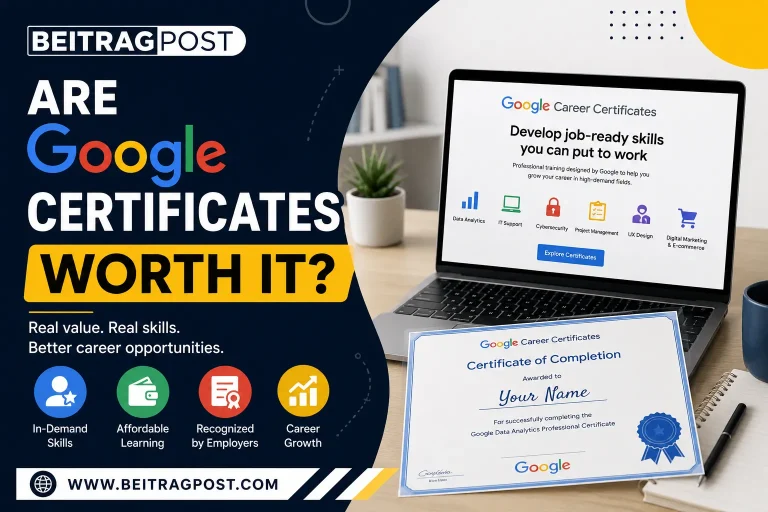
Are Google Professional Certificates worth it?
For many beginners, yes.
Google Professional Certificates are widely recognized, beginner-friendly, and designed to teach practical skills that employers actively look for. They’re particularly valuable when combined with hands-on projects and a strong portfolio.
Final Verdict
Finding the best online courses for career change isn’t about chasing the highest salary or collecting the most certificates. It’s about choosing a career that matches your strengths, interests, and long-term goals before investing your time in learning.
The strongest career changers focus on building practical skills rather than rushing through lessons. They create projects, practice consistently, and apply for opportunities before they feel completely ready. Whether you choose Data Analytics, Digital Marketing, UX Design, Project Management, Cybersecurity, or Front-End Development, your success will depend far more on how you apply your knowledge than on the certificate itself.
If you’re still undecided, start with the career that genuinely interests you the most. Motivation makes learning easier, projects stronger, interviews more confident, and long-term career growth much more sustainable.
Key Takeaways
Choose a career before choosing a course.
Match your strengths with long-term industry demand.
Build practical projects while studying.
Focus on one learning path instead of collecting multiple certificates.
Apply for jobs before you feel “100% ready.”
Keep learning even after landing your first role.