What Is Artificial Intelligence? A Beginner-Friendly Guide
If you’re wondering what is artificial intelligence, you’re not alone. AI has become part of everyday life, powering everything from search engines and virtual assistants to recommendation systems, self-driving technology, and modern healthcare. Yet many people still aren’t sure what artificial intelligence actually is or how it affects their daily lives.
In simple terms, artificial intelligence (AI) is a branch of computer science that enables machines to perform tasks that normally require human intelligence. These tasks include recognizing images, understanding language, solving problems, making decisions, learning from data, and even generating text, music, or artwork.
Artificial intelligence isn’t one single technology. Instead, it’s a broad field that combines algorithms, data, and computing power to help computers analyze information and improve their performance over time. While AI may seem futuristic, it’s already integrated into many of the apps, websites, and devices people use every day.
This guide explains what is artificial intelligence, how it works, where it’s used, its advantages and limitations, and why understanding AI has become increasingly important for students, professionals, businesses, and everyday users.
What Is Artificial Intelligence in Simple Words?
Artificial intelligence refers to computer systems designed to perform tasks that typically require human thinking.
Instead of following only fixed instructions, many AI systems can analyze information, identify patterns, and improve their performance by learning from large amounts of data.
Imagine teaching a child to recognize different breeds of dogs. After seeing thousands of examples, the child gradually learns how to identify them correctly.
AI works in a similar way.
Rather than memorizing a single image, an AI model studies countless examples until it learns the patterns that distinguish one object from another.
That same learning process allows AI to recognize speech, translate languages, recommend movies, detect fraud, answer questions, and assist with countless other tasks.
Why Artificial Intelligence Matters Today
Artificial intelligence has moved far beyond research laboratories.
Today, it influences how people communicate, shop, travel, learn, work, and entertain themselves.
For example:
- Email services filter spam automatically.
- Navigation apps calculate faster routes.
- Streaming platforms recommend movies and music.
- Online stores suggest products based on browsing history.
- Smartphones improve photos using AI-powered image processing.
Many of these features operate quietly in the background, making everyday technology faster, smarter, and more convenient.
As businesses continue adopting AI, understanding the basics is becoming an increasingly valuable digital skill rather than a niche technical topic.
A Brief History of Artificial Intelligence
Although AI feels like a modern breakthrough, the idea has existed for decades.
Researchers began exploring whether computers could simulate intelligent behavior during the 1950s. Early progress was limited because computers lacked the processing power and data needed for advanced learning.
Over the following decades, improvements in hardware, cloud computing, and data availability transformed AI from an academic concept into practical technology.
Several milestones accelerated its development:
- 1950s: Researchers introduced the concept of machine intelligence.
- 1980s: Expert systems became popular in business applications.
- 1990s: AI defeated human champions in specialized games.
- 2010s: Machine learning and deep learning achieved major breakthroughs.
- 2020s: Generative AI became widely available for consumers and businesses.
Today, artificial intelligence continues evolving at an extraordinary pace, influencing industries across the world.
Types of Artificial Intelligence
Not every AI system works the same way.
Different types of artificial intelligence are designed for different purposes, ranging from simple automation to advanced problem-solving.
Narrow AI
Narrow AI, sometimes called Weak AI, focuses on completing one specific task extremely well.
Examples include:
- Voice assistants
- Recommendation engines
- Image recognition software
- Translation tools
- Spam filters
Although these systems can outperform humans in specific activities, they cannot think beyond the task they were designed to perform.
Nearly every AI application people use today belongs to this category.
General AI
General AI refers to a theoretical system capable of performing any intellectual task that a human can complete.
Unlike today’s AI, General AI would understand new situations, reason independently, and transfer knowledge across different subjects without extensive retraining.
Researchers continue studying this possibility, but General AI does not currently exist.
Super AI
Super AI describes a hypothetical form of intelligence that would surpass human capabilities across virtually every field.
While it frequently appears in science fiction, Super AI remains speculative rather than a real-world technology.
Understanding the difference between these categories helps separate today’s practical AI systems from future possibilities often discussed in popular media.
How Artificial Intelligence Learns
One of the biggest misconceptions about AI is that developers manually program every possible answer.
Modern AI usually learns by analyzing enormous amounts of data instead.
During training, an AI model processes examples, compares its predictions with the correct answers, identifies mistakes, and gradually improves its accuracy.
The more relevant, high-quality data it receives, the better its performance typically becomes.
This learning process allows AI to adapt to new information instead of relying solely on fixed instructions.
If you’d like a deeper explanation of the technology behind this process, read our guide on How Does AI Work, where we break down machine learning, neural networks, and AI training in beginner-friendly language.
Real-Life Examples of Artificial Intelligence
Many people use artificial intelligence dozens of times each day without realizing it.
Some common examples include:
- Search engines providing relevant results.
- Digital assistants answering voice commands.
- Navigation apps predicting traffic conditions.
- Banks identifying suspicious transactions.
- Streaming platforms recommending personalized content.
- Customer support chatbots responding instantly.
- Smart cameras recognizing faces and objects.
- Language translation services converting text in seconds.
These practical applications demonstrate that AI is already improving everyday experiences across multiple industries.
How Artificial Intelligence Is Used in Different Industries
Understanding what is artificial intelligence becomes easier when you see how it solves real-world problems. Instead of existing as a standalone technology, AI now supports professionals across many industries by improving efficiency, reducing repetitive work, and helping people make better decisions.
Artificial Intelligence in Healthcare
Healthcare organizations use AI to assist doctors rather than replace them.
Modern AI systems can analyze medical images, identify patterns in patient data, help prioritize urgent cases, and support earlier disease detection. Hospitals also use AI to streamline administrative work, allowing healthcare professionals to spend more time with patients.
While medical decisions still require human expertise, AI has become a valuable support tool.
Artificial Intelligence in Education
Education has become more personalized thanks to AI.
Learning platforms can recommend lessons based on a student’s progress, generate quizzes, explain difficult concepts, and provide instant feedback. Teachers also use AI to automate routine tasks like grading and lesson planning.
Instead of replacing educators, AI helps them focus on teaching and student engagement.
Artificial Intelligence in Business
Businesses of every size are adopting AI to improve productivity.
Common business applications include:
- Customer support chatbots
- Sales forecasting
- Inventory management
- Fraud detection
- Data analysis
- Marketing automation
These tools help companies save time while making faster, data-driven decisions.
Artificial Intelligence in Finance
Banks and financial institutions process millions of transactions every day.
AI helps identify unusual activity that may indicate fraud, evaluates credit risk, predicts market trends, and improves customer service through intelligent virtual assistants.
Because financial data changes rapidly, AI can analyze information much faster than manual processes alone.
Artificial Intelligence in Transportation
Navigation apps already demonstrate how AI improves transportation.
By analyzing traffic conditions, road closures, and historical travel patterns, AI recommends faster routes and more accurate arrival times.
The same technology also supports logistics companies by optimizing delivery routes and improving supply chain efficiency.
Advantages of Artificial Intelligence
Artificial intelligence offers significant benefits for individuals, businesses, and organizations.
Although its impact varies across industries, several advantages appear consistently.
Improves Efficiency
AI automates repetitive tasks that would otherwise consume valuable time.
Instead of spending hours organizing data or answering routine questions, employees can focus on work that requires creativity and critical thinking.
Reduces Human Error
When trained using reliable data, AI can perform repetitive calculations and analyses with remarkable consistency.
This helps reduce mistakes in areas such as data processing, inventory tracking, and financial reporting.
Handles Large Amounts of Data
Modern organizations generate enormous volumes of information every day.
AI can analyze that data much faster than humans, identifying trends and patterns that may otherwise go unnoticed.
Available Around the Clock
Unlike human workers, AI-powered systems can operate continuously without requiring breaks.
That’s why many businesses provide 24/7 customer support using intelligent chatbots and virtual assistants.
Supports Better Decision-Making
AI doesn’t replace human judgment, but it provides valuable insights by analyzing historical data, identifying patterns, and highlighting potential outcomes.
When combined with human expertise, those insights often lead to more informed decisions.
Limitations of Artificial Intelligence
Despite its impressive capabilities, AI isn’t perfect.
Understanding its limitations is just as important as recognizing its strengths.
AI Depends on Quality Data
An AI system can only learn from the information it’s given.
If training data is incomplete, inaccurate, or biased, the results may also be unreliable.
This is one reason why responsible data collection remains essential.
AI Lacks Human Judgment
AI can recognize patterns and generate predictions, but it doesn’t truly understand emotions, ethics, or human experiences in the way people do.
Important decisions involving healthcare, law, or public safety still require human oversight.
Privacy and Security Concerns
Many AI systems process large amounts of personal information.
Organizations must protect that data responsibly while following privacy regulations and maintaining user trust.
High Development Costs
Building advanced AI systems often requires significant investments in computing power, skilled professionals, and ongoing maintenance.
Although many businesses now use AI tools, creating large-scale AI solutions remains expensive.
Artificial Intelligence vs Machine Learning
People often use these terms interchangeably, but they aren’t exactly the same.
Artificial intelligence is the broader field focused on creating machines that perform intelligent tasks.
Machine learning is one branch of AI that allows computers to improve by learning from data instead of relying only on fixed programming.
Think of it this way:
- Artificial Intelligence is the overall concept.
- Machine Learning is one method used to achieve AI.
- Deep Learning is a specialized form of machine learning designed to solve more complex problems.
Understanding this relationship helps explain why discussions about AI frequently include machine learning and neural networks.
Can Artificial Intelligence Replace Human Jobs?
This question appears whenever AI makes major headlines.
The answer is more nuanced than a simple yes or no.
AI is already automating many repetitive and predictable tasks. However, it also creates new opportunities by increasing demand for skills such as AI development, data analysis, cybersecurity, prompt engineering, and digital strategy.
Many workplaces are shifting toward collaboration, where AI handles routine work while humans focus on creativity, communication, leadership, and complex problem-solving.
Rather than replacing every profession, AI is changing how many jobs are performed.
Should You Learn About Artificial Intelligence?
Learning the basics of AI is becoming valuable regardless of your profession.
You don’t need to become a programmer to benefit from understanding how AI works and where it can be applied.
Students can use AI to support learning, professionals can improve productivity, entrepreneurs can automate routine processes, and businesses can identify new growth opportunities.
If you’re ready to move beyond the basics, our guide to 10 Best AI Tools for Beginners introduces practical tools that can help you start using AI confidently in everyday work and study.
Common Myths About Artificial Intelligence
As AI becomes more popular, misconceptions spread just as quickly. Understanding these myths helps you separate realistic expectations from science fiction.
Myth 1: Artificial Intelligence Can Think Like Humans
One of the biggest misunderstandings is that AI thinks the same way people do.
In reality, today’s AI identifies patterns, analyzes data, and generates responses based on what it has learned during training. It doesn’t possess emotions, self-awareness, personal opinions, or consciousness.
Even the most advanced AI systems are designed to perform specific tasks rather than think independently.
Myth 2: AI Will Replace Every Job
Artificial intelligence is changing the workplace, but that doesn’t mean every profession will disappear.
Throughout history, new technologies have automated certain tasks while creating entirely new careers. AI is following a similar pattern by handling repetitive work and allowing people to focus on creativity, strategy, communication, and decision-making.
Many industries are expected to use AI as a productivity tool instead of a complete replacement for human workers.
Myth 3: Artificial Intelligence Never Makes Mistakes
AI can process enormous amounts of information, but it isn’t perfect.
Its performance depends on factors such as:
- Training data quality
- System design
- Human oversight
- Regular updates
If the data used for training contains errors or bias, AI can produce inaccurate or misleading results.
For that reason, important decisions should always include human review.
The Future of Artificial Intelligence
Artificial intelligence is evolving rapidly, and its influence will likely continue expanding across nearly every industry.
Future improvements may include:
- More personalized learning experiences
- Faster medical research
- Smarter business automation
- Improved scientific discoveries
- Better accessibility tools
- More capable virtual assistants
At the same time, governments, businesses, and technology companies continue discussing responsible AI development, privacy, transparency, and ethical guidelines.
The goal isn’t simply to make AI more powerful but to ensure it’s used responsibly and benefits society.
Tips for Using Artificial Intelligence Responsibly
AI can save time and improve productivity, but using it wisely is just as important as understanding how it works.
Consider these best practices:
- Verify important information instead of accepting every AI-generated answer.
- Protect personal and sensitive data when using AI services.
- Use AI to assist your work rather than replace critical thinking.
- Stay informed as AI technology continues to evolve.
- Learn the strengths and limitations of different AI tools before relying on them.
A balanced approach helps you benefit from AI while avoiding common mistakes.
Frequently Asked Questions About Artificial Intelligence
What is artificial intelligence in simple terms?
Artificial intelligence is technology that enables computers to perform tasks that usually require human intelligence, such as learning, recognizing patterns, understanding language, solving problems, and making predictions.
Is artificial intelligence the same as machine learning?
No.
Artificial intelligence is the broader field, while machine learning is one method used to build AI systems that improve by learning from data.
Where is artificial intelligence used today?
AI is used in healthcare, education, finance, transportation, online shopping, customer support, entertainment, manufacturing, cybersecurity, and many other industries.
Most people interact with AI daily through smartphones, search engines, streaming services, navigation apps, and virtual assistants.
Is artificial intelligence dangerous?
Artificial intelligence itself isn’t inherently dangerous, but like any technology, its impact depends on how people design and use it.
Responsible development, human oversight, and ethical guidelines help reduce potential risks.
Do I need programming skills to use AI?
No.
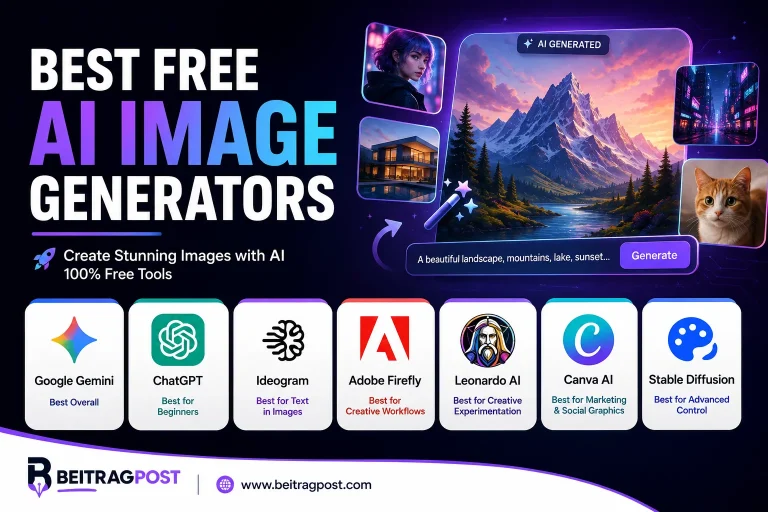
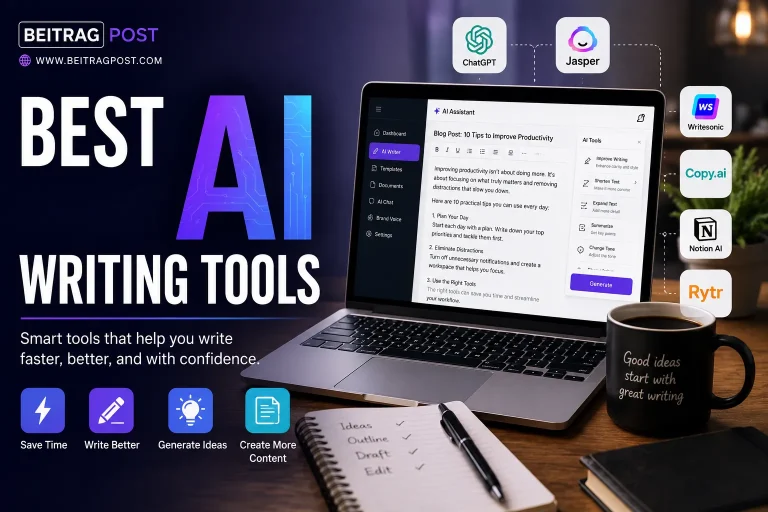
Many AI-powered applications are designed for beginners and require no coding experience. You can use AI writing assistants, image generators, productivity tools, and chatbots through simple interfaces.
Final Verdict
Understanding what is artificial intelligence is no longer just a topic for researchers or software engineers. AI has become part of everyday life, helping people search for information, navigate unfamiliar places, communicate more effectively, improve productivity, and solve problems across countless industries.
While artificial intelligence continues advancing, it’s important to remember that today’s AI is designed to assist humans rather than replace human intelligence. It performs best when combined with human judgment, creativity, and experience.
Whether you’re a student exploring new technology, a professional looking to work more efficiently, or a business owner evaluating AI solutions, learning the fundamentals is the first step toward making informed decisions in an increasingly AI-powered world.
Key Takeaways
- Artificial intelligence enables computers to perform tasks that normally require human intelligence.
- Most AI systems today are examples of Narrow AI designed for specific tasks.
- AI is widely used in healthcare, education, finance, business, and transportation.
- Machine learning is a branch of artificial intelligence, not a separate technology.
- AI improves efficiency but still depends on quality data and human oversight.
- Understanding AI helps individuals and businesses adapt to modern technology.
- Learning AI basics today can prepare you for future educational and career opportunities.