11 Best Coding Courses Online for Beginners Who Want Real Skills
Finding the best coding courses online can save you months of frustration and help you build practical programming skills that employers actually value. Whether you want to become a web developer, data analyst, software engineer, or simply learn coding as a hobby, choosing the right course is just as important as learning the programming language itself.
The internet is full of coding courses, but not all of them deliver the same value. Some focus heavily on theory, while others teach through hands-on projects that prepare you for real-world work. In this guide, we’ll compare the best coding courses online based on teaching quality, beginner friendliness, career value, pricing, certificates, and overall learning experience.
Best Coding Courses Online: Quick Recommendations
If you want the short version, these are our top picks.
| Best For | Recommended Course |
|---|---|
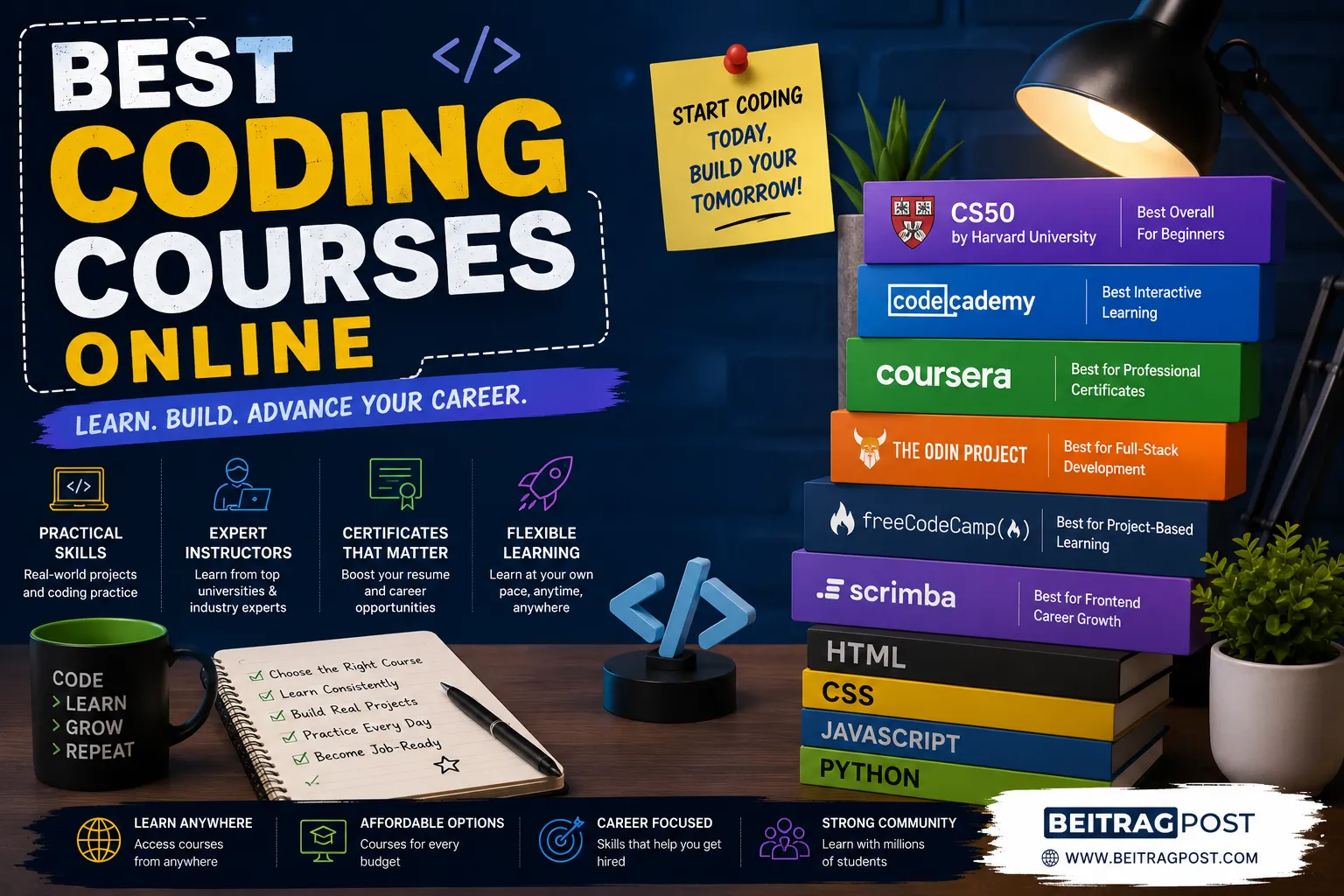
| Overall Winner | CS50 by Harvard University |
| Complete Beginners | Codecademy Career Paths |
| Affordable Learning | Udemy Programming Courses |
| Professional Certificates | Coursera |
| Web Development | The Odin Project |
| Interactive Practice | freeCodeCamp |
| Job Preparation | Scrimba Frontend Career Path |
If you’re unsure which learning platform suits your goals, our detailed guide to Best Online Learning Platforms compares the strengths, pricing, and learning experience of today’s most popular education websites.
How We Chose the Best Coding Courses Online
Not every popular course deserves a recommendation.
Some have outdated lessons.
Others focus too much on theory without helping students build real projects.
For this guide, every recommendation was evaluated using practical criteria that matter to beginners and career changers.
We looked at:
- Teaching quality
- Beginner-friendly lessons
- Hands-on projects
- Career relevance
- Certificate value
- Community support
- Course updates
- Overall value for money
Rather than recommending the most expensive programs, we focused on courses that genuinely help people become better programmers.
Our Top Picks at a Glance
Before diving into detailed reviews, here’s a quick overview of the strongest options.
| Course | Best For | Price | Certificate |
|---|---|---|---|
| CS50 | Complete beginners | Free | ✅ |
| Codecademy | Interactive learning | Free / Paid | ✅ |
| Coursera | Professional development | Free / Subscription | ✅ |
| Udemy | Budget learners | One-time purchase | ✅ |
| The Odin Project | Full-stack development | Free | ❌ |
| freeCodeCamp | Project-based learning | Free | ✅ |
| Scrimba | Frontend careers | Free / Paid | ✅ |
1. CS50 by Harvard University
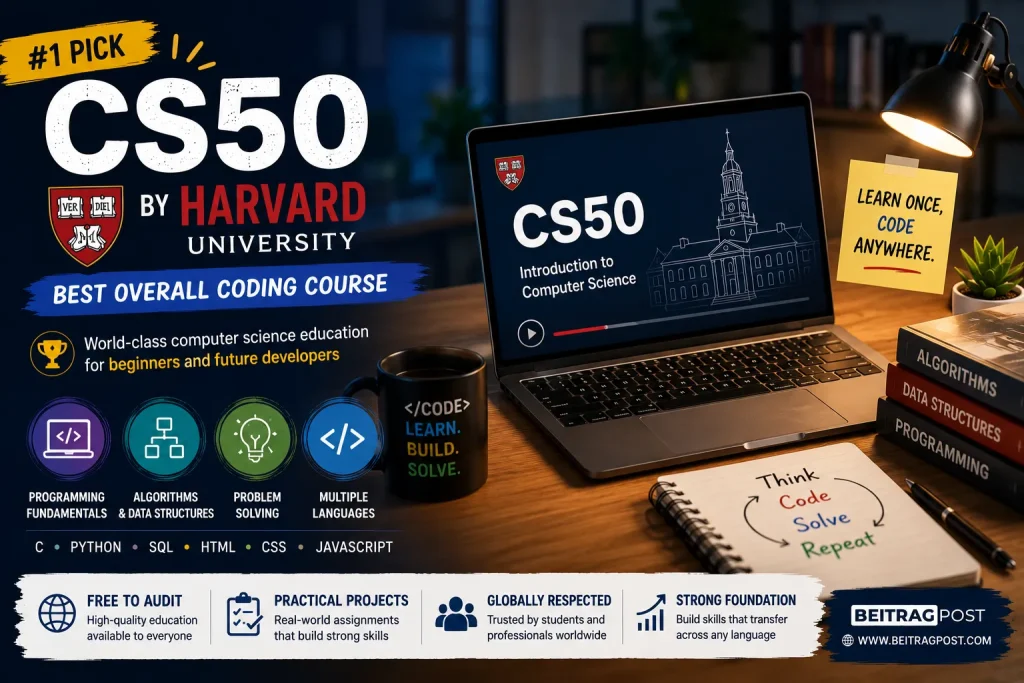
Best Overall Coding Course
If someone asks for only one recommendation, CS50 is the course we suggest first.
Created by Harvard University, CS50 introduces computer science in a way that’s challenging but surprisingly accessible for motivated beginners.
Instead of teaching only syntax, it explains how programming actually works, helping students develop strong problem-solving skills that transfer across different programming languages.
Best for
- Complete beginners
- Future software engineers
- Computer science students
What you’ll learn
- Programming fundamentals
- Algorithms
- Data structures
- Problem-solving
- C, Python, SQL, HTML, CSS, and JavaScript basics
Pros
- World-class instruction
- Completely free to audit
- Excellent practical assignments
- Highly respected worldwide
Cons
- Fast pace in some sections
- Requires consistent practice
Editor’s Verdict: If you’re serious about learning programming from the ground up, CS50 remains one of the best coding courses online regardless of budget.
2. Codecademy Career Paths
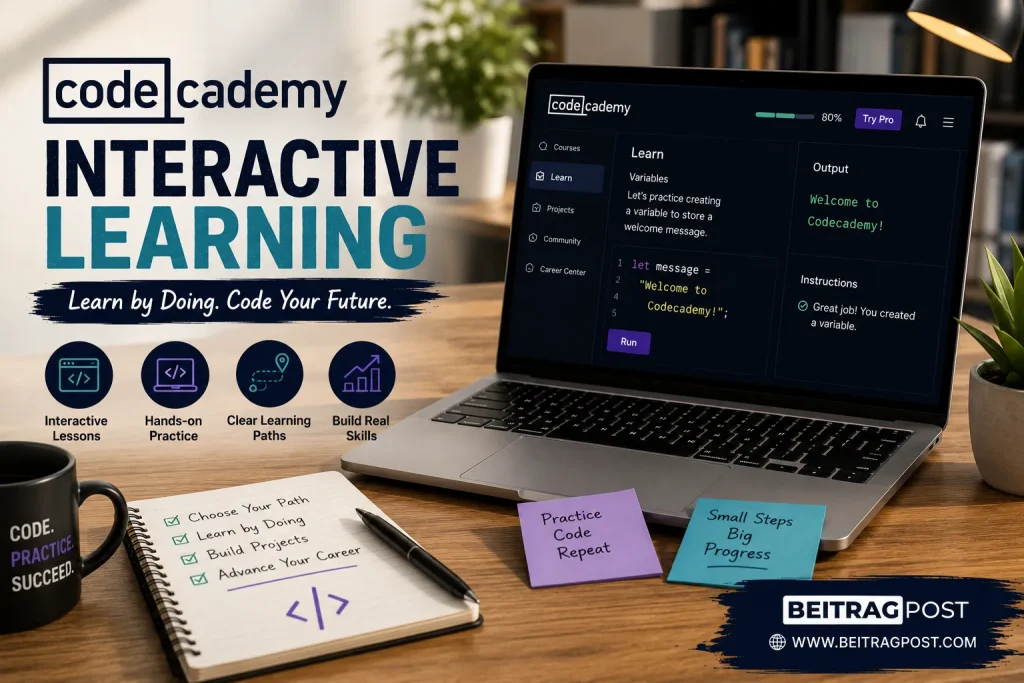
Best Interactive Coding Course
Some people learn best by writing code immediately instead of watching long video lectures.
That’s exactly where Codecademy stands out.
Every lesson includes interactive coding exercises inside your browser, allowing you to practice concepts as you learn them.
Popular learning paths include:
- Full-Stack Engineering
- Data Science
- Front-End Development
- Python Programming
Best for
- Beginners who prefer hands-on learning
- Self-paced students
- Career changers
Pros
- Interactive lessons
- Beginner-friendly interface
- Clear learning paths
- Practical coding exercises
Cons
- Premium features require a subscription
Editor’s Verdict: If you lose focus during traditional video courses, Codecademy’s interactive approach makes learning much more engaging.
3. Coursera Programming Specializations
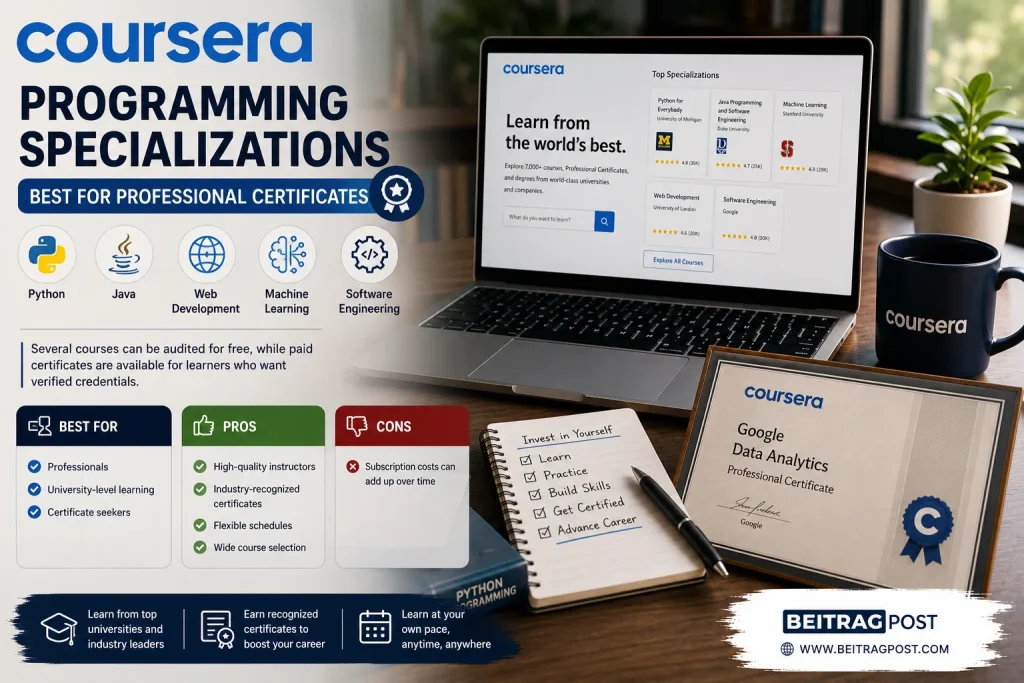
Best for Professional Certificates
Coursera partners with universities and technology companies to offer structured programming courses that often include recognized certificates.
Many specializations cover topics such as:
- Python
- Java
- Web development
- Machine learning
- Software engineering
Several courses can be audited for free, while paid certificates are available for learners who want verified credentials.
Best for
- Professionals
- University-level learning
- Certificate seekers
Pros
- High-quality instructors
- Industry-recognized certificates
- Flexible schedules
- Wide course selection
Cons
- Subscription costs can add up over time
4. Udemy Programming Courses
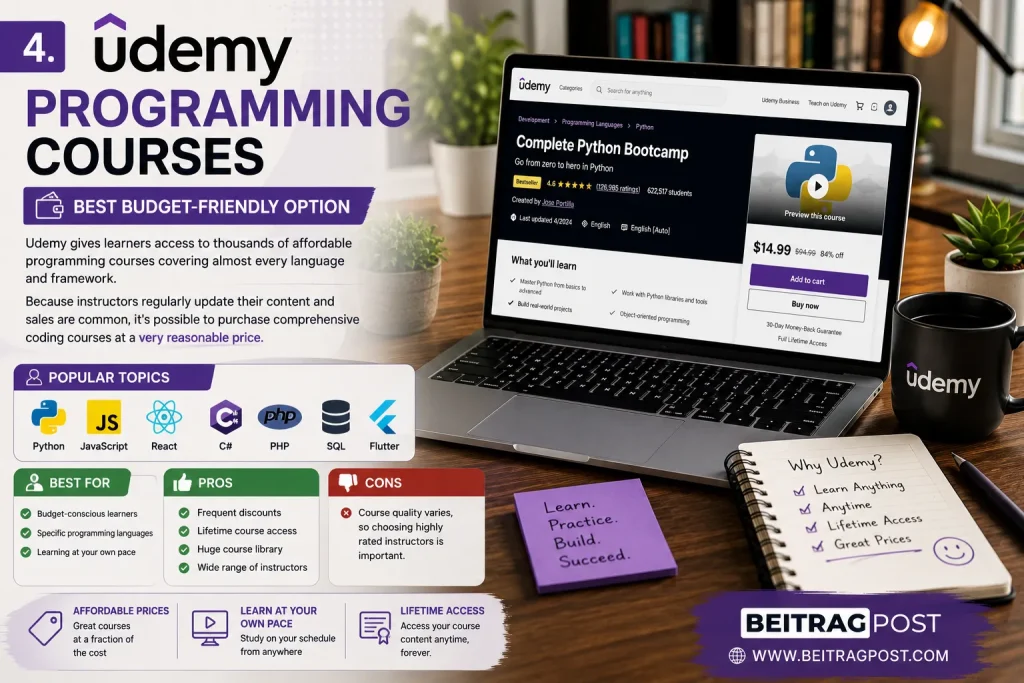
Best Budget-Friendly Option
Udemy gives learners access to thousands of affordable programming courses covering almost every language and framework.
Because instructors regularly update their content and sales are common, it’s possible to purchase comprehensive coding courses at a very reasonable price.
Popular topics include:
- Python
- JavaScript
- React
- C#
- PHP
- SQL
- Flutter
Best for
- Budget-conscious learners
- Specific programming languages
- Learning at your own pace
Pros
- Frequent discounts
- Lifetime course access
- Huge course library
- Wide range of instructors
Cons
- Course quality varies, so choosing highly rated instructors is important.
5. The Odin Project
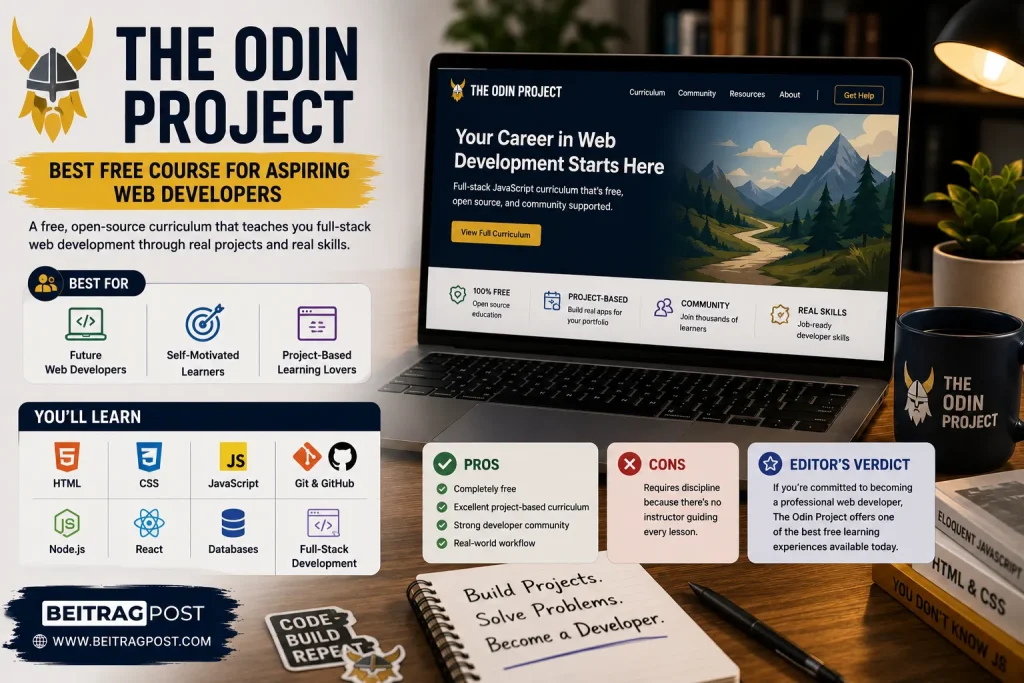
Best Free Course for Aspiring Web Developers
If your goal is to become a full-stack web developer without spending money, The Odin Project is one of the strongest free learning paths available.
Unlike many video-based courses, it teaches you by building real projects. You’ll spend less time watching tutorials and more time writing code, debugging problems, and creating portfolio pieces that demonstrate your skills to employers.
Best for
- Future web developers
- Self-motivated learners
- People who enjoy project-based learning
You’ll Learn
- HTML
- CSS
- JavaScript
- Git & GitHub
- Node.js
- React
- Databases
- Full-stack development
Pros
- Completely free
- Excellent project-based curriculum
- Strong developer community
- Real-world workflow
Cons
- Requires discipline because there’s no instructor guiding every lesson.
Editor’s Verdict: If you’re committed to becoming a professional web developer, The Odin Project offers one of the best free learning experiences available today.
6. freeCodeCamp
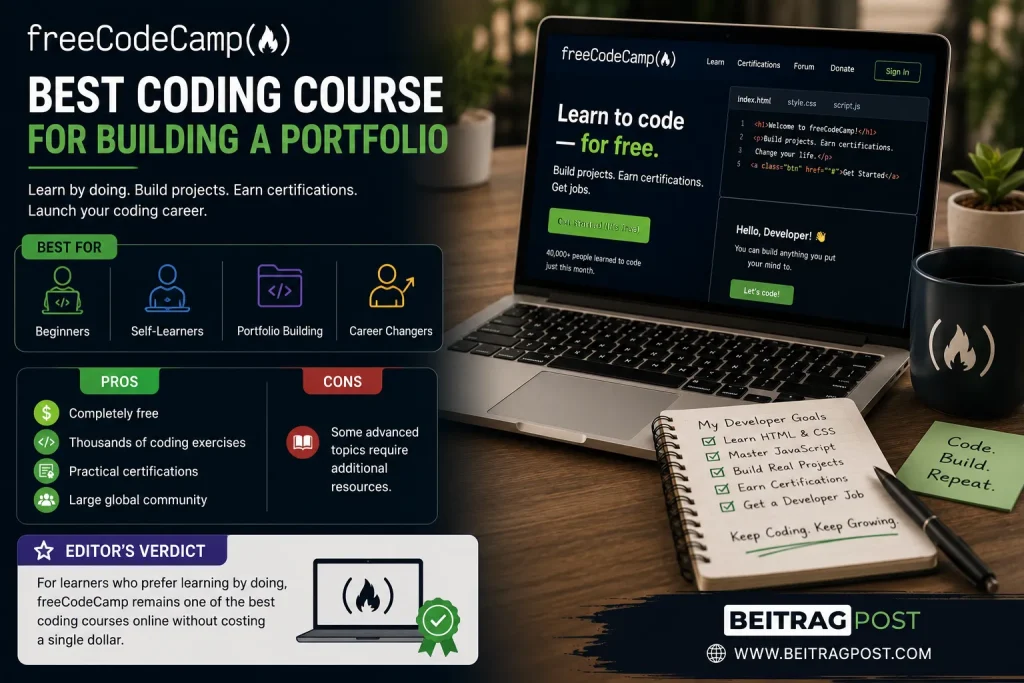
Best Coding Course for Building a Portfolio
freeCodeCamp has helped millions of people learn programming through hands-on projects rather than passive learning.
Instead of simply watching lessons, you’ll build websites, applications, and coding projects that can be added directly to your portfolio.
Its certifications are widely recognized within the developer community because they’re earned through practical work.
Best for
- Beginners
- Self-learners
- Portfolio building
- Career changers
Pros
- Completely free
- Thousands of coding exercises
- Practical certifications
- Large global community
Cons
- Some advanced topics require additional resources.
Editor’s Verdict: For learners who prefer learning by doing, freeCodeCamp remains one of the best coding courses online without costing a single dollar.
7. Scrimba Frontend Career Path
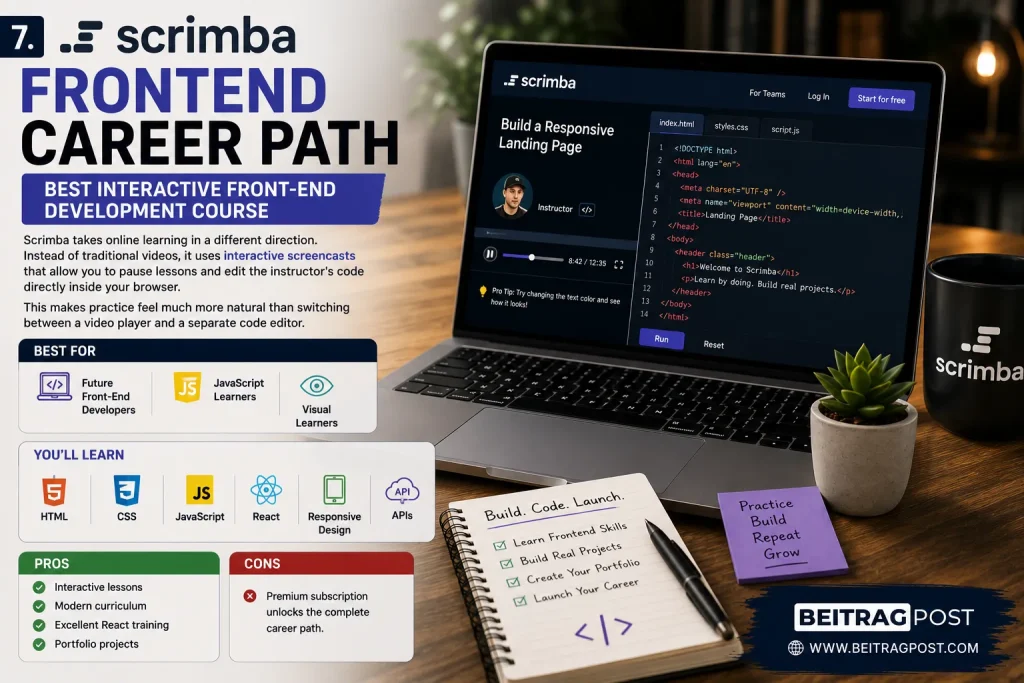
Best Interactive Front-End Development Course
Scrimba takes online learning in a different direction.
Instead of traditional videos, it uses interactive screencasts that allow you to pause lessons and edit the instructor’s code directly inside your browser.
This makes practice feel much more natural than switching between a video player and a separate code editor.
Best for
- Future front-end developers
- JavaScript learners
- Visual learners
You’ll Learn
- HTML
- CSS
- JavaScript
- React
- Responsive Design
- APIs
Pros
- Interactive lessons
- Modern curriculum
- Excellent React training
- Portfolio projects
Cons
- Premium subscription unlocks the complete career path.
8. LinkedIn Learning
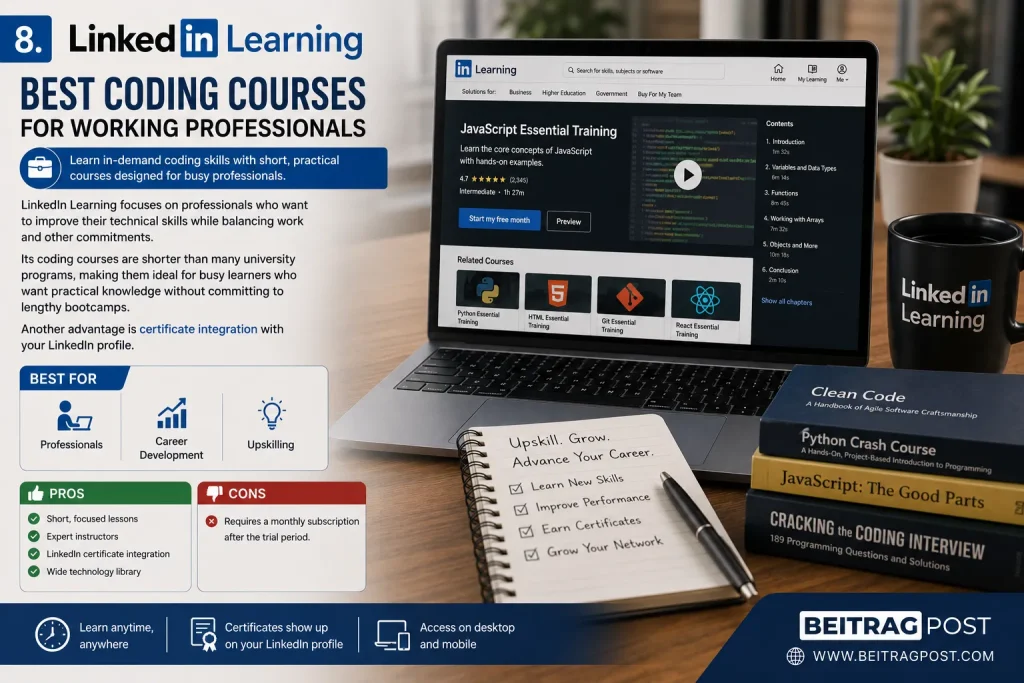
Best Coding Courses for Working Professionals
LinkedIn Learning focuses on professionals who want to improve their technical skills while balancing work and other commitments.
Its coding courses are shorter than many university programs, making them ideal for busy learners who want practical knowledge without committing to lengthy bootcamps.
Another advantage is certificate integration with your LinkedIn profile.
Best for
- Professionals
- Career development
- Upskilling
Pros
- Short, focused lessons
- Expert instructors
- LinkedIn certificate integration
- Wide technology library
Cons
- Requires a monthly subscription after the trial period.
9. Pluralsight
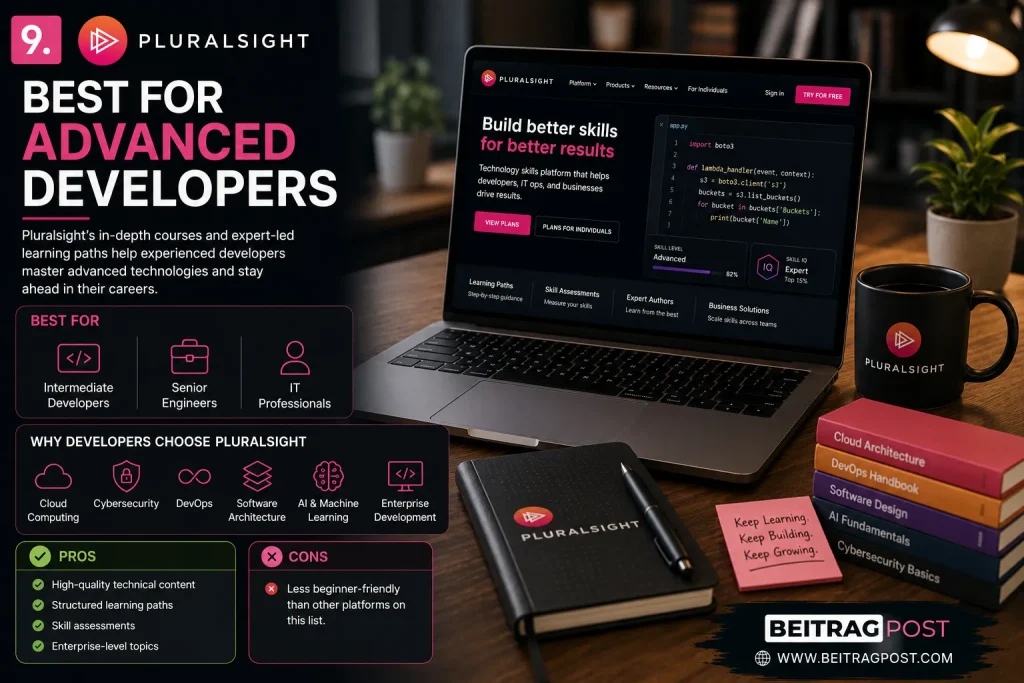
Best for Advanced Developers
While beginners can certainly use Pluralsight, its biggest strength lies in helping experienced developers continue growing their technical skills.
The platform offers structured learning paths covering cloud computing, cybersecurity, DevOps, software architecture, AI, and enterprise development.
Skill assessments also help identify areas where further learning is needed.
Best for
- Intermediate developers
- Senior engineers
- IT professionals
Pros
- High-quality technical content
- Structured learning paths
- Skill assessments
- Enterprise-level topics
Cons
- Less beginner-friendly than other platforms on this list.
10. edX
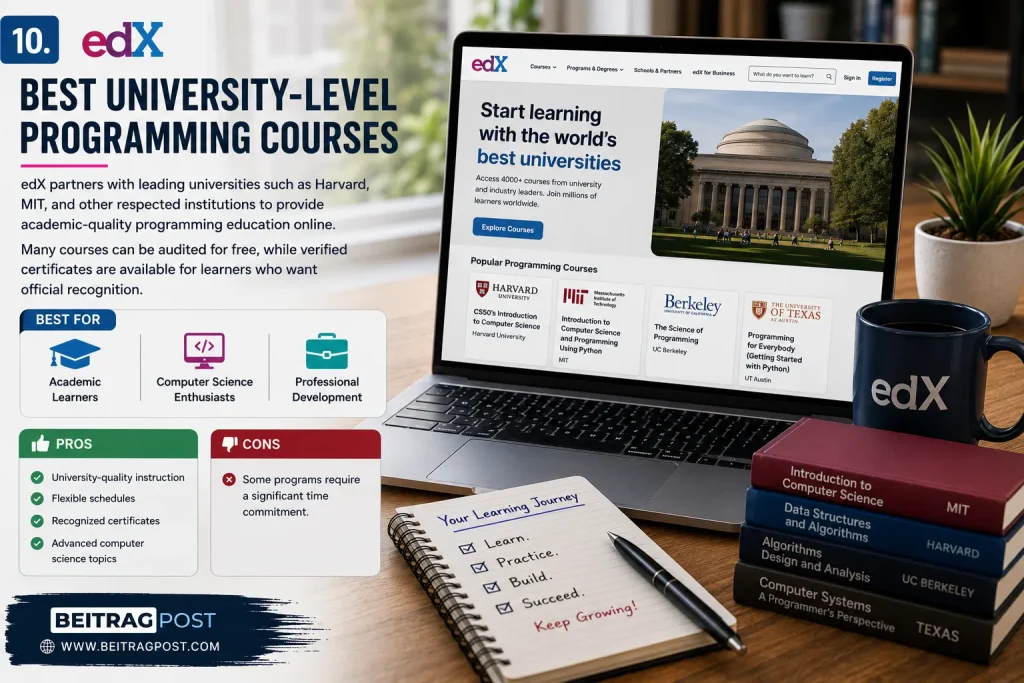
Best University-Level Programming Courses
edX partners with leading universities such as Harvard, MIT, and other respected institutions to provide academic-quality programming education online.
Many courses can be audited for free, while verified certificates are available for learners who want official recognition.
Best for
- Academic learners
- Computer science enthusiasts
- Professional development
Pros
- University-quality instruction
- Flexible schedules
- Recognized certificates
- Advanced computer science topics
Cons
- Some programs require a significant time commitment.
11. Skillshare
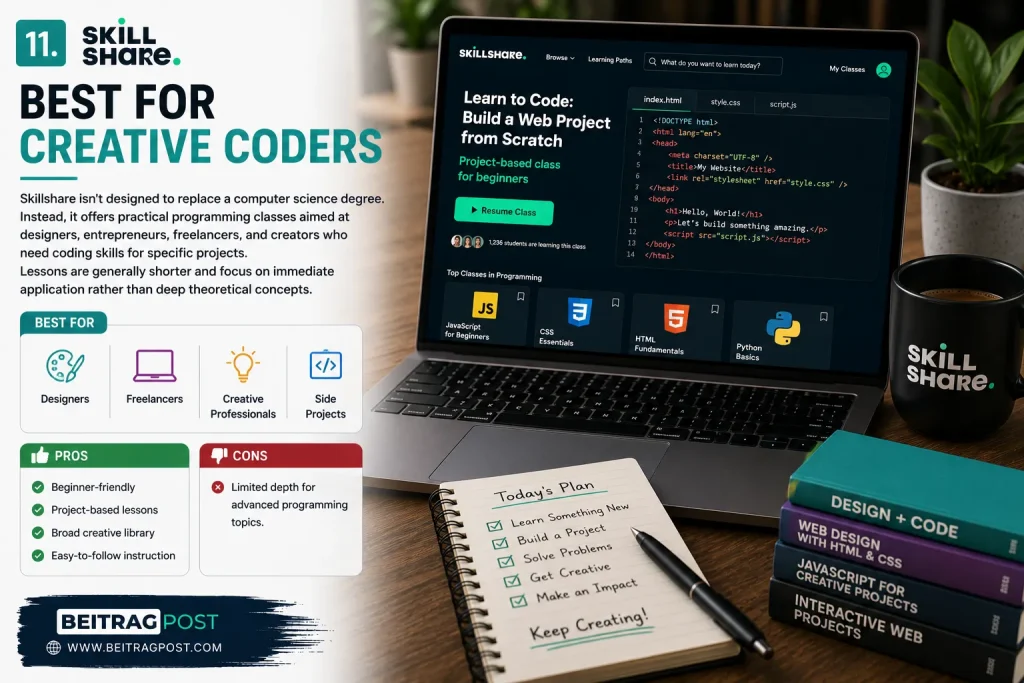
Best for Creative Coders
Skillshare isn’t designed to replace a computer science degree.
Instead, it offers practical programming classes aimed at designers, entrepreneurs, freelancers, and creators who need coding skills for specific projects.
Lessons are generally shorter and focus on immediate application rather than deep theoretical concepts.
Best for
- Designers
- Freelancers
- Creative professionals
- Side projects
Pros
- Beginner-friendly
- Project-based lessons
- Broad creative library
- Easy-to-follow instruction
Cons
- Limited depth for advanced programming topics.
Comparison: Which Coding Course Is Right for You?
| Goal | Best Choice |
|---|---|
| Learn programming from scratch | CS50 |
| Build a web developer portfolio | The Odin Project |
| Interactive learning | Codecademy |
| Free certifications | freeCodeCamp |
| University-level education | edX |
| Affordable one-time purchase | Udemy |
| Front-end development | Scrimba |
| Professional upskilling | LinkedIn Learning |
| Advanced software engineering | Pluralsight |
| Creative projects | Skillshare |
Who Should Choose Which Course?
Choosing the best coding courses online depends more on your goals than on the platform’s popularity.
- Complete beginners should start with CS50 or Codecademy to build strong programming fundamentals.
- Future web developers will benefit most from The Odin Project or Scrimba, thanks to their project-focused approach.
- Budget-conscious learners can build excellent skills using freeCodeCamp, CS50, and The Odin Project without spending anything.
- Professionals seeking recognized credentials should consider Coursera or edX for structured learning and respected certificates.
How to Choose the Best Coding Course Online for Your Goals
The truth is that there isn’t one course that’s perfect for everyone. The best coding courses online depend on your experience, career goals, learning style, and budget.
Before enrolling in any course, ask yourself these questions.
Are You a Complete Beginner?
If you’ve never written a line of code, start with a course that teaches programming fundamentals rather than jumping straight into advanced frameworks.
Recommended choices:
- CS50
- Codecademy
- freeCodeCamp
These courses explain concepts clearly while giving you practical coding experience.
Do You Want to Become a Professional Developer?
If your goal is landing a job in tech, prioritize courses that include real-world projects.
Employers care less about how many videos you’ve watched and more about what you’ve built.
Look for courses covering:
- Git & GitHub
- Portfolio projects
- APIs
- Databases
- JavaScript
- React
- Backend development
Building a portfolio alongside your learning will significantly improve your chances of getting interviews.
Do You Need a Certificate?
Certificates can strengthen your resume, but they shouldn’t be the only reason you choose a course.
A respected certificate combined with practical projects carries much more value than a certificate alone.
If earning a recognized credential is important, consider:
- Coursera
- edX
- LinkedIn Learning
Free vs Paid Coding Courses
One of the most common questions is whether paid courses are actually worth the money.
Here’s a simple comparison.
| Free Courses | Paid Courses |
|---|---|
| No financial risk | Structured learning paths |
| Great for beginners | More comprehensive content |
| Strong community support | Instructor feedback (on some platforms) |
| Excellent for learning fundamentals | Better career-focused resources |
For many learners, the smartest approach is to begin with free resources and invest in a paid course only after confirming that coding is something they genuinely enjoy.
Learning Strategy Matters More Than the Course
Buying the best course doesn’t automatically make someone a programmer.
Consistency does.
Many beginners purchase multiple courses but never finish one. Others complete a single well-structured course, build projects consistently, and successfully transition into tech careers.
A simple learning routine often works best.
- Practice coding every day, even if it’s only 30–60 minutes.
- Build small projects after every major topic.
- Review mistakes instead of memorizing code.
- Join developer communities to ask questions and learn from others.
- Keep improving your portfolio as your skills grow.
If you’re wondering what to learn after choosing a course, our guide on How to Learn to Code provides a step-by-step roadmap covering programming languages, practice strategies, project ideas, and career progression.
Frequently Asked Questions About the Best Coding Courses Online
Which coding course is best for complete beginners?
CS50, Codecademy, and freeCodeCamp are among the best coding courses online for beginners because they teach programming fundamentals while providing practical exercises and projects.
Can I learn coding online without a degree?
Yes.
Many professional developers are self-taught. Employers increasingly value practical skills, strong portfolios, and problem-solving ability over formal degrees.
Are free coding courses enough to get a job?
They can be.
Many developers have started with free resources like CS50, freeCodeCamp, and The Odin Project. Success depends on consistently practicing, building projects, and demonstrating your skills through a portfolio.
Which programming language should I learn first?
Python is often recommended for beginners because its syntax is straightforward and it’s widely used in automation, data science, artificial intelligence, and web development.
JavaScript is another excellent choice if you’re interested in building websites and web applications.
How long does it take to learn coding?
Learning the basics usually takes a few months of consistent practice. Becoming job-ready often requires six months to a year, depending on your learning schedule, chosen specialization, and the amount of time you spend building real projects.
Final Verdict
Choosing the best coding courses online isn’t about finding the most expensive program or the one with the longest curriculum. It’s about selecting a course that matches your current skill level, keeps you motivated, and helps you build practical experience through real projects.
If you’re completely new to programming, start with CS50, Codecademy, or freeCodeCamp to develop strong fundamentals. As your confidence grows, explore more specialized learning paths such as Scrimba for front-end development or Coursera and edX for professional certificates.
Remember that completing a course is only the beginning. The developers who stand out are the ones who continue practicing, creating projects, solving problems, and learning from real-world experience. Choose one course, stay consistent, and focus on building skills that you can actually demonstrate.
Key Takeaways
- Choose a course based on your career goal, not just popularity.
- Beginners should prioritize practical, project-based learning.
- Free platforms like CS50 and freeCodeCamp provide excellent value.
- Certificates are useful, but a strong portfolio matters even more.
- Practice consistently and build projects alongside every lesson.
- Finish one quality course before buying another.