Best Online Learning Platforms: Which One Is Actually Worth Your Time and Money?
Best online learning platforms have transformed the way people learn new skills, earn professional certificates, and advance their careers. A decade ago, learning usually meant enrolling in a college, attending evening classes, or buying expensive textbooks. Today, whether you want to become a software developer, improve your marketing skills, earn a project management certificate, or simply explore a new hobby, there’s an online learning platform designed to help you achieve your goals.
However, having hundreds of choices creates a new problem.
Which online learning platform is actually worth using?
A quick search will show dozens of recommendations. Some articles rank platforms simply because they are popular, while others focus only on pricing or the number of available courses. Unfortunately, those factors alone don’t tell you whether a platform is the right fit for your personal or professional goals.
For example, a platform with 200,000 courses isn’t automatically better than one offering 5,000 carefully curated programs. Likewise, a certificate only has value if it supports your career, improves your skills, or helps you stand out in the job market.
That’s why this guide takes a different approach.
Instead of creating another generic “Top 10” list, we’ve evaluated every major platform based on what truly matters to learners:
- Course quality and instructor expertise
- Career value and certificate recognition
- Learning experience and flexibility
- Pricing and long-term value
- Practical skill development
- Best use cases for different types of learners
By the end of this guide, you’ll know exactly which platform is best for your learning style, budget, and career goals whether you’re a student, a working professional, a freelancer, or someone who simply enjoys learning new things.
Quick Recommendations about Best Online Learning Platforms
If you don’t have time to read the entire guide, here are our top recommendations based on different learning goals.
| Goal | Best Platform | Why We Chose It |
|---|---|---|
| Best Overall | Coursera | Excellent balance of quality, certificates, and career value |
| Best Budget Option | Udemy | Affordable courses with lifetime access |
| Best for Career Growth | LinkedIn Learning | Professional development and LinkedIn integration |
| Best University Courses | edX | Academic-quality education from leading institutions |
| Best for Creative Skills | Skillshare | Project-based learning for designers and creators |
| Best for Technology Professionals | Pluralsight | Deep technical training and skill assessments |
| Best for AI & Data Science | Udacity | Industry-focused programs and portfolio projects |
| Best Completely Free Platform | Khan Academy | Outstanding free educational content |
| Best Short Professional Courses | FutureLearn | Flexible university-backed learning |
| Best Premium Learning Experience | MasterClass | Learn directly from world-renowned experts |
If you’re still undecided after reading this table, don’t worry. We’ll explain the strengths, weaknesses, pricing, and ideal use cases for each platform later in this guide.
Why You Can Trust Our Recommendations on Best Online Learning Platforms
Choosing an online learning platform is an investment not just financially, but also in terms of your time. A course that doesn’t match your goals can leave you frustrated, while the right platform can help you build valuable skills, earn promotions, or even change careers.
Rather than ranking platforms based on popularity alone, we evaluated each one using criteria that directly affect your learning experience.
1. Course Quality
The number of available courses doesn’t matter if the content is outdated or poorly organized. We prioritized platforms known for producing accurate, well-structured, and regularly updated educational material.
2. Instructor Expertise
Learning from experienced professionals or respected university faculty often provides more practical and trustworthy insights than courses created without demonstrated expertise.
3. Career Value
Some platforms offer certificates that are widely recognized by employers and industry leaders, while others focus primarily on personal development. We considered how useful each platform is for building career-ready skills.
4. Learning Experience
An effective platform should make learning engaging through interactive exercises, quizzes, assignments, downloadable resources, discussion forums, and mobile accessibility.
5. Pricing
Affordable education is important, but value matters more than cost alone. We compared free options, subscriptions, one-time purchases, and long-term learning benefits.
Before You Choose Any Platform, Ask Yourself These 5 Questions
Many learners choose a platform based on advertisements or discounts. A smarter approach is to identify your own needs first.
Ask yourself:
- Are you learning for a new job, a promotion, or personal interest?
- Do you need an employer-recognized certificate?
- Do you prefer structured programs or short individual courses?
- How much time can you realistically dedicate each week?
- What’s your budget for online learning?
Your answers will make the decision much easier.
For example:
- Someone preparing for a career in data analytics may benefit more from Coursera or Udacity.
- A freelance graphic designer may get greater value from Skillshare.
- A manager looking to improve leadership skills might prefer LinkedIn Learning.
- Someone who simply wants to master Microsoft Excel over a weekend could find Udemy to be the most practical option.
There is no universal winner. The best platform is the one that aligns with your specific goals not necessarily the one with the biggest marketing budget.
Best Online Learning Platforms Our Top Pick
Coursera
Best Overall Online Learning Platform for Career Growth and Professional Certificates
Best For: Career changers, university-level learning, professional certificates, business, technology, and lifelong learners.
| Rating Category | Our Score |
|---|---|
| Course Quality | ⭐⭐⭐⭐⭐ (5/5) |
| Certificate Value | ⭐⭐⭐⭐⭐ (5/5) |
| Ease of Use | ⭐⭐⭐⭐⭐ (5/5) |
| Value for Money | ⭐⭐⭐⭐☆ (4.5/5) |
| Career Growth | ⭐⭐⭐⭐⭐ (5/5) |
| Overall Rating | 9.8/10 |
Why Coursera Is Our #1 Recommendation
After comparing the leading online learning platforms, Coursera consistently stood out as the best all-around choice for most learners.
The biggest reason is simple: it combines high-quality education with practical career value.
Unlike course marketplaces where anyone can publish content, Coursera partners with universities and leading companies to create structured learning programs. This means you’re learning from professors, researchers, and industry professionals rather than relying solely on independent instructors.
For learners who want more than just video lessons, this structured approach makes a significant difference. Instead of jumping from one unrelated course to another, you can follow guided learning paths that gradually build your knowledge and confidence.
Whether you’re interested in artificial intelligence, data analytics, digital marketing, project management, UX design, cybersecurity, or business leadership, Coursera offers complete programs designed to help you develop job-ready skills.
What Makes Coursera Different?
Many platforms focus on selling individual courses.
Coursera focuses on helping learners build complete skill sets.
For example, instead of taking one Python course and stopping there, you can progress through beginner lessons, complete guided projects, earn a Professional Certificate, and eventually move into more advanced specializations.
This structured journey makes learning more organized and easier to stick with over the long term.
Another major advantage is the quality of its partnerships. Courses are developed with contributions from respected universities and global companies, giving learners confidence that the material reflects current industry expectations.
Course Quality
One area where Coursera consistently performs well is course quality.
Lessons are carefully organized, instructors explain concepts clearly, and many programs include quizzes, assignments, peer-reviewed projects, and hands-on exercises that reinforce what you’ve learned.
Rather than encouraging passive learning, many courses require you to apply new knowledge through practical activities. This approach helps improve retention and prepares learners for real-world situations instead of simply memorizing information.
The platform also updates many of its career-focused programs to reflect changes in technology and industry trends, making it a strong choice for fast-moving fields like cloud computing, cybersecurity, AI, and digital marketing.
Certificate Value
Not all online certificates carry the same weight.
Some simply confirm that you’ve watched a series of videos.
Coursera’s strongest programs go further by offering certificates developed in collaboration with universities and internationally recognized companies.
While a certificate alone won’t guarantee a job, it can strengthen your resume, demonstrate continuous learning, and show employers that you’ve invested time in developing relevant skills.
When combined with practical projects and a strong portfolio, these certificates become much more valuable.
Learning Experience
Coursera is designed for learners who want flexibility without sacrificing structure.
You can study whenever it fits your schedule, making it easier to balance learning with work, family, or other commitments.
Most programs include:
- High-quality video lectures
- Reading materials
- Interactive quizzes
- Practical assignments
- Guided projects
- Discussion forums
- Downloadable resources
- Progress tracking
- Mobile learning support
This combination creates a learning experience that feels closer to a university course than a collection of disconnected video tutorials.
Pricing
Coursera offers several pricing options depending on the type of learning experience you’re looking for.
Many courses can be audited for free, allowing you to access lecture videos without paying. If you want graded assignments, certificates, or access to Professional Certificate programs, you’ll typically need to purchase the course or subscribe to Coursera Plus.
Although Coursera isn’t always the cheapest platform, the overall value is strong because many programs combine multiple courses into structured career pathways.
If you’re planning to complete several programs throughout the year, a subscription often provides better long-term value than purchasing courses individually.
Pros
- Outstanding course quality
- Structured learning paths
- Recognized university and industry partnerships
- Flexible self-paced learning
- Career-focused Professional Certificates
- Strong technology, business, and marketing programs
- Excellent mobile experience
Cons
- Premium certificates require payment.
- Some advanced programs require a significant time commitment.
- Beginners may occasionally find university-level content more challenging than marketplace courses.
Who Should Choose Coursera?
Coursera is an excellent choice if you:
- Want recognized certificates that add credibility to your resume.
- Plan to change careers or develop in-demand professional skills.
- Prefer structured learning instead of random individual courses.
- Enjoy learning from universities and experienced industry professionals.
- Want long-term career development rather than quick tutorials.
Who Should Skip Coursera?
Coursera may not be the best fit if you:
- Need to learn one small skill as quickly and cheaply as possible.
- Prefer buying a single course instead of subscribing.
- Want highly creative or hobby-focused classes rather than career-oriented education.
In these situations, platforms like Udemy or Skillshare may provide better value.
Coursera vs. Udemy: Which Offers Better Value?
This is one of the most common questions learners ask.
The answer depends on your goal.
Choose Coursera if you want a structured learning journey, respected certificates, and courses developed with universities or industry leaders.
Choose Udemy if your goal is to learn a specific practical skill quickly, such as Microsoft Excel, Adobe Photoshop, or WordPress, without committing to a subscription.
Neither platform is universally better. They simply serve different types of learners.
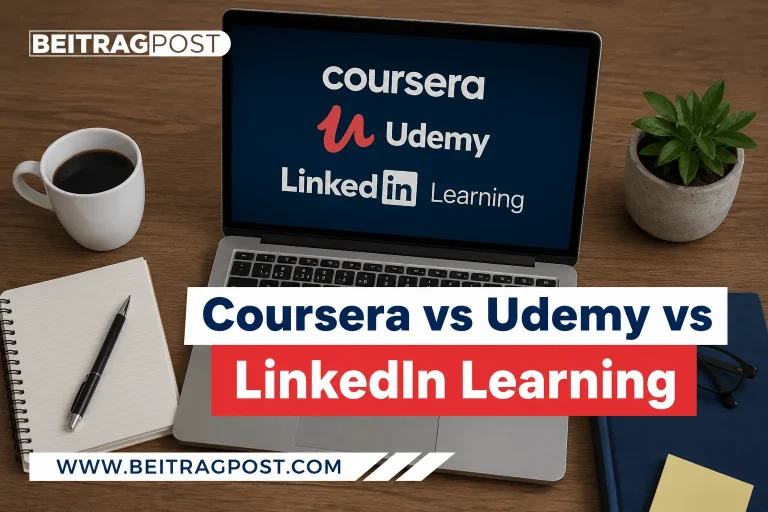
If you’re still deciding, our detailed comparison of Coursera vs Udemy vs LinkedIn Learning breaks down pricing, certificates, course quality, and career value to help you choose the best option.
Bottom Line
If we had to recommend just one online learning platform to the average learner, Coursera would be our first choice.
Its combination of structured programs, respected educational partners, flexible learning, and career-focused certificates makes it the strongest all-around platform for students, professionals, freelancers, and anyone serious about continuous learning.
Whether you’re starting a new career, upgrading existing skills, or preparing for future opportunities, Coursera provides one of the most complete online learning experiences available today.
Udemy
Best Online Learning Platform for Affordable, Skill-Based Learning
Best For: Beginners, freelancers, entrepreneurs, hobby learners, and professionals who want to master specific skills at a low cost.
| Rating Category | Our Score |
|---|---|
| Course Quality | ⭐⭐⭐⭐☆ (4.6/5) |
| Ease of Use | ⭐⭐⭐⭐⭐ (5/5) |
| Value for Money | ⭐⭐⭐⭐⭐ (5/5) |
| Certificate Value | ⭐⭐⭐☆☆ (3.8/5) |
| Course Variety | ⭐⭐⭐⭐⭐ (5/5) |
| Overall Rating | 9.4/10 |
Why We Recommend Udemy
If Coursera is designed for structured career development, Udemy is built for fast, practical skill building.
Instead of following long learning paths, Udemy lets you purchase individual courses based on exactly what you want to learn. This makes it one of the most flexible platforms for people who need to solve a specific problem or develop a single skill without paying for a monthly subscription.
Whether you want to learn Excel for work, WordPress for freelancing, Photoshop for graphic design, or Python for programming, you’ll likely find multiple highly rated courses on Udemy.
The biggest advantage is freedom. You decide what to learn, when to learn it, and how much you want to spend.
What Makes Udemy Different?
Unlike university-backed platforms, Udemy works as an open marketplace where experienced instructors publish their own courses.
That means you aren’t limited to academic subjects. You can learn almost anything, including:
- Web Development
- Graphic Design
- Digital Marketing
- SEO
- Artificial Intelligence
- Data Analysis
- Microsoft Office
- Video Editing
- Photography
- Public Speaking
- Business
- Accounting
- Personal Finance
- Music
- Languages
- Fitness
- Productivity
The variety is one of Udemy’s greatest strengths.
Instead of searching across multiple websites, many learners can find everything they need in one place.
Course Quality: Better Than Many People Expect
One common misconception is that marketplace courses are lower quality than university courses.
That’s not always true.
Some of Udemy’s highest-rated instructors have spent years refining their courses based on student feedback. Many regularly update lessons, answer questions, and improve content whenever software or industry standards change.
However, quality does vary.
That’s why we recommend checking:
- Instructor ratings
- Student reviews
- Total enrollments
- Last updated date
- Course preview videos
Spending five minutes evaluating a course before purchasing can make a huge difference.
Learning Experience
Udemy focuses on flexibility.
Once you purchase a course, you typically receive lifetime access. You can learn at your own pace, pause whenever necessary, and revisit lessons years later without paying again.
Most courses include:
- HD video lessons
- Downloadable resources
- Practice exercises
- Quizzes
- Coding exercises (for technical subjects)
- Mobile learning
- TV app support
- Completion certificates
This approach works particularly well for busy professionals and freelancers who want to learn whenever they have spare time.
Pricing
Pricing is where Udemy truly stands out.
Although many courses have relatively high list prices, the platform runs promotions throughout the year. During these sales, learners can often purchase premium courses for a small fraction of the regular price.
For many people, this makes Udemy one of the best-value online learning platforms available.
Instead of paying a monthly subscription, you own the course permanently after purchasing it.
That pricing model is especially attractive if you only need a few targeted courses each year.
Certificates: Should They Matter?
Udemy provides certificates of completion for paid courses.
While these certificates demonstrate that you’ve finished a course, they generally don’t carry the same level of recognition as certificates issued through university partnerships or professional organizations.
However, this doesn’t mean Udemy lacks career value.
Employers are usually more interested in what you can actually do than in where you learned it.
For example, if a Udemy course helps you build a professional portfolio, create websites, edit videos, or automate business processes, those practical skills often matter more than the certificate itself.
Pros
- Extremely affordable during promotions
- Huge selection of courses
- Lifetime access after purchase
- Learn at your own pace
- Practical, real-world skills
- Excellent mobile experience
- Frequent course updates from top instructors
Cons
- Course quality depends on the instructor
- Certificates have limited employer recognition
- Some older courses become outdated if instructors stop maintaining them
Who Should Choose Udemy?
Udemy is an excellent choice if you:
- Want to learn one specific skill quickly.
- Prefer paying once instead of subscribing.
- Are building freelance or business skills.
- Want affordable professional education.
- Like learning at your own pace.
Who Should Skip Udemy?
Udemy may not be the ideal option if you:
- Need university-recognized credentials.
- Prefer structured learning paths.
- Want complete career programs rather than individual courses.
- Need formal academic education.
In those situations, Coursera or edX will usually provide better long-term value.
Udemy vs. Coursera: Which One Should You Choose?
This comparison confuses many first-time learners.
Here’s the simplest way to think about it.
Choose Udemy if your goal is to solve a specific problem.
For example:
- Learn Excel.
- Build a WordPress website.
- Master Photoshop.
- Study Python basics.
- Improve public speaking.
Choose Coursera if your goal is to build an entire career.
For example:
- Become a Data Analyst.
- Earn a Professional Certificate.
- Learn AI systematically.
- Prepare for a new job.
- Follow a structured university-backed program.
Think of Udemy as buying individual books.
Think of Coursera as enrolling in a complete educational program.
Neither approach is better they simply serve different purposes.
Bottom Line
If you’re looking for an affordable, flexible, and practical way to develop new skills, Udemy remains one of the strongest online learning platforms available.
Its massive course library, frequent discounts, and lifetime access make it an excellent investment for learners who want immediate, job-ready knowledge without committing to long-term subscriptions.
For freelancers, entrepreneurs, beginners, and professionals seeking targeted training, Udemy delivers exceptional value.
LinkedIn Learning
Best Online Learning Platform for Professionals and Workplace Skills
Best For: Working professionals, managers, business leaders, office employees, job seekers, and anyone focused on career growth.
| Rating Category | Our Score |
|---|---|
| Course Quality | ⭐⭐⭐⭐⭐ (4.8/5) |
| Career Value | ⭐⭐⭐⭐⭐ (5/5) |
| Ease of Use | ⭐⭐⭐⭐⭐ (5/5) |
| Value for Money | ⭐⭐⭐⭐☆ (4.5/5) |
| Certificate Value | ⭐⭐⭐⭐☆ (4.5/5) |
| Overall Rating | 9.5/10 |
Why We Recommend LinkedIn Learning
If your goal is to become more valuable in your current job instead of earning an academic certificate, LinkedIn Learning is one of the smartest investments you can make.
Unlike platforms that primarily focus on universities or individual instructors, LinkedIn Learning is built around the skills employers actively look for.
Its library focuses heavily on:
- Leadership
- Business Communication
- Project Management
- Microsoft Office
- Excel
- Data Analysis
- Artificial Intelligence
- Cybersecurity
- Software Development
- Marketing
- Sales
- Human Resources
- Productivity
Instead of trying to teach everything, LinkedIn Learning concentrates on helping professionals improve workplace performance.
That makes the platform especially useful if your goal is getting promoted, becoming more productive, or improving your resume.
What Makes LinkedIn Learning Different?
The biggest difference is context.
Most online learning platforms teach subjects.
LinkedIn Learning teaches careers.
Every course is designed around practical workplace situations.
Instead of simply learning theory, you’ll learn how professionals actually solve problems inside companies.
For example, an Excel course doesn’t just explain formulas.
It teaches how analysts, managers, accountants, and business teams use Excel in daily work.
That practical approach is one reason LinkedIn Learning has become popular among professionals worldwide.
Learning Experience
One thing we genuinely like about LinkedIn Learning is its bite-sized format.
Many lessons are only a few minutes long.
That means you can continue learning during:
- Lunch breaks
- Daily commute
- Coffee breaks
- Evenings after work
Instead of asking you to watch two-hour lectures, courses are divided into manageable lessons that fit into busy schedules.
This dramatically improves course completion rates.
LinkedIn Profile Integration
This is where LinkedIn Learning has a unique advantage.
After completing eligible courses, you can display your certificates directly on your LinkedIn profile.
Although certificates alone won’t guarantee interviews, they help demonstrate continuous learning to recruiters and hiring managers.
If you’re actively searching for jobs or building your professional brand, this small feature adds meaningful value.
Course Quality
LinkedIn Learning maintains a high standard across most of its catalog.
Courses are professionally produced, easy to follow, and updated regularly to reflect changes in software and business practices.
Most instructors are experienced professionals rather than influencers or hobbyists, which creates a more practical learning experience.
The platform also organizes courses into Learning Paths.
Instead of randomly selecting classes, learners follow structured sequences that gradually build expertise.
Pricing
LinkedIn Learning uses a subscription model.
Rather than purchasing individual courses, you receive unlimited access to the entire library while your subscription is active.
If you plan to complete multiple courses each month, this pricing model offers excellent value.
However, learners interested in only one course may find Udemy’s one-time purchase model more affordable.
Pros
- Excellent professional development courses
- High production quality
- Career-focused Learning Paths
- Easy LinkedIn profile integration
- Regular content updates
- Strong leadership and business library
- Great mobile learning experience
Cons
- Subscription required
- Limited university-level academic content
- Smaller creative course library than Skillshare
- Less technical depth than Pluralsight for advanced IT professionals
Who Should Choose LinkedIn Learning?
LinkedIn Learning is an excellent choice if you:
- Work in a corporate environment.
- Want to improve leadership skills.
- Need Microsoft Office or Excel training.
- Plan to move into management.
- Want to strengthen your LinkedIn profile.
- Prefer short lessons that fit around work.
Who Should Skip LinkedIn Learning?
You may want another platform if:
- You need university-backed certificates.
- You’re preparing for an academic degree.
- You want highly creative courses.
- You’re looking for advanced cloud engineering or cybersecurity training.
In these situations, Coursera, edX, Skillshare, or Pluralsight may be better options.
LinkedIn Learning vs Coursera
This is a common comparison, but the platforms serve different purposes.
Choose LinkedIn Learning if:
- You’re already employed.
- You want practical workplace skills.
- You need leadership training.
- You want short, flexible lessons.
Choose Coursera if:
- You want structured career programs.
- You need recognized Professional Certificates.
- You’re changing careers.
- You want university-level education.
In simple terms:
LinkedIn Learning helps you grow within your current career.
Coursera helps you prepare for your next career.
LinkedIn Learning vs Udemy
These platforms also target different audiences.
Choose Udemy if you need one specific skill at the lowest possible cost.
Choose LinkedIn Learning if you’re building long-term professional skills across multiple subjects.
Udemy is excellent for solving immediate learning needs.
LinkedIn Learning is better for continuous professional development.
Editor’s Recommendation
If you already have a full-time job and your goal is getting promoted, improving workplace performance, or developing leadership skills, LinkedIn Learning is one of the best subscriptions you can buy.
The lessons are practical, professionally produced, and designed around real business challenges rather than academic theory.
For professionals who value convenience and career-focused education, it remains one of the strongest online learning platforms available today.
Quick Comparison
| If Your Goal Is… | Best Choice |
|---|---|
| Learn one affordable skill | Udemy |
| Earn respected certificates | Coursera |
| Grow your corporate career | LinkedIn Learning |
| Study university subjects | edX |
| Learn creative skills | Skillshare |
edX
Best Online Learning Platform for University-Level Education
Best For: University students, professionals pursuing advanced education, researchers, engineers, and learners who value academic credibility.
| Rating Category | Our Score |
|---|---|
| Academic Quality | ⭐⭐⭐⭐⭐ (5/5) |
| Certificate Value | ⭐⭐⭐⭐⭐ (5/5) |
| Ease of Use | ⭐⭐⭐⭐☆ (4.5/5) |
| Career Value | ⭐⭐⭐⭐☆ (4.7/5) |
| Overall Rating | 9.4/10 |
Why We Recommend edX
If your goal is to experience university-level education without enrolling in a traditional campus program, edX is one of the strongest choices available.
Unlike marketplace-based platforms, edX works with globally recognized universities and institutions to create structured educational programs.
That difference becomes obvious after taking your first course.
Instead of short tutorials, you’ll find comprehensive lessons supported by assignments, quizzes, discussion forums, and assessments that encourage deeper understanding.
What Makes edX Different?
The biggest strength of edX is academic credibility.
Many learners choose edX because they want knowledge that follows university standards rather than quick how-to videos.
The platform offers learning opportunities across subjects including:
- Computer Science
- Artificial Intelligence
- Data Science
- Engineering
- Cybersecurity
- Business Management
- Finance
- Healthcare
- Economics
- Language Learning
Several programs are also designed for professionals looking to advance their careers through structured education.
Learning Experience
Expect a classroom-style experience.
Courses often require more time and commitment than platforms like Udemy.
Instead of watching a few short videos, learners complete reading materials, assignments, quizzes, and final assessments.
This structured approach helps build deeper subject knowledge.
Pricing
Many edX courses can be audited for free.
If you want graded assignments or a verified certificate, you’ll usually need to upgrade to a paid option.
Compared with traditional university tuition, the overall value is excellent.
Pros
- Excellent academic quality
- Trusted university partnerships
- Strong STEM programs
- Flexible learning schedule
- Professional Certificates available
Cons
- Less suitable for casual learners
- Courses often require greater commitment
- Certificates require payment
Who Should Choose edX?
Choose edX if you:
- Prefer structured university learning.
- Need academically rigorous content.
- Plan to study technical or business subjects.
- Want recognized educational credentials.
Best Alternative
If you prefer a stronger career focus rather than academic learning, Coursera is usually the better choice.
Editor’s Verdict
Best for learners who value education over entertainment.
If you’re willing to invest time into structured study, edX delivers one of the highest-quality learning experiences available online.
Skillshare
Best Online Learning Platform for Creative Professionals
Best For: Designers, writers, photographers, video editors, illustrators, content creators, and freelancers.
| Rating Category | Our Score |
|---|---|
| Creativity | ⭐⭐⭐⭐⭐ (5/5) |
| Community | ⭐⭐⭐⭐⭐ (5/5) |
| Practical Learning | ⭐⭐⭐⭐☆ (4.8/5) |
| Career Value | ⭐⭐⭐⭐☆ (4.4/5) |
| Overall Rating | 9.2/10 |
Why We Recommend Skillshare
Creative work is difficult to learn through theory alone.
That’s why Skillshare focuses on project-based learning.
Instead of simply watching lessons, students are encouraged to create real projects while learning.
This approach builds confidence much faster.
Whether you’re designing logos, editing videos, writing articles, or creating illustrations, you’ll finish many courses with portfolio-ready work.
What Makes Skillshare Different?
Skillshare isn’t trying to replace a university.
Its goal is to help creative people improve practical skills.
Popular categories include:
- Graphic Design
- UI/UX Design
- Motion Graphics
- Photography
- Video Editing
- Illustration
- Creative Writing
- Branding
- Marketing
- Content Creation
The platform is especially valuable for freelancers who need practical results instead of academic certificates.
Learning Experience
Courses are usually shorter than university programs.
Lessons are engaging.
Projects are practical.
Many instructors actively encourage learners to share work and receive community feedback.
That interactive learning environment makes Skillshare unique.
Pros
- Outstanding creative courses
- Portfolio-focused learning
- Strong creative community
- Excellent instructors
- Beginner-friendly
Cons
- Limited recognized certificates
- Less suitable for technical careers
- Subscription required
Who Should Choose Skillshare?
Skillshare is perfect if you want to:
- Become a freelance designer.
- Improve illustration skills.
- Learn video editing.
- Build a creative portfolio.
- Explore digital art.
Best Alternative
If your goal is professional certification instead of creative learning, Coursera is the stronger option.
Editor’s Verdict
Skillshare won’t replace university education.
But for creative professionals, it remains one of the most enjoyable and practical learning platforms available.
Pluralsight
Best Online Learning Platform for Developers and IT Professionals
Best For: Software developers, cloud engineers, cybersecurity professionals, DevOps engineers, IT administrators, and technical teams.
| Rating Category | Our Score |
|---|---|
| Technical Content | ⭐⭐⭐⭐⭐ (5/5) |
| Practical Skills | ⭐⭐⭐⭐⭐ (5/5) |
| Career Value | ⭐⭐⭐⭐⭐ (5/5) |
| Ease of Use | ⭐⭐⭐⭐☆ (4.6/5) |
| Overall Rating | 9.6/10 |
Why We Recommend Pluralsight
Technology evolves rapidly.
Developers who stop learning often fall behind.
Pluralsight helps solve this problem by focusing almost entirely on professional technology education.
Rather than covering thousands of unrelated topics, it specializes in helping IT professionals master the skills employers actively demand.
Standout Features
One feature we particularly like is Skill IQ.
Instead of guessing what you should study next, Skill IQ evaluates your current abilities and recommends personalized learning paths.
The platform also offers:
- Interactive Labs
- Hands-on Cloud Sandboxes
- Certification preparation
- Learning Paths
- Assessments
- Enterprise team learning
Best Subjects
Pluralsight excels in:
- Python
- Java
- C#
- JavaScript
- AWS
- Azure
- Kubernetes
- Docker
- Linux
- Cybersecurity
- AI
- Machine Learning
If your career depends on technology, these learning paths provide excellent depth.
Pros
- Exceptional technical education
- Excellent cloud learning
- Personalized assessments
- Regular content updates
- Strong certification support
Cons
- Subscription required
- Limited creative content
- Beginners may find advanced paths challenging
Who Should Choose Pluralsight?
Choose Pluralsight if you:
- Work in IT.
- Want cloud certifications.
- Are preparing for cybersecurity roles.
- Need structured developer training.
- Want continuous technical education.
Best Alternative
If you’re looking for broader university education rather than specialized IT training, Coursera is the better option.
Editor’s Verdict
For developers and technology professionals, Pluralsight remains one of the strongest learning investments you can make.
Its structured learning paths and practical labs prepare learners for real technical challenges rather than simply teaching theory.
Editor’s Choice So Far
After reviewing the first six platforms, here’s how we’d recommend them based on different learner profiles:
| If You Are… | Recommended Platform |
|---|---|
| Career Changer | Coursera |
| Budget Learner | Udemy |
| Office Professional | LinkedIn Learning |
| University Student | edX |
| Creative Professional | Skillshare |
| Developer / IT Expert | Pluralsight |
Udacity
Best Online Learning Platform for AI, Data Science, and Career-Focused Tech Skills
Best For: Aspiring software engineers, AI specialists, data analysts, cloud engineers, and professionals transitioning into technology careers.
| Rating Category | Our Score |
|---|---|
| Technical Depth | ⭐⭐⭐⭐⭐ (5/5) |
| Project-Based Learning | ⭐⭐⭐⭐⭐ (5/5) |
| Career Value | ⭐⭐⭐⭐⭐ (4.9/5) |
| Ease of Use | ⭐⭐⭐⭐☆ (4.5/5) |
| Overall Rating | 9.5/10 |
Why We Recommend Udacity
Many online platforms teach programming. Udacity teaches you how to apply technical skills in real-world projects.
That’s an important distinction.
Instead of stopping after video lessons, many Udacity programs require learners to complete portfolio-worthy projects that reflect real workplace tasks. This makes the platform particularly valuable for people preparing for technical interviews or building a portfolio for employers.
Its strongest categories include:
- Artificial Intelligence
- Machine Learning
- Data Science
- Cloud Computing
- Software Engineering
- Autonomous Systems
- Product Management
Unlike broader learning platforms, Udacity focuses on quality over quantity. Its catalog is smaller, but the programs are highly specialized and career-oriented.
What Makes Udacity Different?
Udacity’s Nanodegree programs combine structured lessons, coding projects, mentor support (in eligible programs), and career resources. This creates a guided learning experience that feels closer to professional training than casual online courses.
Pros
- Excellent AI and data science programs
- Portfolio-based projects
- Career-focused curriculum
- Practical coding experience
- Frequently updated technical content
Cons
- Higher pricing than most competitors
- Smaller course library
- Primarily focused on technology fields
Best Alternative
If you want broader career education across multiple industries, Coursera offers greater flexibility.
Editor’s Verdict
For learners committed to building a career in AI, cloud computing, or software development, Udacity remains one of the strongest specialized platforms available.
Khan Academy
Best Free Online Learning Platform
Best For: Students, parents, teachers, and anyone who wants high-quality education without paying for a subscription.
| Rating Category | Our Score |
|---|---|
| Value for Money | ⭐⭐⭐⭐⭐ (5/5) |
| Beginner Friendliness | ⭐⭐⭐⭐⭐ (5/5) |
| Educational Quality | ⭐⭐⭐⭐⭐ (5/5) |
| Career Focus | ⭐⭐⭐⭐☆ (4.0/5) |
| Overall Rating | 9.4/10 |
Why We Recommend Khan Academy
One of the biggest myths about online education is that you need an expensive subscription to learn effectively.
Khan Academy proves otherwise.
The platform provides completely free lessons across core academic subjects and has earned a reputation for making complex topics easier to understand through short videos, interactive exercises, and personalized progress tracking.
Popular subjects include:
- Mathematics
- Science
- Economics
- History
- Computing
- Reading
- Test Preparation
- Financial Literacy
Because the lessons build from basic concepts to more advanced topics, it’s an excellent choice for beginners who want to strengthen their foundation before moving to career-focused platforms.
Pros
- Completely free
- Excellent educational quality
- Interactive practice exercises
- Personalized learning dashboard
- Great for students and parents
Cons
- Limited professional certifications
- Less emphasis on workplace skills
- Fewer advanced career pathways
Best Alternative
If you eventually want professional certificates or career-focused programs, consider Coursera after completing the basics.
Editor’s Verdict
If your budget is limited, Khan Academy is easily one of the best places to begin your learning journey. It offers exceptional educational value without requiring any financial commitment.
Looking for more free resources? Check out our guide to Best Free Online Courses, where we compare free certificates, university courses, and no-cost learning platforms.
FutureLearn
Best Online Learning Platform for Short Professional Courses
Best For: Professionals, healthcare workers, educators, business learners, and anyone looking for flexible university-backed courses.
| Rating Category | Our Score |
|---|---|
| Course Quality | ⭐⭐⭐⭐⭐ (4.8/5) |
| Flexibility | ⭐⭐⭐⭐⭐ (5/5) |
| Certificate Value | ⭐⭐⭐⭐☆ (4.4/5) |
| Overall Rating | 9.2/10 |
Why We Recommend FutureLearn
Not every learner wants to commit to long, intensive programs.
FutureLearn fills that gap by offering shorter university-backed courses that are easier to complete while balancing work and personal responsibilities.
Its partnerships with respected educational institutions help maintain strong course quality, while discussion-based learning encourages interaction with other students around the world.
Popular categories include:
- Healthcare
- Psychology
- Education
- Business
- Technology
- Leadership
- Language Learning
Pros
- Flexible course schedules
- Trusted educational partners
- Strong healthcare and education catalog
- Interactive discussions
Cons
- Smaller course library
- Some certificates require payment
- Limited advanced technical training
Best Alternative
If your focus is recognized Professional Certificates, Coursera generally provides broader options.
Editor’s Verdict
FutureLearn is an excellent choice for professionals who want credible education without committing to lengthy programs.
MasterClass
Best Premium Platform for Personal Development and Creative Inspiration
Best For: Entrepreneurs, creatives, writers, chefs, musicians, leaders, and lifelong learners.
| Rating Category | Our Score |
|---|---|
| Production Quality | ⭐⭐⭐⭐⭐ (5/5) |
| Inspiration | ⭐⭐⭐⭐⭐ (5/5) |
| Entertainment Value | ⭐⭐⭐⭐⭐ (5/5) |
| Career Certification | ⭐⭐⭐☆☆ (3.5/5) |
| Overall Rating | 9.0/10 |
Why We Recommend MasterClass
MasterClass is different from every other platform on this list.
Its goal isn’t to prepare you for certification exams or university credits.
Instead, it gives you access to lessons taught by globally recognized experts who share their experiences, decision-making processes, and creative techniques.
Rather than focusing on technical training, the platform emphasizes inspiration, storytelling, leadership, creativity, and personal growth.
Popular topics include:
- Writing
- Cooking
- Acting
- Music
- Business
- Leadership
- Wellness
- Sports
- Creativity
Pros
- Outstanding production quality
- World-class instructors
- Inspiring lessons
- Excellent user experience
- Great for personal growth
Cons
- No accredited certificates
- Limited technical training
- Subscription required
Best Alternative
If your goal is career advancement instead of inspiration, LinkedIn Learning or Coursera will provide more practical value.
Editor’s Verdict
MasterClass isn’t designed to replace professional education. Instead, it offers a unique opportunity to learn directly from accomplished experts, making it one of the most engaging platforms for personal enrichment and creative thinking.
Mid-Guide Recommendation Summary
After reviewing all ten platforms, here’s our quick recommendation based on your goals.
| Your Goal | Best Platform |
|---|---|
| Overall Best | Coursera |
| Lowest Cost | Udemy |
| Corporate Skills | LinkedIn Learning |
| University Education | edX |
| Creative Careers | Skillshare |
| Developers & IT | Pluralsight |
| AI & Data Science | Udacity |
| Free Learning | Khan Academy |
| Short Professional Courses | FutureLearn |
| Personal Development | MasterClass |
Editorial Note
One mistake many comparison articles make is trying to crown a single winner.
After reviewing these platforms, our conclusion is different:
There isn’t one platform that’s best for everyone.
The best choice depends on your learning objective, budget, preferred learning style, and long-term career goals.
That’s exactly why the final section of this guide will help you match the right platform to your specific situation instead of recommending the same service to every reader.
Best Online Learning Platforms Compared
If you’ve read this far, you’ve probably narrowed your options to two or three platforms. To make the final decision easier, here’s a side-by-side comparison of the top choices.
| Platform | Best For | Certificates | Free Courses | Pricing Model | Our Rating |
|---|---|---|---|---|---|
| Coursera | Career growth & professional certificates | ✅ Yes | ✅ Yes | Subscription & individual programs | ⭐ 9.8/10 |
| Udemy | Affordable skill-based learning | ✅ Completion certificate | Limited | One-time purchase | ⭐ 9.4/10 |
| LinkedIn Learning | Workplace & leadership skills | ✅ Yes | Trial available | Monthly subscription | ⭐ 9.5/10 |
| edX | University-level education | ✅ Verified certificates | ✅ Audit option | Individual programs | ⭐ 9.4/10 |
| Skillshare | Creative professionals | ❌ No formal accreditation | Trial available | Subscription | ⭐ 9.2/10 |
| Pluralsight | IT & cloud professionals | ✅ Skill assessments | Trial available | Subscription | ⭐ 9.6/10 |
| Udacity | AI & data science | ✅ Nanodegree certificates | Limited | Individual programs | ⭐ 9.5/10 |
| Khan Academy | Free education | ❌ No | ✅ Completely free | Free | ⭐ 9.4/10 |
| FutureLearn | Short university-backed courses | ✅ Yes | Some courses | Subscription & upgrades | ⭐ 9.2/10 |
| MasterClass | Personal development | ❌ No | ❌ No | Annual subscription | ⭐ 9.0/10 |
Which Best Online Learning Platforms Should You Choose?
Instead of asking, “Which platform is the best?”, ask a better question:
“Which platform is the best for my goal?”
Here’s a simple decision guide.
Choose Coursera if…
- You want an employer-recognized certificate.
- You’re changing careers.
- You want structured learning paths.
- You enjoy university-style education.
- You’re preparing for roles in technology, business, marketing, or data.
Choose Udemy if…
- You need one practical skill quickly.
- You’re on a budget.
- You prefer lifetime access instead of subscriptions.
- You’re learning for freelancing or personal projects.
Need to Choose LinkedIn Learning if…
- You already have a job.
- You want promotion-ready skills.
- You use LinkedIn professionally.
- Leadership and productivity are your priorities.
Choose edX if…
- You enjoy academic learning.
- You value university partnerships.
- You don’t mind more challenging coursework.
Need to Choose Skillshare if…
- You’re a designer, writer, photographer, or illustrator.
- You learn best by creating projects.
- You want to build a portfolio.
Choose Pluralsight if…
- You’re a software developer.
- You work in cloud computing or cybersecurity.
- You need technical certification preparation.
Need to Choose Udacity if…
- You’re serious about AI or data science.
- You want portfolio-ready projects.
- You’re transitioning into tech.
Choose Khan Academy if…
- You’re learning on a limited budget.
- You need strong academic foundations.
- You’re a student or parent.
Need to Choose FutureLearn if…
- You want flexible university-backed short courses.
- You work in healthcare or education.
- You enjoy collaborative discussions.
Choose MasterClass if…
- You want inspiration from industry leaders.
- You’re interested in creativity and personal growth.
- Certificates aren’t your main priority.
Free vs. Paid Best Online Learning Platforms
One of the biggest questions learners ask is whether paying for a platform is actually worth it.
The answer depends on your objective.
Free platforms are excellent for exploring new subjects, strengthening foundational knowledge, or learning as a hobby. Paid platforms usually offer more structured programs, graded assessments, career services, and certificates that can add value to your professional profile.
If you’re unsure whether you’ll enjoy a subject, start with free resources. Once you’re confident about your goals, investing in a premium platform often delivers a better long-term return because you’ll receive deeper instruction, practical projects, and guided learning paths.
Common Mistakes People Make to choose Best Online Learning Platforms
Many learners blame the platform when they don’t see results. In reality, the issue is often their learning habits.
Avoid these common mistakes:
- Buying multiple courses without finishing any of them.
- Choosing a platform based only on price.
- Ignoring instructor ratings and recent reviews.
- Expecting certificates alone to secure a job.
- Watching lessons without practicing what you’ve learned.
- Trying to learn too many skills at the same time.
- Studying inconsistently instead of following a routine.
The most successful learners focus on completing one learning path before moving to the next.
Tips to Get the Most Value from Any Best Online Learning Platforms
No matter which platform you choose, these habits will improve your results:
- Set a clear learning goal before enrolling.
- Create a weekly study schedule and stick to it.
- Take notes instead of only watching videos.
- Complete assignments and hands-on projects.
- Build a portfolio whenever possible.
- Review older lessons to reinforce concepts.
- Join learner communities or discussion forums.
- Apply new skills in your work or personal projects as soon as possible.
Learning consistently even for 30 minutes a day is usually more effective than studying for several hours only once a week.
Frequently Asked Questions
Which one is Best Online Learning Platforms?
For most learners, Coursera offers the best balance of quality, flexibility, recognized certificates, and career-focused learning.
Which platform is best for beginners?
Udemy is ideal for beginners because it offers affordable, easy-to-follow courses across thousands of topics.
Which platform provides the best certificates?
Coursera and edX stand out because many of their programs are developed with respected universities and industry partners.
Are online learning certificates worth it?
Yes, but only when combined with practical skills and real projects. Employers generally value demonstrated ability more than certificates alone.
Which platform is best for coding?
Pluralsight and Udacity are excellent for experienced developers, while Coursera and Udemy are great starting points for beginners.
Can I learn online for free?
Absolutely. Khan Academy, free Coursera courses, and audited edX classes provide high-quality educational content at no cost. You can also explore our guide to Best Free Online Courses for additional options.
How many courses should I take at once?
One or two courses at a time is usually enough. Focusing on completion leads to better results than enrolling in many courses simultaneously.
Which platform is best for business professionals?
LinkedIn Learning is a strong choice for leadership, productivity, communication, and workplace skills, while Coursera is better for structured business certificates.
Final Verdict Best Online Learning Platforms
The online learning industry has never offered more opportunities than it does today. Whether you’re looking to change careers, earn a professional certificate, improve your technical expertise, or simply learn something new, there is a platform designed to match your goals.
After evaluating today’s leading online learning platforms, Coursera earns our top recommendation because it consistently delivers the best combination of educational quality, career-focused programs, recognized certificates, and structured learning paths. Udemy remains the best value for affordable skill-based learning, while LinkedIn Learning is an excellent investment for professionals who want to strengthen workplace skills and grow within their current careers.
For university-level education, edX continues to set a high standard. Creative professionals will find Skillshare particularly valuable, while developers and IT specialists should seriously consider Pluralsight or Udacity. If your priority is learning without spending money, Khan Academy proves that outstanding education doesn’t always require a subscription.
Ultimately, the right platform isn’t the one with the largest course catalog or the biggest marketing budget it’s the one that helps you achieve your personal and professional goals. Choose a platform that fits your learning style, commit to a consistent study routine, and apply what you learn through real projects. That’s where online education creates lasting value.