Todoist vs Things vs TickTick: Which Is Best?
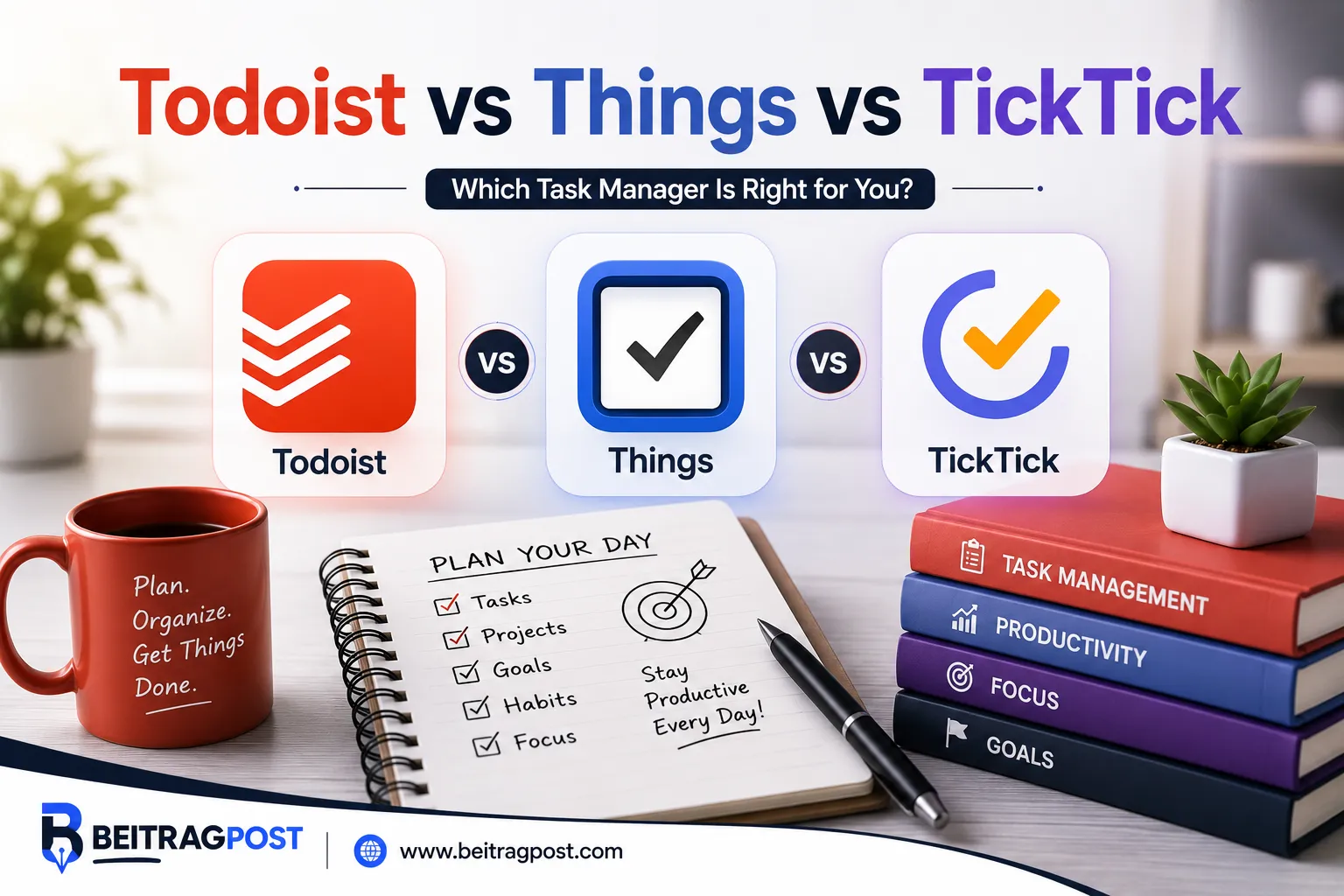
If you’re comparing Todoist vs Things vs TickTick, the right choice depends on how you organize tasks, which devices you use, and how much flexibility you want. Todoist is the strongest all-around option, Things is especially appealing to Apple users who want a polished personal task manager, and TickTick stands out for packing a broad set of productivity features into one app.
The three apps can all handle everyday tasks, projects, recurring work, and planning. However, they approach productivity differently. Todoist emphasizes flexibility and cross-platform task management. Things focuses on simplicity and a carefully designed Apple experience. TickTick combines task management with several additional productivity tools.
Here’s the short version before we get into the details.
Quick Verdict
| If You Want… | Best Choice | Why |
|---|---|---|
| Best Overall | Todoist | Excellent balance of simplicity, organization, and flexibility |
| Best for Apple Users | Things | Clean design and deep integration with Apple devices |
| Most Features | TickTick | Combines task management with several built-in productivity tools |
| Best for Teams | Todoist | Strong collaboration and shared project features |
| Best Simple Personal Planner | Things | Focused experience with little unnecessary clutter |
| Best Feature-to-Price Balance | TickTick | Broad productivity toolkit without needing multiple apps |
Our overall pick: Todoist.
However, that doesn’t mean Todoist is automatically the best choice for everyone. If you’re fully invested in Apple’s ecosystem and prefer a focused personal task manager, Things may suit you better. If you want more productivity features in the same app, TickTick deserves a close look.
Todoist vs Things vs TickTick Compared
| Feature | Todoist | Things | TickTick |
|---|---|---|---|
| Best For | Flexible task management | Apple users | Feature-rich productivity |
| Windows | Yes | No | Yes |
| macOS | Yes | Yes | Yes |
| iPhone/iPad | Yes | Yes | Yes |
| Android | Yes | No | Yes |
| Web App | Yes | No | Yes |
| Recurring Tasks | Yes | Yes | Yes |
| Project Organization | Strong | Strong | Strong |
| Collaboration | Strong | Limited | Good |
| Calendar Features | Yes | Yes | Yes |
| Reminders | Yes | Yes | Yes |
| Habit Tracking | Limited | No | Yes |
| Focus Tools | Some | Some | Yes |
| Free Plan | Yes | No | Yes |
Features and plan details can change, so check the developer’s current plan information before purchasing.
The Biggest Difference Between Todoist, Things, and TickTick
At first glance, these apps can look almost identical.
All three let you create tasks, organize projects, set deadlines, and manage recurring work. The difference becomes clearer when you consider the philosophy behind each product.
Todoist is the flexible choice. It works across major platforms and gives users plenty of ways to structure personal and professional tasks.
Things is the focused choice. It puts a strong emphasis on a clean interface, thoughtful organization, and the Apple ecosystem.
TickTick is the feature-heavy choice. It goes beyond basic task management by combining tasks with tools such as calendar planning, habits, and focus features.
That distinction matters more than the number of checkboxes an app can offer.
Todoist
Best Overall for Flexible Task Management
Todoist has become popular because it manages to balance simplicity with powerful organization.
You can use it for a simple daily to-do list, but you can also build detailed systems around projects, priorities, labels, filters, recurring tasks, and deadlines.
That flexibility makes Todoist suitable for both casual users and people who manage complicated workloads.
What Todoist Does Well
Todoist’s biggest advantage is its versatility.
A student can use it to track assignments. A freelancer can manage client projects. A business owner can organize recurring responsibilities. A busy professional can create a personal system for meetings, deadlines, and follow-ups.
The interface remains relatively clean even when your task list becomes large.
Task Organization
Todoist gives you several ways to organize information.
You can separate work into projects, assign priorities, add labels, create filters, and use due dates to control when tasks appear.
That makes it easier to move beyond a simple checklist.
For example, instead of creating one huge list called “Work,” you could create separate projects for clients, marketing, administration, and long-term goals.
Recurring Tasks
Recurring tasks are particularly useful for routines.
You can create tasks that repeat according to a schedule instead of manually recreating them.
That can be useful for:
- Weekly reports
- Monthly bills
- Regular meetings
- Content publishing
- Household chores
- Routine business tasks
The less manual maintenance your system requires, the more likely you are to keep using it.
Collaboration
Todoist is also a strong option for people who need to share work with others.
You can organize shared projects and assign responsibilities instead of keeping everything inside one personal list.
That gives Todoist an advantage over a more personal-focused app like Things.
Todoist’s Weaknesses
The flexibility that makes Todoist powerful can also make it feel more complicated.
New users may need time to understand projects, labels, filters, priorities, and other organizational features.
Some useful capabilities are also tied to paid plans, so users should compare the free and premium versions before committing to a particular workflow.
Best For
Todoist is a strong choice for:
- Freelancers
- Professionals
- Students
- Small teams
- People using multiple platforms
- Users managing personal and work tasks together
Who Should Choose Todoist?
Choose Todoist if you want a task manager that can grow with you.
It’s particularly useful when you need something that works across different devices and can handle both simple lists and more advanced organizational systems.
Editor Verdict: Todoist is the best overall choice because it offers the strongest combination of flexibility, usability, platform support, and organization.
Things
Best for Apple Users Who Want a Focused Task Manager
Things takes a different approach.
Instead of trying to become a productivity platform for everyone, it focuses heavily on delivering a polished personal task-management experience within Apple’s ecosystem.
That makes it particularly attractive to people who use Mac, iPhone, and iPad as their primary devices.
What Things Does Well
The first thing you’ll notice about Things is its interface.
It’s clean, structured, and designed to make task planning feel less overwhelming.
Rather than filling the screen with endless options, Things keeps the core experience focused on getting tasks organized and completed.
Organization
Things uses areas, projects, headings, tags, and deadlines to help users structure their responsibilities.
This works particularly well for people who like a visual hierarchy.
You can separate major parts of your life into areas and then organize individual responsibilities underneath them.
For example:
Area: Work
Project: Website Redesign
Headings:
- Research
- Content
- Design
- Launch
That structure gives larger projects a clear beginning, middle, and end.
Apple Integration
Things is built specifically for Apple’s platforms.
If you already use several Apple devices, the experience can feel extremely natural.
That focus is also one of its biggest limitations.
Unlike Todoist and TickTick, Things doesn’t target users who need a broad collection of operating systems.
Things’ Weaknesses
The biggest drawback is platform availability.
If you regularly switch between Windows, Android, and Apple devices, Things may not fit your workflow.
It’s also designed primarily around personal productivity rather than team collaboration.
That makes it less attractive for users who need extensive shared project management.
Best For
Things is particularly suitable for:
- Mac users
- iPhone users
- iPad users
- Personal task management
- Users who value minimal interfaces
- People who prefer focused productivity software
Who Should Choose Things?
Choose Things if you’re deeply invested in Apple’s ecosystem and want a refined personal task manager rather than a cross-platform productivity platform.
Editor Verdict: Things is arguably the cleanest choice for Apple-focused users who prioritize simplicity and a polished personal workflow over cross-platform flexibility.
TickTick
Best for Users Who Want More Productivity Features
TickTick takes the broadest approach of the three.
It starts with task management but adds several tools that can help users manage different parts of their productivity system without relying on multiple applications.
That makes it especially interesting for people who want more than a traditional to-do list.
What TickTick Does Well
TickTick combines task management with features designed around planning and focus.
Depending on your needs, you can use it for:
- Tasks
- Projects
- Calendar planning
- Recurring work
- Habit tracking
- Focus sessions
- Reminders
- Personal planning
Having these features together can reduce the need to move between separate apps.
Task Management
TickTick provides the organizational features you’d expect from a modern task manager.
You can create lists, organize projects, set priorities, add dates, and schedule recurring tasks.
The system is flexible enough for both simple daily lists and more structured planning.
Habit Tracking
Habit tracking is one area where TickTick separates itself from Todoist and Things.
If you want your task manager to also help you monitor recurring personal habits, having that feature built into the same environment can be convenient.
For example, you might track:
- Reading
- Exercise
- Meditation
- Learning
- Daily planning
Instead of maintaining a separate habit application, you can keep these routines alongside your tasks.
Focus Features
TickTick also includes productivity features designed to help users concentrate.
This can appeal to people who prefer an all-in-one approach.
Rather than simply telling you what needs to be done, the app can help structure when you work on those tasks.
TickTick’s Weaknesses
More features aren’t always better.
Users who want a minimalist task manager may find TickTick’s broader toolkit unnecessary.
If your only requirement is maintaining a straightforward list of tasks, some of its additional capabilities may create more complexity than value.
Best For
TickTick is a strong fit for:
- Productivity enthusiasts
- Students
- Freelancers
- Personal planners
- Habit-focused users
- People who want an all-in-one productivity app
Who Should Choose TickTick?
Choose TickTick if you want task management combined with additional productivity tools such as habits, calendar planning, and focus features.
Editor Verdict: TickTick is the strongest choice for users who want more functionality in one place and don’t mind a slightly broader productivity experience.
Todoist vs Things vs TickTick: Feature-by-Feature Comparison
The biggest differences become easier to understand when you compare the apps by the tasks you actually need them to perform.
A task manager can look excellent on paper but still feel frustrating if it doesn’t match your workflow. That’s why the following comparison focuses on practical use rather than simply counting features.
Task Management
All three apps handle the basics well.
You can create tasks, assign deadlines, organize projects, and manage recurring responsibilities. The difference is how much flexibility you get around those fundamentals.
Todoist offers a strong balance between simplicity and advanced organization. Its projects, priorities, labels, filters, and scheduling options make it suitable for users with increasingly complex workloads.
Things keeps the experience more focused. Its organization system is particularly appealing if you prefer a structured hierarchy without too many advanced controls.
TickTick sits somewhere between the two. It provides strong task organization while adding several productivity features around the core task system.
Winner: Todoist
For most users, Todoist offers the best combination of straightforward task creation and advanced organization.
Calendar and Scheduling
Calendar integration matters when your task list contains deadlines, appointments, and time-sensitive work.
Todoist works well for users who want tasks and schedules to interact. This makes it easier to see upcoming responsibilities alongside your broader workload.
Things also provides calendar-oriented planning, with a design that emphasizes a clear view of what needs to happen next.
TickTick takes scheduling further by integrating calendar and task-planning features into its broader productivity system.
If calendar planning is central to your workflow, TickTick deserves particular attention.
Winner: TickTick
TickTick’s broader scheduling approach gives it an advantage for users who want tasks and calendar planning closely connected.
Recurring Tasks
Recurring tasks are essential when you manage routines.
Think about monthly reports, weekly meetings, household chores, content publishing, or regular client work.
All three apps support recurring tasks, so there isn’t a dramatic difference here.
The more important question is how easily recurring responsibilities fit into your overall system.
Todoist is particularly flexible for recurring workflows.
Things keeps recurring tasks simple and easy to manage.
TickTick provides recurring task functionality alongside its wider collection of productivity tools.
Winner: Todoist
Todoist’s flexible approach makes it an excellent option for users who manage many repeating responsibilities.
Project Organization
A good task manager should make large projects feel manageable.
All three apps can divide larger responsibilities into smaller pieces, but their approaches differ.
Todoist gives you projects, sub-project structures, labels, filters, priorities, and other organizational tools.
Things uses areas, projects, and headings to create a visual hierarchy that feels particularly natural for personal planning.
TickTick offers lists, folders, tags, priorities, and other organizational options.
For users who enjoy building detailed systems, Todoist provides the most flexibility.
For users who want a cleaner hierarchy, Things may feel more comfortable.
Winner: Todoist
Todoist gets the edge because it gives advanced users more ways to customize their organization without forcing those features on beginners.
Collaboration
This is one of the clearest differences between the three apps.
Todoist is designed to support shared projects and assigned responsibilities, making it useful for teams and collaborative work.
TickTick also provides collaboration capabilities, although its broader identity is still centered around personal productivity.
Things is much more focused on individual task management.
If you need to assign work to other people or maintain shared projects, Things is unlikely to be your first choice.
Winner: Todoist
For team-based workflows, Todoist is the strongest option of the three.
Cross-Platform Support
Platform compatibility can completely change the buying decision.
Todoist works across major desktop and mobile platforms, including Windows, macOS, iOS, and Android.
TickTick also supports a broad range of platforms.
Things takes a different approach and focuses on Apple devices.
That makes Things excellent for someone who uses only Apple products but less practical for anyone who regularly switches between ecosystems.
For example, if you use a Windows computer at work and an iPhone personally, Todoist or TickTick will generally make more sense.
Winner: Todoist
Todoist provides the broadest balance of platform flexibility and consistent task management.
Habit Tracking and Extra Productivity Features
This is where TickTick separates itself most clearly.
Todoist and Things are primarily task managers.
TickTick attempts to combine task management with additional productivity functions.
Habit tracking is particularly useful if you want to monitor recurring personal behaviors alongside your regular tasks.
For example, someone trying to build a daily exercise habit can manage that routine without moving to a completely separate application.
Things intentionally avoids this broader approach.
That isn’t necessarily a weakness. Some users prefer having separate tools for separate purposes.
Winner: TickTick
If you want an all-in-one productivity system, TickTick offers the broadest collection of built-in features.
Todoist vs Things vs TickTick for Different Types of Users
There isn’t one universal winner.
Your ideal app depends on what you expect from a task manager.
Best for Busy Professionals: Todoist
Professionals often need a combination of personal planning, work projects, recurring responsibilities, and deadlines.
Todoist handles this combination particularly well.
Its cross-platform support also makes it easier to keep your workflow consistent when moving between work and personal devices.
Pick Todoist if: You want flexibility without sacrificing simplicity.
Best for Apple Users: Things
If your daily workflow revolves around Mac, iPhone, and iPad, Things becomes much more attractive.
Its focused design works particularly well for people who want to manage personal responsibilities without turning their task manager into a complicated project-management system.
Pick Things if: You want a polished Apple-only task manager and don’t need extensive collaboration.
Best for Productivity Enthusiasts: TickTick
TickTick is the strongest fit if your definition of productivity extends beyond checking off tasks.
Its combination of tasks, scheduling, habits, reminders, and focus features can replace several smaller productivity tools.
Pick TickTick if: You want more productivity features in one application.
Best for Teams: Todoist
Although all three can work for personal planning, Todoist is the better fit when multiple people need to work together.
Shared projects and task assignments make it more suitable for collaborative workflows.
Pick Todoist if: You’re managing responsibilities with coworkers, clients, or family members.
Best for Minimalism: Things
More features don’t automatically create more productivity.
If you’re distracted by endless settings and customization options, a simpler app can actually help you get more done.
Things takes this approach seriously.
Its focused design can be a major advantage for users who want their task manager to stay out of the way.
Pick Things if: You value simplicity over having every productivity feature in one place.
Todoist vs Things vs TickTick: Which Is Easiest to Use?
Ease of use is subjective, but each app has a different learning curve.
Things is arguably the easiest to understand because its interface stays focused on the essentials.
Todoist is also approachable, but its advanced organization features can take more time to learn.
TickTick may require the most exploration because there are more tools available beyond basic task management.
That doesn’t make TickTick difficult.
It simply means there’s more to discover.
Our Take
- Easiest to learn: Things
- Best balance of simplicity and power: Todoist
- Most features to explore: TickTick
For a completely new user, Things may feel the most immediately comfortable. However, Todoist provides more room to grow as your workflow becomes more sophisticated.
Which App Offers the Best Value?
Value isn’t simply about which app costs the least.
A cheaper task manager isn’t necessarily a better deal if you eventually need another application to handle calendars, habits, collaboration, or other parts of your workflow.
Todoist offers strong value for users who need a flexible task manager that can handle personal and professional work.
Things follows a different pricing philosophy and can be appealing to Apple users who prefer a focused experience without relying on a recurring subscription for the core application.
TickTick is attractive to users who want several productivity functions in one place.
The best value therefore depends on how much of the available feature set you’ll actually use.
Should You Switch From One to Another?
You don’t need to switch task managers simply because another app has more features.
Switch when your current system creates a real problem.
Consider moving to Todoist if:
- You need better cross-platform support.
- You want stronger collaboration.
- Your projects are becoming more complicated.
- You want more flexible task organization.
Or Consider moving to Things if:
- You use Apple devices exclusively.
- You want a cleaner personal workflow.
- You don’t need extensive team collaboration.
- Your current app feels unnecessarily complicated.
Consider moving to TickTick if:
- You want built-in habit tracking.
- You want more productivity tools.
- You prefer an all-in-one system.
- You currently rely on several separate productivity apps.
A migration only makes sense when the new system solves a problem your existing system cannot handle.
How to Choose Between Todoist, Things, and TickTick
If you’re still unsure, start with your devices and workflow.
Choose Todoist if you want:
- Cross-platform access
- Flexible organization
- Strong collaboration
- Personal and professional task management
- A system that can grow with your workload
Choose Things if you want:
- Apple-focused productivity
- A clean interface
- Personal task management
- Simple project organization
- Minimal distractions
Or Choose TickTick if you want:
- Task management
- Habit tracking
- Calendar planning
- Focus tools
- More productivity features in one place
The right decision becomes much easier once you stop asking which app is “best” and instead ask which app solves your specific problems.
Our Final Ranking
| Rank | App | Best For | Overall Verdict |
|---|---|---|---|
| 1 | Todoist | Most users | Best overall balance |
| 2 | TickTick | Feature-focused users | Best all-in-one productivity option |
| 3 | Things | Apple users | Best focused personal task manager |
This ranking doesn’t mean Things is inferior to TickTick or Todoist.
It simply reflects how broadly each application can serve different types of users.
For someone who uses Apple devices exclusively, Things could easily become the number-one choice.
And For someone who wants habits, scheduling, and productivity tools in one place, TickTick may be better than Todoist.
For everyone else, Todoist remains the safest overall recommendation.
Frequently Asked Questions
Is Todoist better than Things?
For most users, yes, particularly if you need cross-platform support or collaboration. Things can be the better choice for Apple users who prioritize a clean, focused personal task-management experience.
Is TickTick better than Todoist?
It depends on your workflow. TickTick offers more built-in productivity features, including habit tracking and focus-oriented tools. Todoist generally provides a cleaner balance between simplicity, organization, and flexibility.
Is Things better than Todoist for Mac users?
It can be. Things is designed specifically around Apple’s ecosystem and provides a polished experience across Apple devices. However, Todoist is more flexible if you also use Windows, Android, or other platforms.
Which is better for a team: Todoist or TickTick?
Todoist is generally the stronger choice for collaborative work because team-oriented project management is a more central part of its experience.
Which task manager is best for personal use?
All three can work well for personal productivity. Things is particularly appealing if you’re an Apple user who prefers simplicity, Todoist is ideal for flexible organization, and TickTick is useful if you want habits and other productivity tools alongside your tasks.
Which is better for productivity: Todoist, Things, or TickTick?
There isn’t one answer for everyone. Todoist is the best overall choice, Things is excellent for focused Apple-based productivity, and TickTick is strongest for users who want an all-in-one productivity system.
Final Verdict: Todoist vs Things vs TickTick
After comparing Todoist vs Things vs TickTick, Todoist is our overall winner because it offers the most balanced combination of flexibility, organization, platform support, and collaboration.
However, the winner changes depending on your priorities.
Choose Things if you’re fully invested in Apple’s ecosystem and want a clean, focused task manager for personal use.
Or Choose TickTick if you want task management combined with habits, scheduling, focus tools, and other productivity features.
Choose Todoist if you want one dependable system that can handle personal tasks, professional projects, recurring work, and collaboration across multiple platforms.
The best task manager isn’t the one with the longest feature list.
It’s the one you’ll actually open every day, trust with your responsibilities, and continue using when your workload becomes more complicated.
If you’re comparing this trio as part of a broader productivity setup, it’s also worth exploring our guide to Best Task Manager Apps, which looks beyond these three options and helps identify other tools that may fit specific workflows.
And if you want to build a larger productivity system rather than simply manage tasks, our guide to Best Productivity Apps can help you compare tools for note-taking, planning, focus, and other everyday workflows.
Ultimately, start with your actual needs rather than chasing the app with the most features. A simple system that you consistently use will almost always outperform a powerful system that feels too complicated to maintain.