
What Is Credit Engine? Meaning, How It Works, Benefits, and Real-World Uses
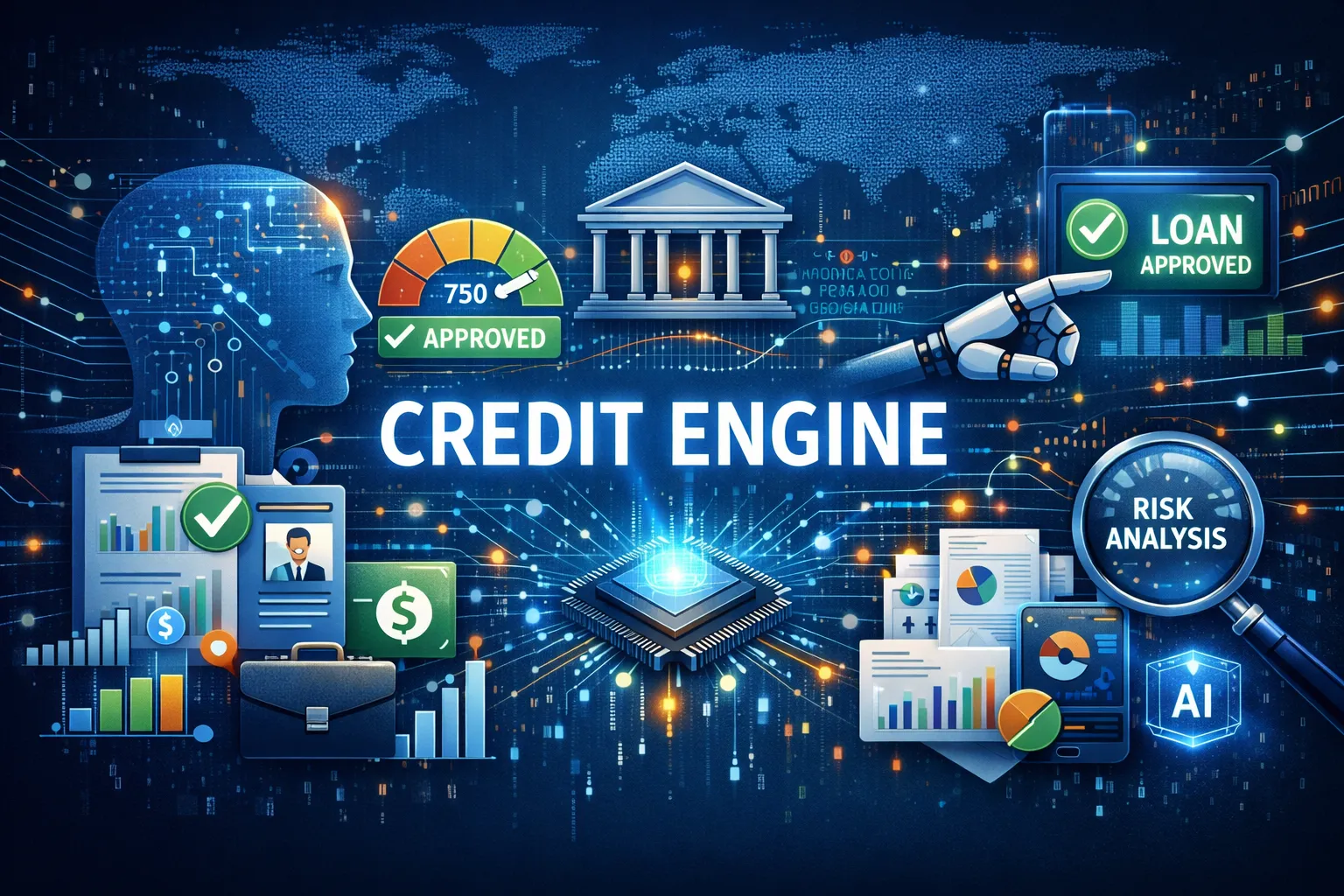
A credit engine is a digital system or technology platform that automates and manages credit decisions, including credit scoring, loan approvals, risk analysis, and borrower evaluation. It uses data, algorithms, and financial rules to help lenders, banks, and fintech companies quickly decide whether a person or business qualifies for credit. Instead of relying only on manual review, a credit engine speeds up lending decisions while improving accuracy and reducing risk.
Credit engines have become a major part of modern financial services, especially with the growth of online lending, digital banking, and fintech innovation. Many financial institutions now depend on these systems to deliver faster loan approvals and better borrower assessments.
What Is a Credit Engine?
A credit engine is an automated software system that evaluates a borrower’s creditworthiness using data analysis, scoring models, and decision-making algorithms. It helps lenders approve or reject credit applications quickly while managing financial risk.
Why Credit Engines Are Important in Modern Lending
Traditional lending processes often involved paperwork, manual checks, and long approval timelines. As digital finance expanded, lenders needed smarter tools to evaluate borrowers efficiently.
A credit engine solves several common lending challenges:
- Reduces loan approval time
- Improves accuracy in credit decisions
- Minimizes human error
- Enhances risk management
- Supports large-scale loan processing
Today, credit engines are widely used by:
- Banks
- Fintech companies
- Online lending platforms
- Credit card providers
- Microfinance institutions
These systems allow lenders to provide faster and more reliable services to customers.
How a Credit Engine Works
A credit engine works by collecting and analyzing financial data to determine whether a borrower is eligible for credit. It combines automation, artificial intelligence, and financial risk modeling to make decisions.
1. Data Collection
The process starts by gathering information about the borrower. This data may include:
- Credit history and credit score
- Income and employment details
- Existing loans and debts
- Transaction history
- Banking activity
- Alternative data (utility bills, digital payments, etc.)
Modern credit engines often use real-time financial data to improve decision accuracy.
2. Credit Risk Assessment
Once the system collects borrower data, it applies credit risk models to evaluate the likelihood of repayment. The credit engine uses predefined rules and machine learning algorithms to analyze:
- Payment behavior
- Debt-to-income ratio
- Credit utilization
- Financial stability
- Borrower reliability
This step helps lenders determine whether approving a loan is safe or risky.
3. Credit Scoring and Decision Making
After analyzing borrower data, the credit engine assigns a credit score or risk rating. Based on this score, the system can:
- Approve credit applications
- Reject loan requests
- Suggest loan limits
- Recommend interest rates
- Set repayment terms
Many fintech credit engines provide instant loan approvals within seconds.
4. Monitoring and Updating
A credit engine doesn’t stop after loan approval. It continuously monitors borrower activity to detect:
- Late payments
- Financial behavior changes
- Fraud risks
- Loan default probability
This ongoing monitoring helps lenders manage long-term credit risk.
Key Features of a Credit Engine
Credit engines include several advanced tools designed to improve lending efficiency and financial decision-making.
Automated Loan Processing
Credit engines streamline loan applications by reducing manual involvement. Borrowers can apply online, and lenders receive instant decisions.
Real-Time Credit Scoring
Modern systems provide real-time credit evaluation using updated financial data and behavioral analytics.
Risk Management Tools
Credit engines help lenders identify high-risk borrowers and reduce potential losses through advanced risk modeling.
Integration with Financial Systems
Most credit engines integrate with banking platforms, credit bureaus, and payment gateways for smooth operations.
Artificial Intelligence and Machine Learning
AI-powered credit engines improve accuracy by learning from historical lending data and borrower patterns.
Types of Credit Engines
Credit engines vary depending on their purpose and application in financial services.
Consumer Credit Engines
These systems evaluate individual borrowers applying for personal loans, credit cards, or mortgages. They focus on personal credit history and income analysis.
Business Credit Engines
Business credit engines assess companies seeking financing. They analyze:
- Company financial statements
- Business credit score
- Cash flow stability
- Industry risk
These systems help lenders evaluate business loan applications more effectively.
Alternative Credit Engines
Alternative credit engines use non-traditional data sources such as:
- Mobile payment history
- E-commerce transactions
- Utility bill payments
- Social financial behavior
These engines are especially useful for borrowers with limited credit history.
Benefits of Using a Credit Engine
Credit engines provide significant advantages for both lenders and borrowers.
Faster Loan Approvals
Credit engines reduce loan processing time from days or weeks to minutes or seconds. Borrowers receive quicker financial access.
Improved Accuracy in Credit Decisions
Automated data analysis reduces human bias and improves credit risk evaluation.
Better Customer Experience
Online credit engines simplify the application process, making lending services more convenient and user-friendly.
Enhanced Fraud Detection
Credit engines use predictive analytics to detect suspicious activity and prevent financial fraud.
Cost Reduction for Lenders
Automation reduces operational costs by minimizing manual processing and administrative work.
Real-World Examples of Credit Engine Usage
Credit engines are widely used across financial industries.
Digital Lending Platforms
Online lenders rely heavily on credit engines to approve personal loans instantly without paperwork.
Credit Card Approval Systems
Credit card companies use automated credit engines to analyze applicant data and determine eligibility.
Buy Now Pay Later (BNPL) Services
BNPL providers use credit engines to evaluate short-term credit eligibility during online purchases.
Banking and Financial Institutions
Traditional banks use credit engines to support loan underwriting, mortgage approvals, and customer credit evaluations.
Credit Engine vs Credit Scoring: What’s the Difference?
Many people confuse credit engines with credit scoring, but they are not the same.
| Feature | Credit Engine | Credit Scoring |
|---|---|---|
| Purpose | Complete credit decision system | Numerical risk evaluation |
| Function | Collects data, analyzes risk, and makes decisions | Measures creditworthiness only |
| Technology | Uses AI, automation, and analytics | Uses scoring models |
| Output | Loan approval, rejection, or terms | Credit score number |
A credit score is only one part of a credit engine’s overall functionality.
How Fintech Is Transforming Credit Engine Technology
Financial technology companies are reshaping credit engines through innovation and digital transformation.
Artificial Intelligence Integration
AI helps credit engines analyze large datasets and predict borrower behavior more accurately.
Open Banking Data Usage
Open banking allows credit engines to access customer financial data securely, improving lending decisions.
Personalized Credit Offers
Advanced credit engines can customize loan offers based on individual financial profiles.
Mobile Lending Solutions
Many credit engines now operate through mobile apps, allowing borrowers to apply for credit anywhere.
Challenges and Risks of Credit Engines
While credit engines provide many benefits, they also have limitations.
Data Privacy Concerns
Credit engines rely heavily on financial data, raising concerns about data protection and privacy.
Algorithm Bias Risk
Poorly designed algorithms may create biased lending decisions if not properly monitored.
Dependence on Technology
System failures or technical errors can disrupt lending operations.
Regulatory Compliance
Credit engines must follow financial regulations and consumer protection laws in different regions.
Future Trends in Credit Engine Technology
The credit engine industry continues evolving with technological advancements and changing financial demands.
AI-Powered Predictive Lending
Future credit engines will focus on predicting borrower behavior and preventing loan defaults before they occur.
Blockchain-Based Credit Systems
Blockchain technology may improve transparency and security in credit data management.
Expansion of Alternative Credit Data
Credit engines will increasingly use digital behavior, subscription payments, and lifestyle financial data to evaluate borrowers.
Global Financial Inclusion
Credit engines are helping underserved populations access credit services, especially in developing markets.
How Businesses and Lenders Choose the Right Credit Engine
When selecting a credit engine, financial institutions consider several important factors:
- Scalability and performance
- Integration with banking systems
- Data security standards
- Regulatory compliance features
- Customization options
- AI and analytics capabilities
Choosing the right credit engine helps lenders improve efficiency and reduce financial risk.
Frequently Asked Questions About Credit Engines
Is a credit engine the same as a loan management system?
No. A credit engine focuses on credit decision-making, while a loan management system handles loan servicing and payment tracking.
Do credit engines use artificial intelligence?
Yes. Many modern credit engines use AI and machine learning to improve credit risk analysis and borrower evaluation.
Can credit engines approve loans instantly?
Yes. Many digital lending platforms use credit engines to provide instant loan decisions.
Are credit engines safe?
Credit engines are safe when they follow data security standards and regulatory compliance requirements. However, proper monitoring is essential to prevent bias and fraud risks.
Final Thoughts
A credit engine plays a crucial role in modern financial services by automating credit evaluation, improving risk management, and speeding up lending decisions. As digital banking and fintech solutions continue expanding, credit engines are becoming essential tools for lenders and borrowers alike.
These systems provide faster loan approvals, more accurate credit assessments, and improved customer experiences. With ongoing advancements in artificial intelligence, open banking, and alternative credit data, credit engine technology is expected to shape the future of global lending.
For individuals and businesses seeking faster and more accessible credit services, credit engines represent one of the most important innovations in today’s financial ecosystem.
indexsp: .inx: The S&P 500 Tracker That Impacts Your Portfolio