Types of DNA: Complete Guide to DNA Forms, Structures, and Functions
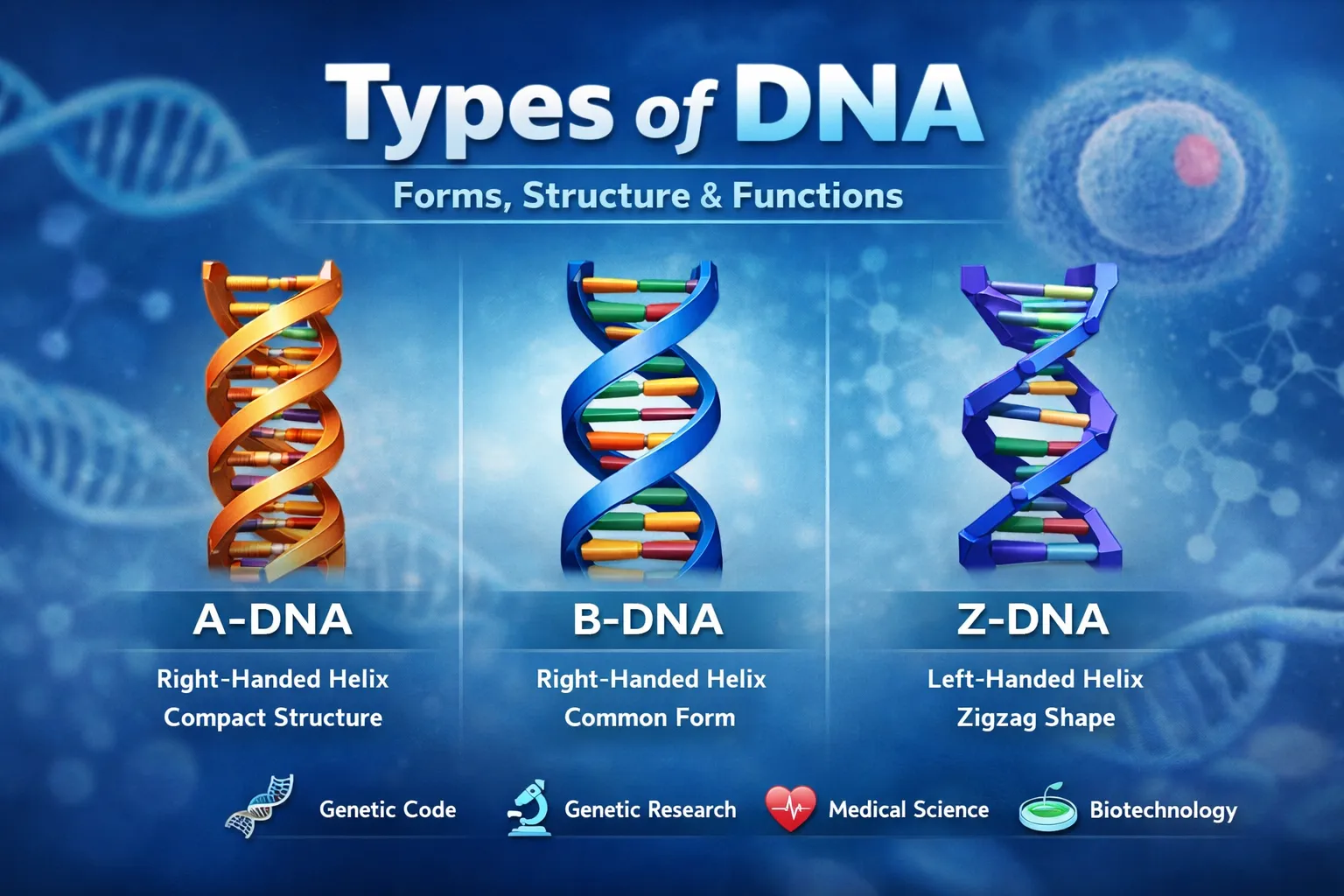
Types of DNA mainly refer to the different structural forms in which DNA exists inside living organisms. The three primary types of DNA are A-DNA, B-DNA, and Z-DNA, each having unique structural characteristics and biological roles. Among them, B-DNA is the most common form found in human cells, while A-DNA and Z-DNA appear under specific environmental or cellular conditions. Understanding these DNA types helps explain how genetic information is stored, replicated, and expressed in living organisms.
DNA is the fundamental molecule responsible for heredity, cell function, and biological development. Scientists classify DNA into different forms based on its molecular shape, hydration level, and biological activity. Learning about the different types of DNA structures gives valuable insight into genetics, medical research, and biotechnology.
What Is DNA?
DNA, or Deoxyribonucleic Acid, is the genetic blueprint that contains instructions for growth, development, reproduction, and cellular activity in almost all living organisms. DNA carries genes that determine physical traits and biological processes.
The DNA molecule consists of:
- Sugar and phosphate backbone
- Nitrogen bases (Adenine, Thymine, Cytosine, and Guanine)
- Double helix structure
- Genetic coding sequences
The structure of DNA is not fixed. It can change its shape depending on environmental conditions, hydration levels, and protein interactions. These variations lead to different types of DNA.
Main Types of DNA
Scientists have identified several DNA forms, but the three major and most widely studied types of DNA are A-DNA, B-DNA, and Z-DNA.
B-DNA – The Most Common DNA Form
What Is B-DNA?
B-DNA is the standard and most stable DNA structure found in living organisms. It represents the classic double helix structure first described by James Watson and Francis Crick.
Key Features of B-DNA
- Right-handed double helix structure
- Contains about 10 base pairs per turn
- Most stable and biologically active DNA type
- Found in normal cellular conditions
- Plays a major role in gene expression and replication
Biological Importance of B-DNA
B-DNA stores genetic information and supports essential cellular processes like transcription and replication. This form is considered the functional DNA type that controls protein production and genetic inheritance.
A-DNA – The Dehydrated DNA Form
What Is A-DNA?
A-DNA forms when DNA loses water or exists in low-hydration environments. It has a more compact and thicker structure compared to B-DNA.
Key Features of A-DNA
- Right-handed double helix
- Shorter and wider structure
- Contains about 11 base pairs per turn
- Forms under dehydrated conditions
- Commonly found in DNA-RNA hybrid molecules
Biological Importance of A-DNA
Although A-DNA is less common in living cells, it plays an important role in protein synthesis and RNA transcription. Scientists also observe A-DNA in laboratory studies and molecular research.
Z-DNA – The Left-Handed DNA Structure
What Is Z-DNA?
Z-DNA is a rare and unusual DNA structure that differs significantly from A-DNA and B-DNA. It forms a zigzag backbone and has a left-handed helix.
Key Features of Z-DNA
- Left-handed double helix
- Zigzag phosphate backbone
- Contains about 12 base pairs per turn
- Forms in high salt or stress conditions
- Often appears in regions with repeating GC sequences
Biological Importance of Z-DNA
Z-DNA is believed to play a role in gene regulation, mutation control, and cellular stress responses. Researchers are still studying its exact function in human genetics and disease development.
Comparison of Major DNA Types
| Feature | A-DNA | B-DNA | Z-DNA |
|---|---|---|---|
| Helix Direction | Right-handed | Right-handed | Left-handed |
| Base Pairs Per Turn | 11 | 10 | 12 |
| Structure | Short and wide | Normal and balanced | Thin and zigzag |
| Occurrence | Dehydrated conditions | Normal cell environment | Stress or high salt conditions |
| Biological Role | RNA interactions | Genetic storage and replication | Gene regulation |
Other Classifications of DNA
Besides structural forms, DNA can also be classified based on location, function, and origin. These categories help scientists better understand genetic diversity and cellular behavior.
Nuclear DNA
What Is Nuclear DNA?
Nuclear DNA is DNA located inside the cell nucleus. It contains most of the genetic information in organisms.
Key Characteristics
- Inherited from both parents
- Contains thousands of genes
- Responsible for physical traits and biological functions
- Organized into chromosomes
Nuclear DNA is the main source of genetic inheritance and plays a vital role in evolution and genetic diversity.
Mitochondrial DNA (mtDNA)
What Is Mitochondrial DNA?
Mitochondrial DNA exists inside mitochondria, the energy-producing structures in cells.
Key Characteristics
- Inherited only from the mother
- Smaller than nuclear DNA
- Helps produce cellular energy
- Useful in ancestry and evolutionary studies
Mitochondrial DNA helps scientists trace maternal lineage and study genetic disorders related to energy metabolism.
Recombinant DNA
What Is Recombinant DNA?
Recombinant DNA is artificially created DNA formed by combining genetic material from different organisms.
Applications of Recombinant DNA
- Genetic engineering
- Vaccine development
- Production of insulin and medicines
- Agricultural biotechnology
Recombinant DNA technology has revolutionized modern medicine and scientific research.
Complementary DNA (cDNA)
What Is Complementary DNA?
Complementary DNA is synthesized from messenger RNA (mRNA) using reverse transcription.
Importance of cDNA
- Used in gene cloning
- Helps study gene expression
- Supports medical and pharmaceutical research
Scientists commonly use cDNA to understand how genes produce proteins.
Genomic DNA
Genomic DNA refers to the complete set of DNA present in an organism, including all genes and non-coding sequences. It contains the entire genetic instruction needed for development and survival.
Why DNA Exists in Different Forms
DNA changes its structure to perform specific biological functions. Environmental conditions, protein interactions, and cellular activity can influence DNA shape.
Common factors affecting DNA structure include:
- Hydration levels
- Salt concentration
- Protein binding
- Cellular stress
- Genetic sequence composition
These structural variations help DNA adapt to different biological requirements.
Importance of Understanding Types of DNA
Studying different types of DNA helps researchers and medical professionals understand genetics and develop advanced treatments.
Benefits of DNA Research
- Helps identify genetic disorders
- Supports cancer research
- Improves forensic science
- Enables personalized medicine
- Advances biotechnology and agriculture
Knowledge of DNA types also plays a major role in evolutionary biology and disease prevention.
Role of DNA Types in Genetic Disorders and Diseases
Different DNA structures can influence gene activity and mutation risk. Abnormal DNA folding or mutations can lead to diseases such as:
- Cancer
- Genetic mutations
- Neurodegenerative disorders
- Inherited metabolic conditions
Researchers study DNA structure changes to design targeted therapies and diagnostic tools.
DNA Types and Modern Biotechnology
Modern science relies heavily on understanding DNA forms and structures. Biotechnology uses different DNA types to develop solutions in healthcare and agriculture.
Common Applications
- Gene therapy
- CRISPR gene editing
- DNA fingerprinting
- Drug development
- Crop improvement
These technologies depend on deep knowledge of DNA structure and function.
How Scientists Study DNA Types
Scientists use advanced techniques to study DNA structure and variations.
Common DNA Research Methods
- X-ray crystallography
- Gel electrophoresis
- DNA sequencing
- Polymerase Chain Reaction (PCR)
- Molecular imaging
These tools help researchers analyze DNA behavior at the molecular level.
Future Research on DNA Structures
Ongoing research aims to discover new DNA forms and understand how structural variations affect health and disease. Scientists are exploring:
- DNA nanotechnology
- Synthetic biology
- Advanced genetic therapies
- DNA-based data storage
These innovations may transform medicine and technology in the future.
Frequently Asked Questions About Types of DNA
What are the main types of DNA?
The main types of DNA are A-DNA, B-DNA, and Z-DNA. B-DNA is the most common structure in living cells.
Which DNA type is found in humans?
Humans mainly contain B-DNA, which carries genetic information and controls cellular functions.
What makes Z-DNA unique?
Z-DNA has a left-handed helix and zigzag structure, unlike the typical right-handed DNA forms.
Why is mitochondrial DNA important?
Mitochondrial DNA helps produce cellular energy and is inherited from the mother.
Final Thoughts on Types of DNA
Understanding the types of DNA helps explain how life stores and uses genetic information. A-DNA, B-DNA, and Z-DNA each serve unique biological roles, while specialized forms like mitochondrial DNA and recombinant DNA support scientific advancement and medical innovation.
DNA remains one of the most important discoveries in biology, shaping research in genetics, healthcare, and biotechnology. As scientific knowledge expands, studying DNA types will continue to unlock new possibilities for disease treatment, genetic engineering, and future technological breakthroughs.
Full Form DNA: Everything You Need to Know
Monohybrid Cross and Dihybrid Cross: Differences, Examples, Ratios, and Easy Explanation