Strongest Metal in the World: Strength, Properties, and Real-Life Uses Explained
When people search for the strongest metal in the world, they usually want a clear and direct answer. Scientists generally consider tungsten the strongest natural metal because it has extremely high tensile strength and the highest melting point among all metals. However, titanium offers the best strength-to-weight ratio, while steel alloys and advanced engineered metals often deliver the highest performance in real-world construction and industrial applications. The strongest metal depends on how strength gets measured, including tensile strength, hardness, durability, and resistance to extreme heat.
Understanding these differences helps engineers, manufacturers, students, and curious readers choose the right metal for specific uses. Below, you will find a detailed yet easy explanation of the strongest metals and why they matter in modern industries.
What Determines the Strongest Metal in the World?
The term strongest metal does not refer to just one property. Scientists and engineers measure metal strength in several ways to determine how materials perform under pressure, heat, or impact.
Tensile Strength
Tensile strength measures how much pulling force a metal can withstand before it breaks. Researchers commonly use this measurement when comparing metal durability.
Yield Strength
Yield strength shows how much stress a metal can handle before it bends permanently. Engineers rely on this measurement when designing buildings, bridges, and heavy machinery.
Hardness
Hardness measures resistance to scratches, dents, and surface damage. Hard metals usually perform better in industrial tools and protective coatings.
Impact Resistance
Impact resistance measures how well a metal absorbs sudden force without cracking or shattering.
Heat Resistance
Some metals maintain strength under extremely high temperatures. Aerospace and manufacturing industries rely heavily on this property.
Each type of strength plays an important role in determining the strongest metal for specific applications.
Tungsten: The Strongest Natural Metal in the World
Most material scientists recognize tungsten as the strongest metal in the world when comparing tensile strength and heat resistance. This rare metal performs exceptionally well in extreme conditions where other metals fail.
Why Tungsten Stands Out
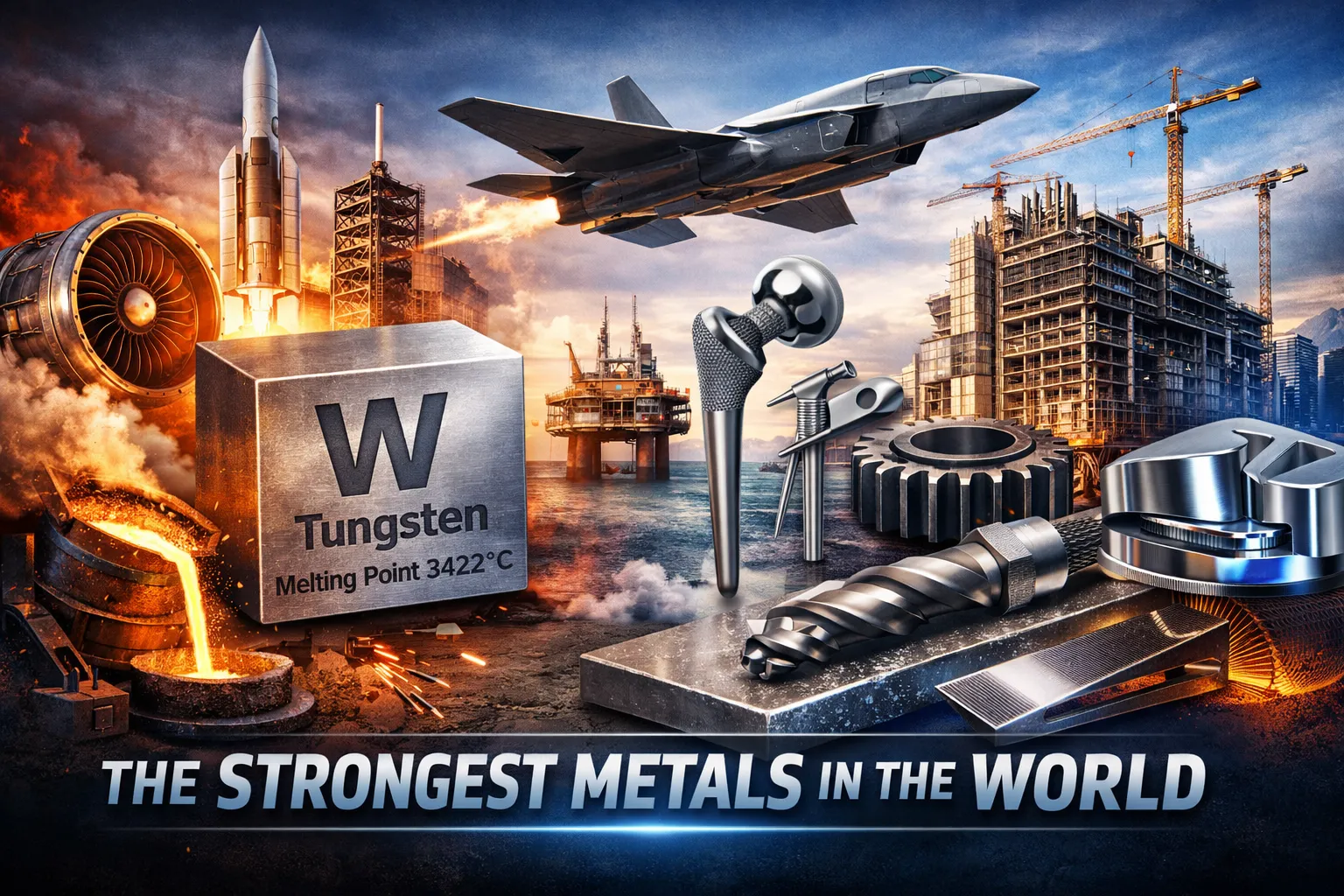
Tungsten offers unmatched durability and structural stability. It holds the highest melting point of any metal and maintains strength under intense pressure and heat.
Key Properties of Tungsten
- Extremely high tensile strength
- Highest melting point of any metal (3422°C)
- Excellent resistance to wear and corrosion
- Very high density and durability
- Strong structural stability under extreme temperatures
Because of these properties, tungsten plays a critical role in industries that require high-performance materials.
Common Uses of Tungsten
Industries depend on tungsten for applications that demand reliability and durability.
- Aerospace engine components
- Rocket and missile technology
- Industrial cutting and drilling tools
- Electrical contacts and heating elements
- Military defense equipment
- High-temperature manufacturing systems
Tungsten allows engineers to design machines and equipment that operate safely in extreme environments.
Titanium: The Strongest Lightweight Metal
While tungsten dominates overall strength, many experts consider titanium the strongest lightweight metal. Titanium combines impressive durability with low weight, which makes it valuable in industries where weight reduction improves performance.
Why Engineers Prefer Titanium
Titanium offers a high strength-to-weight ratio, meaning it provides excellent durability without adding unnecessary mass. It also resists corrosion and performs well in harsh environmental conditions.
Key Properties of Titanium
- High tensile strength
- Lightweight structure
- Strong corrosion resistance
- Excellent fatigue resistance
- Biocompatible for medical applications
These features make titanium one of the most versatile metals available today.
Industries That Use Titanium
Several modern industries depend on titanium for performance and safety.
- Aircraft and spacecraft manufacturing
- Medical implants and surgical tools
- Automotive racing and performance vehicles
- Marine engineering and shipbuilding
- Sports equipment and protective gear
Titanium allows manufacturers to build strong yet lightweight products that improve efficiency and durability.
Steel Alloys: The Strongest Metals for Construction and Engineering
Although pure metals show remarkable strength, engineers often rely on steel alloys for real-world applications. Manufacturers create steel by combining iron with carbon and other elements to improve performance.
Why Steel Alloys Offer Superior Performance
Steel alloys allow engineers to customize metal properties based on specific project needs. By adjusting the chemical composition, manufacturers can increase strength, flexibility, corrosion resistance, and heat tolerance.
Types of High-Strength Steel
Carbon Steel
Carbon steel provides excellent durability and cost-effectiveness. Construction companies widely use this steel for structural frameworks and heavy equipment.
Stainless Steel
Manufacturers add chromium to stainless steel to improve corrosion resistance and long-term durability. Many industries use stainless steel in medical equipment, kitchen tools, and industrial systems.
Maraging Steel
Maraging steel delivers ultra-high strength and toughness. Aerospace and military industries frequently rely on this advanced material.
Steel alloys remain essential because they combine strength, affordability, and adaptability across multiple industries.
Chromium: The Hardest Metal for Surface Protection
Chromium plays a major role when discussing the strongest metals, especially in terms of surface hardness. Although industries rarely use chromium alone, it strengthens many metal products through coatings and alloy production.
Chromium Strength Benefits
- Exceptional hardness
- High resistance to corrosion
- Strong surface durability
- Enhanced protection for industrial tools
Manufacturers commonly use chromium plating to protect machinery, automotive parts, and heavy-duty equipment from wear and environmental damage.
Strongest Metal Alloys and Advanced Engineered Materials
Modern technology allows scientists to create metal alloys that outperform natural metals. These advanced materials deliver exceptional strength, durability, and heat resistance.
Tungsten Carbide
Engineers create tungsten carbide by combining tungsten with carbon. This compound offers extreme hardness and wear resistance. Manufacturers frequently use tungsten carbide in mining equipment, cutting tools, and drilling machinery.
Inconel Superalloy
Inconel maintains strength and stability under extreme heat and pressure. Aerospace industries use this superalloy in jet engines and turbine systems.
Titanium Aluminide
Scientists combine titanium with aluminum to produce a lightweight material that resists high temperatures. Aircraft manufacturers use this alloy to improve fuel efficiency and structural performance.
These engineered metals continue to push the limits of strength and durability.
Comparison of the Strongest Metals in the World
| Metal | Strength Advantage | Primary Benefit | Common Applications |
|---|---|---|---|
| Tungsten | Highest tensile strength | Extreme heat resistance | Aerospace, military, industrial tools |
| Titanium | Best strength-to-weight ratio | Lightweight durability | Aviation, medical, marine |
| Steel Alloys | Customizable strength | Versatile engineering use | Construction, manufacturing |
| Chromium | Exceptional hardness | Surface protection | Coatings, stainless steel production |
Which Metal Works Best for Different Industries?
Different industries require different definitions of strength. Engineers select metals based on performance requirements rather than choosing a single strongest option.
Construction and Infrastructure
Steel alloys dominate construction because they provide structural stability, flexibility, and long-term durability.
Aerospace and Aviation
Manufacturers prefer titanium and Inconel because they combine heat resistance with lightweight performance.
Industrial Manufacturing
Factories rely on tungsten carbide for heavy-duty drilling, machining, and precision cutting tools.
Medical and Surgical Applications
Doctors and medical engineers choose titanium because it safely integrates with human bone and resists corrosion.
Each industry selects metals based on specific performance demands.
Why Industries Rarely Use Pure Metals Alone
Most modern applications depend on metal alloys rather than pure metals. Engineers design alloys to enhance performance and durability.
Benefits of Using Metal Alloys
- Improved structural strength
- Increased corrosion resistance
- Better flexibility and fatigue resistance
- Enhanced heat tolerance
- Customized performance for specialized industries
Alloys allow manufacturers to create metals that meet precise engineering standards.
Future Developments in Strong Metal Materials
Scientists continue researching new materials that could surpass traditional metals in strength and durability.
Graphene-Reinforced Metals
Researchers combine graphene with metal alloys to significantly increase structural strength while reducing weight.
High-Entropy Alloys
These advanced alloys mix multiple metals to create materials that resist heat, corrosion, and mechanical stress.
Nanostructured Metals
Engineers use nanoscale technology to improve strength without increasing density. These materials may revolutionize aerospace and defense industries in the future.
Innovation continues to redefine what experts consider the strongest metal in the world.
Frequently Asked Questions About the Strongest Metal in the World
Is Tungsten Stronger Than Titanium?
Tungsten provides higher tensile strength and heat resistance, but titanium delivers better lightweight strength and corrosion resistance.
Which Metal Is the Hardest?
Chromium ranks among the hardest metals, especially for surface protection and industrial coatings.
Are Metal Alloys Stronger Than Pure Metals?
Engineers often create alloys that outperform pure metals by improving durability, flexibility, and heat resistance.
Which Metal Has the Highest Melting Point?
Tungsten holds the highest melting point among all metals, making it ideal for high-temperature applications.
Final Thoughts on the Strongest Metal in the World
Tungsten earns recognition as the strongest natural metal in the world because of its exceptional tensile strength and heat resistance. Titanium provides unmatched strength while remaining lightweight, which makes it essential in aerospace and medical industries. Steel alloys continue to dominate construction and engineering because they offer customizable durability and cost-effective performance.
Modern industries rely on a combination of pure metals and advanced alloys to meet complex engineering challenges. As material science continues to evolve, researchers will likely develop even stronger and more efficient metals that reshape manufacturing, aerospace, and industrial technology.
Understanding the strongest metals helps engineers design safer structures, create high-performance machinery, and develop innovative technologies that support modern infrastructure and scientific progress.
UV VIS: Complete Guide to UV-Vis Spectroscopy, Uses, and Working Principle