Multipotent vs Pluripotent: Key Differences, Examples, and Why They Matter
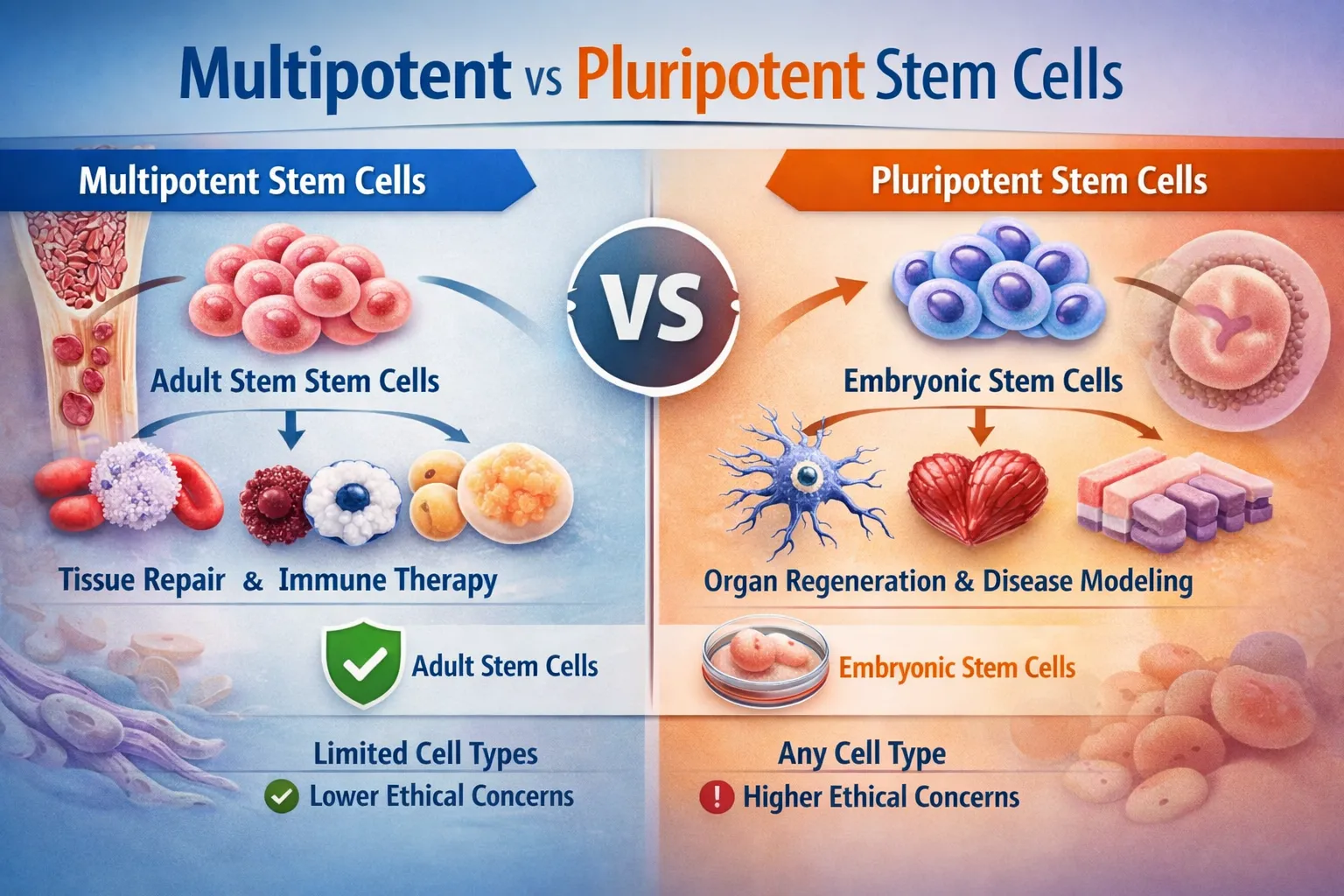
Multipotent vs pluripotent refers to two types of stem cells that differ in their ability to develop into other cell types. Pluripotent stem cells can turn into almost any cell in the human body, while multipotent stem cells are limited to forming related groups of cells within a specific tissue or organ. Understanding this difference helps explain how the body repairs itself and why stem cell research is so important in modern medicine.
Stem cells are widely studied in regenerative medicine, disease treatment, and medical research because of their ability to transform into specialized cells. If you’re trying to understand stem cell potency levels, this comparison clearly breaks down how these two stem cell types work, where they come from, and how they are used in healthcare and scientific research.
What Are Stem Cells?
Stem cells are unique cells in the body that have the ability to:
- Self-renew (make copies of themselves)
- Differentiate into specialized cell types
- Support tissue growth and repair
Stem cells are categorized based on their differentiation potential, which means how many different types of cells they can become. The main potency levels include:
- Totipotent stem cells
- Pluripotent stem cells
- Multipotent stem cells
- Oligopotent stem cells
- Unipotent stem cells
Among these, pluripotent and multipotent stem cells are commonly compared because they play major roles in medical science and regenerative therapy.
Multipotent vs Pluripotent: Quick Comparison (Featured Snippet Style)
| Feature | Pluripotent Stem Cells | Multipotent Stem Cells |
|---|---|---|
| Differentiation Ability | Can develop into nearly all cell types | Can develop into limited related cell types |
| Source | Embryonic stem cells and induced pluripotent stem cells | Adult stem cells such as bone marrow stem cells |
| Flexibility | Very high | Moderate |
| Medical Applications | Regenerative medicine, organ repair, disease modeling | Tissue repair, immune system regeneration |
| Ethical Concerns | Higher (especially embryonic sources) | Lower |
What Are Pluripotent Stem Cells?
Pluripotent stem cells are cells that can develop into almost any specialized cell in the body. They originate during early embryonic development and have remarkable regenerative capabilities.
Key Characteristics of Pluripotent Stem Cells
- Can differentiate into cells from all three germ layers:
- Ectoderm (skin and nervous system)
- Mesoderm (muscle, blood, bone)
- Endoderm (lungs, liver, digestive organs)
- Can divide indefinitely in laboratory conditions
- Used widely in research and regenerative therapy
Types of Pluripotent Stem Cells
1. Embryonic Stem Cells (ESCs)
These stem cells come from early-stage embryos and have the highest differentiation potential.
2. Induced Pluripotent Stem Cells (iPSCs)
These are adult cells that scientists reprogram to behave like embryonic stem cells. iPSCs are widely used because they reduce ethical concerns and support personalized medicine.
Examples of Pluripotent Stem Cell Uses
- Studying genetic diseases
- Drug development testing
- Tissue engineering
- Potential organ regeneration
- Neurological disorder research
What Are Multipotent Stem Cells?
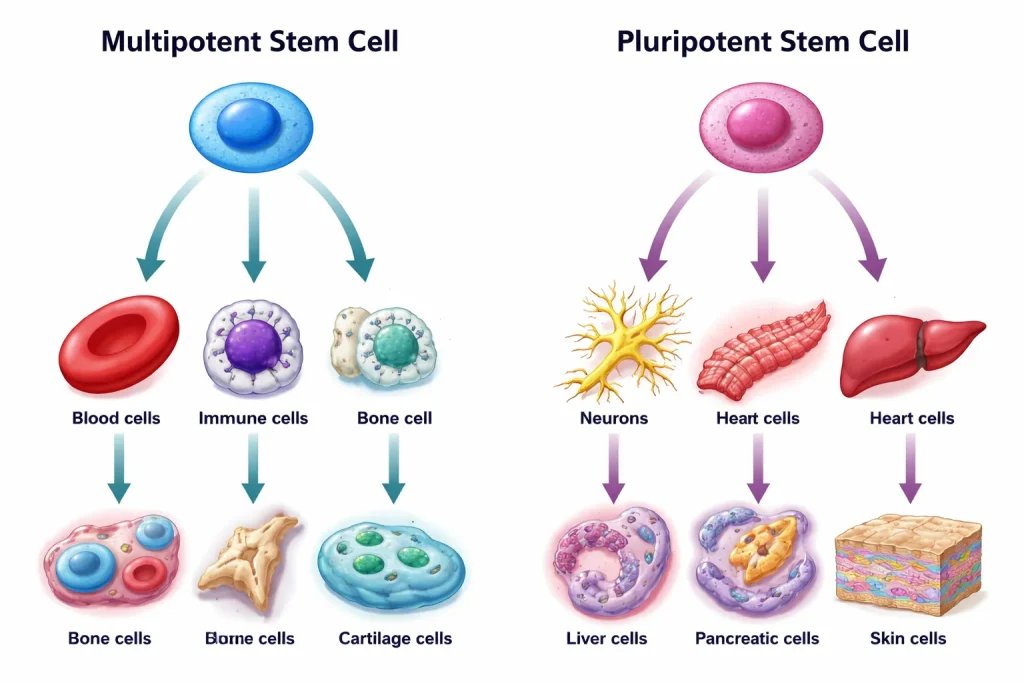
Multipotent stem cells are adult stem cells that can only differentiate into related cell types within a specific biological family. Although they are less versatile than pluripotent stem cells, they are crucial for maintaining and repairing body tissues.
Key Characteristics of Multipotent Stem Cells
- Limited differentiation range
- Found in adult tissues
- Support natural body repair processes
- Lower risk of uncontrolled cell growth
Common Examples of Multipotent Stem Cells
Hematopoietic Stem Cells (HSCs)
These stem cells are found in bone marrow and produce blood cells such as:
- Red blood cells
- White blood cells
- Platelets
Mesenchymal Stem Cells (MSCs)
These cells can develop into:
- Bone cells
- Cartilage cells
- Fat cells
- Muscle cells
Medical Uses of Multipotent Stem Cells
- Bone marrow transplantation
- Treatment of blood disorders
- Immune system therapies
- Tissue regeneration
- Orthopedic repair treatments
Major Differences Between Multipotent vs Pluripotent Stem Cells
Understanding the core differences between multipotent vs pluripotent stem cells helps researchers select the right cell type for medical treatment and research.
1. Differentiation Potential
Pluripotent stem cells can form almost any cell type in the body. Multipotent stem cells are limited to producing cells from a specific tissue lineage.
2. Source of Cells
- Pluripotent stem cells mainly originate from embryos or reprogrammed adult cells.
- Multipotent stem cells are usually found in adult tissues like bone marrow, fat tissue, and blood.
3. Medical Flexibility
Pluripotent stem cells offer broader possibilities for regenerative medicine, while multipotent stem cells are often used for targeted tissue repair.
4. Ethical Considerations
Embryonic pluripotent stem cells raise ethical concerns because they involve embryo use. Multipotent stem cells typically avoid this issue since they come from adult tissue sources.
5. Risk Factors
Pluripotent stem cells have a higher risk of tumor formation due to rapid cell division. Multipotent stem cells usually have a safer clinical profile.
Why Stem Cell Potency Matters in Medicine
Stem cell potency determines how useful a stem cell type is for therapy and research. The difference between multipotent vs pluripotent stem cells directly impacts treatment options.
Role in Regenerative Medicine
- Pluripotent stem cells can potentially replace damaged organs.
- Multipotent stem cells assist in natural healing and tissue maintenance.
Disease Treatment Potential
Stem cells are studied for treating conditions such as:
- Parkinson’s disease
- Diabetes
- Spinal cord injuries
- Blood disorders
- Heart disease
How Scientists Use Pluripotent Stem Cells in Research
Pluripotent stem cells are extremely valuable in laboratory research because they can replicate disease models. Scientists use them to:
- Study early human development
- Understand genetic mutations
- Test new drugs safely
- Develop personalized treatment plans
Induced pluripotent stem cells have revolutionized modern medicine by allowing scientists to create patient-specific cells.
How Multipotent Stem Cells Support Natural Healing
Multipotent stem cells are essential for daily body maintenance. For example:
- Bone marrow stem cells constantly produce blood cells
- Skin stem cells help repair wounds
- Muscle stem cells help repair damaged tissues
These stem cells are already used in established medical treatments like bone marrow transplants.
Advantages and Limitations of Pluripotent Stem Cells
Advantages
- Highest flexibility in cell development
- Major potential for organ regeneration
- Useful in advanced disease modeling
Limitations
- Ethical concerns with embryonic sources
- Higher risk of tumor formation
- Complex laboratory handling
Advantages and Limitations of Multipotent Stem Cells
Advantages
- Lower ethical issues
- Safer for clinical use
- Naturally present in adult tissues
- Widely used in transplantation medicine
Limitations
- Limited differentiation ability
- Restricted regenerative potential
- Smaller research scope compared to pluripotent cells
Advantages and Limitations of Multipotent Stem Cells
Advantages
- Lower ethical issues
- Safer for clinical use
- Naturally present in adult tissues
- Widely used in transplantation medicine
Limitations
- Limited differentiation ability
- Restricted regenerative potential
- Smaller research scope compared to pluripotent cells
Multipotent vs Pluripotent Stem Cells in Regenerative Therapy
Regenerative medicine relies heavily on stem cell differentiation and tissue repair potential.
- Pluripotent stem cells provide wide regenerative possibilities.
- Multipotent stem cells offer stable and controlled tissue repair.
Both stem cell types are crucial for advancing biomedical research and therapeutic solutions.
Ethical Considerations in Stem Cell Research
Stem cell research often raises ethical debates, especially regarding embryonic stem cells. Many researchers now focus on induced pluripotent stem cells because they reduce ethical concerns while maintaining high potency.
Multipotent stem cells generally face fewer ethical challenges because they come from adult tissues without harming embryos.
Future Trends in Stem Cell Technology
Stem cell research is rapidly evolving, and both pluripotent and multipotent stem cells play important roles in future medical breakthroughs. Scientists are working on:
- Gene therapy combined with stem cell treatment
- Artificial organ development
- Personalized regenerative medicine
- Advanced drug testing platforms
- Tissue engineering innovations
Frequently Asked Questions About Multipotent vs Pluripotent Stem Cells
Which Stem Cell Type Is More Powerful?
Pluripotent stem cells are considered more powerful because they can differentiate into almost all body cell types.
Are Multipotent Stem Cells Safer?
Multipotent stem cells are generally safer for clinical use because they have a lower risk of uncontrolled growth.
Can Multipotent Stem Cells Become Pluripotent?
Naturally, multipotent stem cells cannot become pluripotent. However, scientists can reprogram adult cells into induced pluripotent stem cells.
Why Are Pluripotent Stem Cells Important?
They help researchers study human development, disease progression, and regenerative treatment possibilities.
Final Thoughts on Multipotent vs Pluripotent Stem Cells
The comparison between multipotent vs pluripotent stem cells highlights how stem cell potency determines medical potential and research possibilities. Pluripotent stem cells offer incredible flexibility and future regenerative therapy possibilities, while multipotent stem cells play a vital role in everyday healing and current medical treatments.
Both stem cell types contribute significantly to biomedical science, and ongoing research continues to unlock their full therapeutic potential. As technology advances, understanding stem cell differentiation and potency will help shape the future of healthcare, disease treatment, and regenerative medicine.
Bullet Ants: The World’s Most Painful Insect Sting Explained