
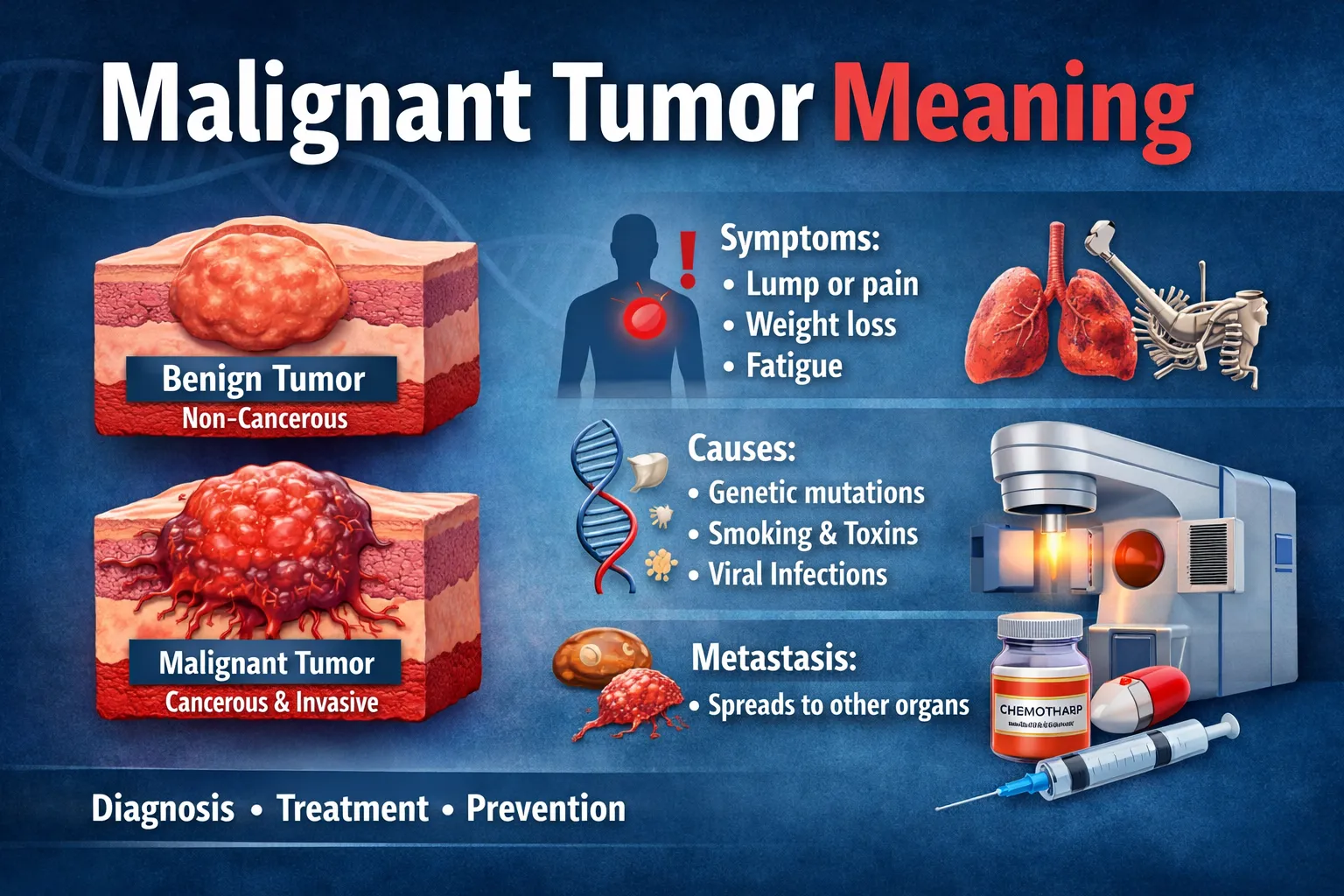
Malignant Tumor Meaning: Understanding Cancerous Growths
When you hear the term malignant tumor, it can sound intimidating and confusing. Simply put, a malignant tumor is an abnormal growth of cells that can invade nearby tissues and spread to other parts of the body. Unlike benign tumors, which are generally harmless, malignant tumors are cancerous and require prompt medical attention.
Understanding the malignant tumor meaning is crucial because it affects how doctors diagnose, treat, and manage cancer. In this article, we’ll break down the definition, characteristics, types, causes, symptoms, and treatment options for malignant tumors in a way that’s clear, friendly, and practical.
What is a Malignant Tumor?
A malignant tumor is a mass of cancer cells that grow uncontrollably. These cells do not function like normal body cells and can invade surrounding tissues. Over time, they may spread to distant organs through the bloodstream or lymphatic system—a process called metastasis.
In simpler terms, malignant tumors are aggressive, potentially life-threatening growths that need early diagnosis and proper treatment to improve survival outcomes.
Key points about malignant tumors:
- They grow rapidly and uncontrollably.
- They invade nearby tissues.
- They can metastasize to other body parts.
- They are cancerous, unlike benign tumors which are non-cancerous.
Difference Between Malignant and Benign Tumors
It’s important to distinguish malignant tumors from benign tumors, as the approach to treatment and prognosis is very different.
| Feature | Malignant Tumor | Benign Tumor |
|---|---|---|
| Growth | Rapid and uncontrolled | Slow and limited |
| Spread | Can invade nearby tissues | Usually stays in one place |
| Metastasis | Can spread to distant organs | Does not spread |
| Risk | Life-threatening | Generally not dangerous |
| Treatment | Often requires surgery, chemotherapy, radiation | May require minor surgery or monitoring |
Understanding this distinction is key when interpreting test results or medical reports.
Types of Malignant Tumors
Malignant tumors can develop in almost any part of the body. The classification is based on the type of cell they originate from. Here are the main types:
1. Carcinomas
Carcinomas originate from epithelial cells, which line the surfaces of organs and tissues. They are the most common type of cancer and include:
- Adenocarcinoma – found in glands (e.g., breast, colon)
- Squamous cell carcinoma – found in skin, lungs, esophagus
2. Sarcomas
Sarcomas develop from connective tissues like bones, muscles, fat, or cartilage. They are less common but can be aggressive. Examples include:
- Osteosarcoma (bone)
- Liposarcoma (fat tissue)
3. Leukemias
Leukemia is a malignant tumor affecting blood-forming tissues such as bone marrow. Instead of forming solid masses, it produces abnormal white blood cells that crowd out healthy cells.
4. Lymphomas
Lymphomas are cancers of the lymphatic system, which is part of the immune system. They include:
- Hodgkin lymphoma
- Non-Hodgkin lymphoma
5. Melanomas
Melanomas are cancers of melanocytes, the cells responsible for skin pigmentation. They are aggressive and can spread quickly if not detected early.
Causes and Risk Factors of Malignant Tumors
Malignant tumors develop due to genetic mutations that disrupt normal cell growth and death. While the exact cause varies, several factors can increase risk:
- Genetic predisposition – inherited mutations like BRCA1/BRCA2 increase the risk of breast and ovarian cancers.
- Environmental factors – exposure to chemicals, radiation, or asbestos.
- Lifestyle factors – smoking, excessive alcohol, poor diet, and lack of exercise.
- Infections – certain viruses like HPV, hepatitis B and C, and Epstein-Barr can trigger cancer.
- Age – cancer risk generally increases with age due to accumulated mutations.
Understanding risk factors helps in early detection and preventive strategies.
Symptoms of Malignant Tumors
Symptoms depend on the tumor type and location, but common signs include:
- Unexplained lumps or masses
- Persistent pain or discomfort in a specific area
- Unexplained weight loss
- Fatigue or weakness
- Changes in skin, like new moles or sores that don’t heal
- Bleeding from unusual places
Tip: Not all lumps are malignant. Some benign tumors can feel similar, so medical evaluation is essential.
Diagnosis of Malignant Tumors
Early and accurate diagnosis is critical for successful treatment. Doctors may use:
- Physical Examination – checking for lumps or abnormal signs.
- Imaging Tests – MRI, CT scans, X-rays, or ultrasounds to locate tumors.
- Biopsy – removing tissue samples to examine under a microscope.
- Blood Tests – detecting tumor markers or abnormal blood cell counts.
- Genetic Testing – identifying mutations that can guide targeted therapy.
Pro tip: Biopsy is the gold standard for confirming a malignant tumor.
Treatment Options for Malignant Tumors
Treatment depends on the type, size, location, and stage of the tumor. The main approaches include:
1. Surgery
Surgical removal of the tumor is often the first line of treatment if the tumor is localized. Complete excision can sometimes be curative.
2. Chemotherapy
Chemotherapy uses drugs to kill cancer cells or stop their growth. It’s effective for tumors that have spread or are difficult to remove surgically.
3. Radiation Therapy
Radiation targets cancer cells with high-energy rays to destroy them while minimizing damage to surrounding tissues.
4. Targeted Therapy
Targeted therapy focuses on specific genes or proteins in cancer cells, blocking growth signals and limiting side effects compared to traditional chemotherapy.
5. Immunotherapy
Immunotherapy stimulates the body’s immune system to attack cancer cells. It’s particularly promising for melanomas and certain lung cancers.
6. Combination Therapy
Often, doctors use a combination of surgery, chemotherapy, radiation, and targeted therapies for the best results.
Prognosis and Survival
The outlook for malignant tumors depends on:
- Type of cancer
- Stage at diagnosis
- Overall health of the patient
- Response to treatment
Early detection significantly improves survival rates. For example:
- Localized breast cancer has a 99% five-year survival rate.
- Late-stage pancreatic cancer has a much lower survival rate, highlighting the importance of early screening.
Prevention and Lifestyle Tips
While not all cancers can be prevented, adopting healthy habits can reduce the risk of malignant tumors:
- Maintain a balanced diet rich in fruits and vegetables.
- Avoid tobacco and limit alcohol consumption.
- Stay physically active.
- Protect skin from excessive UV exposure.
- Get regular screenings for common cancers like breast, colon, and cervical.
- Manage stress and prioritize overall wellness.
Tip: Vaccinations, like HPV and hepatitis B, can prevent virus-related cancers.
When to See a Doctor
Consult a doctor immediately if you notice:
- Persistent lumps that do not go away
- Unexplained bleeding or discharge
- Sudden weight loss or fatigue
- Skin changes or non-healing sores
- Chronic pain without cause
Early consultation can lead to early detection, which often saves lives.
Key Takeaways
- A malignant tumor is a cancerous growth that can invade tissues and spread to other parts of the body.
- They differ from benign tumors, which do not spread or pose serious health risks.
- Symptoms vary depending on location and type, but lumps, pain, fatigue, and weight loss are common indicators.
- Diagnosis typically involves imaging, biopsy, and lab tests.
- Treatment options include surgery, chemotherapy, radiation, targeted therapy, and immunotherapy.
- Early detection improves prognosis and survival rates.
- Preventive lifestyle habits and screenings can lower the risk of developing malignant tumors.
Understanding the malignant tumor meaning helps patients make informed decisions and encourages proactive health monitoring. Knowledge empowers you to spot warning signs early and seek appropriate medical care.
Gelatinisation: The Science and Secrets Behind Cooking Starches