Light Microscope: Everything You Need to Know
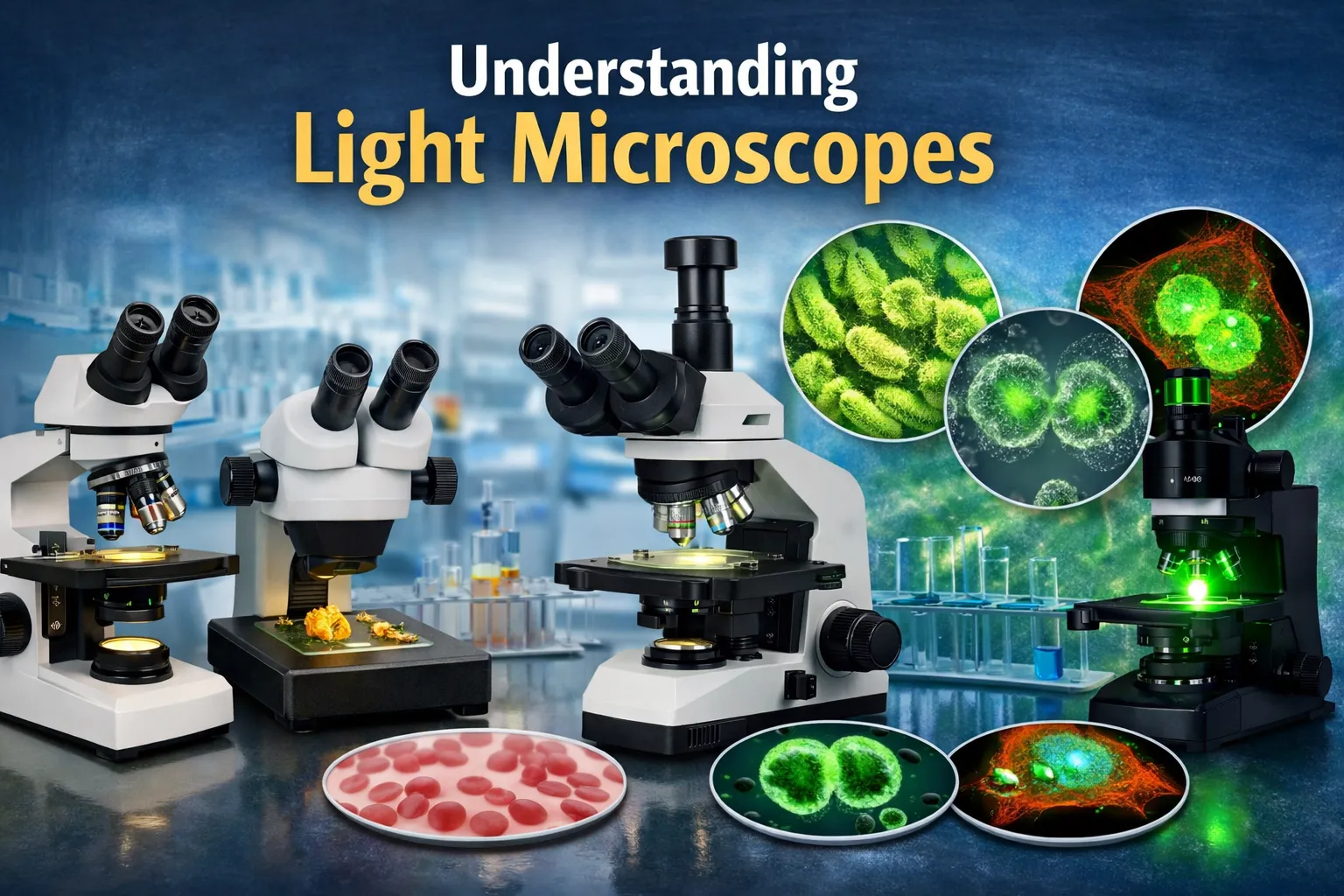
A light microscope is an optical instrument that magnifies small objects using visible light and lenses, allowing observation of cells, tissues, and microorganisms. Common types include compound, stereo, phase contrast, and fluorescence microscopes. They are widely used in biology, medical labs, environmental science, and education due to their simplicity, affordability, and ability to view live or preserved specimens.
What Is a Light Microscope?
A light microscope, also called an optical microscope, is a device that allows users to magnify tiny objects that cannot be seen with the naked eye. Using visible light and a combination of lenses, it enlarges specimens so that details such as cell structures, bacteria, and microorganisms become visible.
Unlike electron microscopes, light microscopes are simpler, portable, and cost-effective, making them ideal for classrooms, laboratories, and hobbyists.
Key components include:
- Eyepiece (Ocular lens): Usually 10x magnification.
- Objective lenses: Multiple lenses (4x, 10x, 40x, 100x).
- Stage: Platform for the specimen slide.
- Illuminator: Light source to illuminate the sample.
- Diaphragm: Controls the light intensity.
- Focus knobs: Coarse and fine adjustments for clarity.
How Does a Light Microscope Work?
The light microscope magnifies objects by bending visible light through lenses. Here’s the basic process:
- Prepare the specimen – Place a thin slice or sample drop on a slide.
- Illuminate – Adjust the light source and diaphragm for brightness.
- Magnify – Start with low-power objective, focus using coarse/fine knobs, then switch to higher magnification if needed.
- Observe – Adjust light and focus to clearly see structures.
The principle behind it is light refraction, which enlarges the image of the specimen. Proper lighting and focusing ensure detailed observation.
Types of Light Microscopes
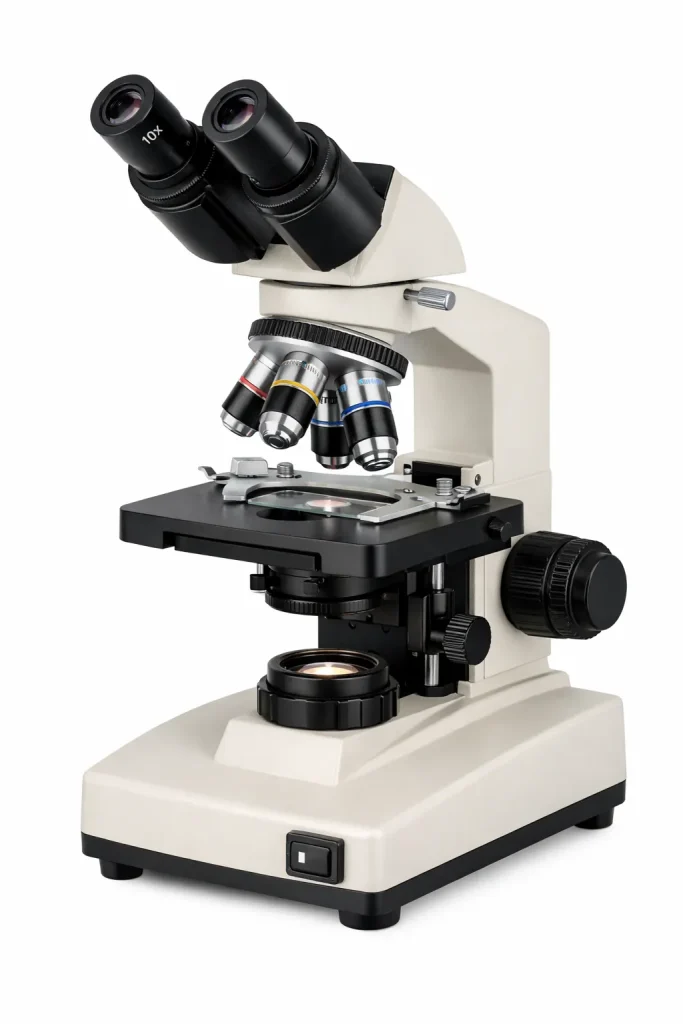
1. Compound Light Microscope
- Uses two sets of lenses (objective + ocular)
- Magnification: 40x–2000x
- Ideal for thin tissue slices, cells, and microorganisms
Pros: High magnification, detailed cellular observation
Cons: Limited depth, 2D imaging only
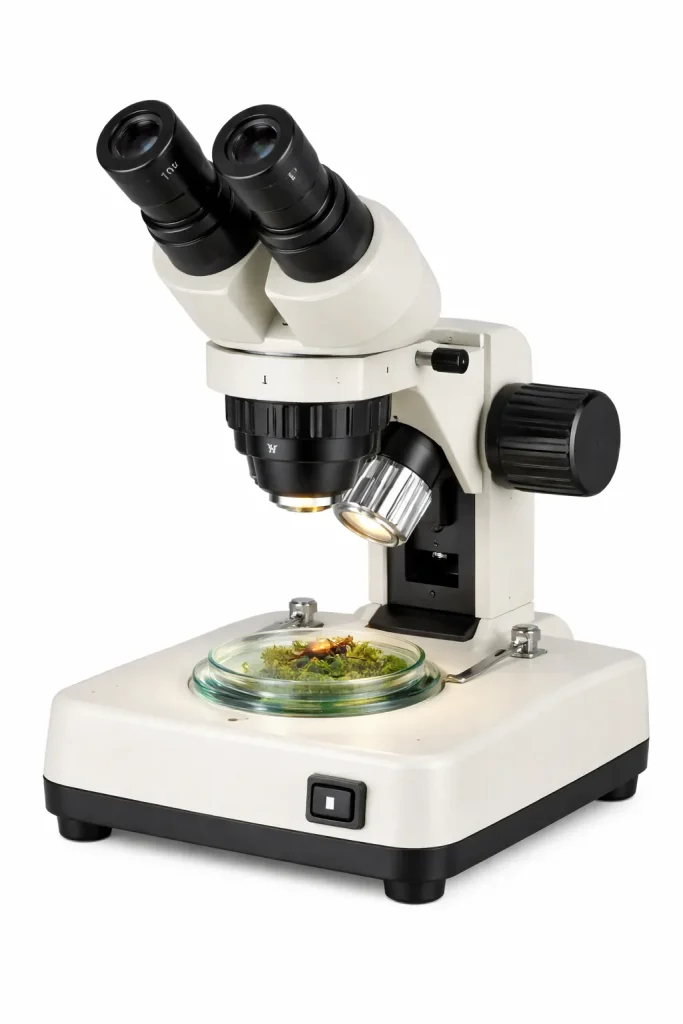
2. Stereo Microscope (Dissecting Microscope)
- Provides a 3D view of specimens
- Magnification: 10x–100x
- Suitable for surface observation: insects, plant parts, rocks
Pros: 3D view, large working distance
Cons: Lower magnification, not for cellular details
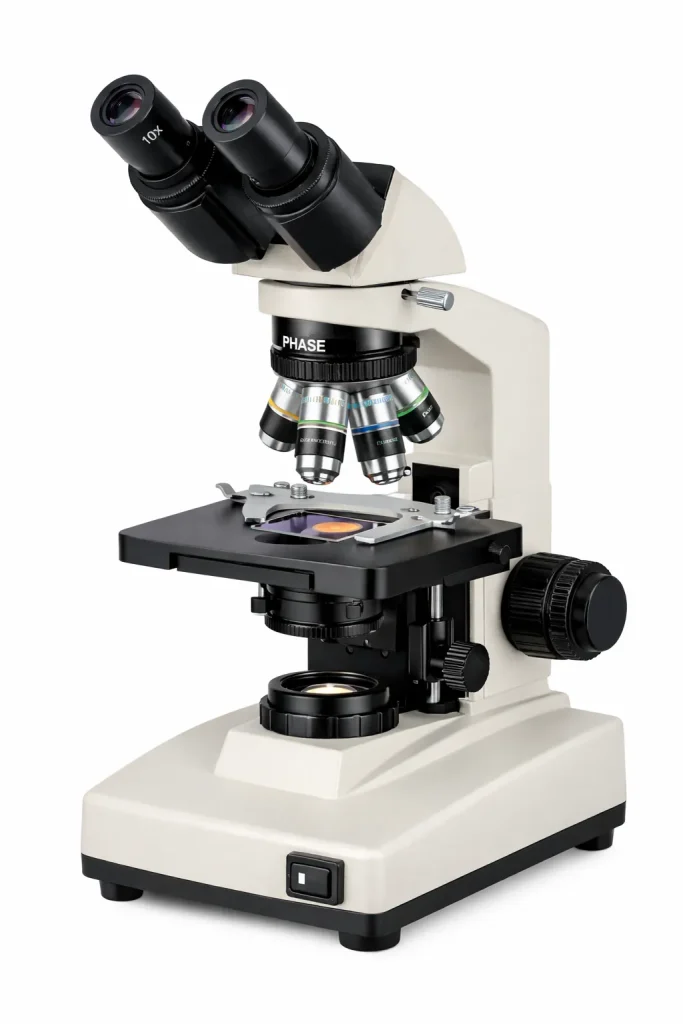
3. Phase Contrast Microscope
- Enhances contrast in transparent or colorless samples
- Observes live cells without staining
Pros: Live cell observation, no staining needed
Cons: Expensive, requires careful alignment
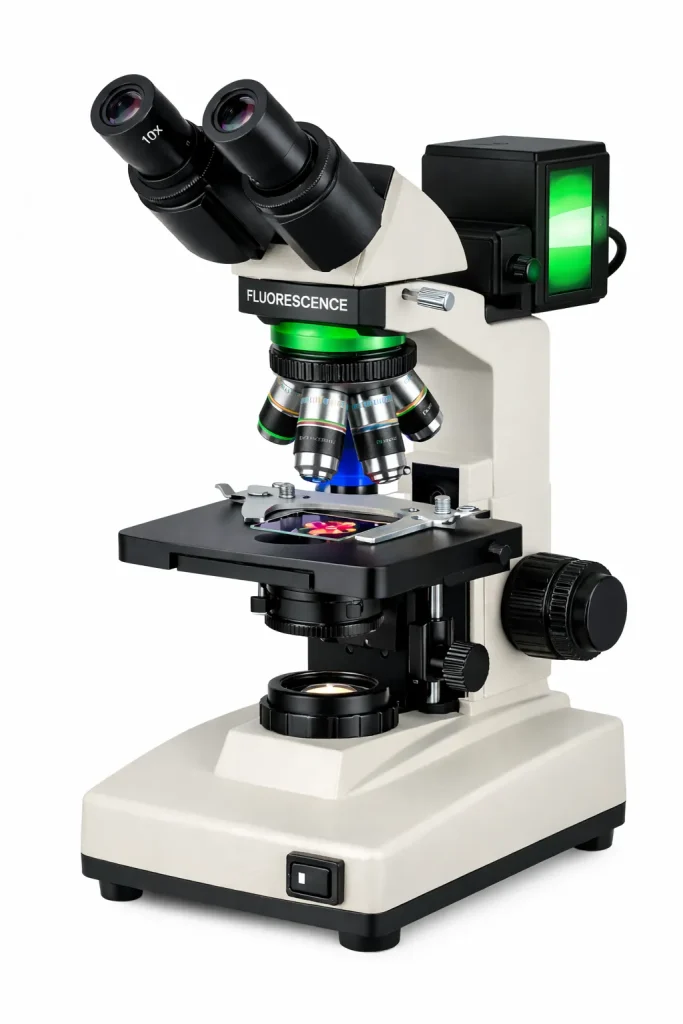
4. Fluorescence Microscope
- Uses fluorescent dyes to study specific proteins, DNA, or structures
- Ideal for research and molecular biology
Pros: High specificity, visualizes molecules
Cons: Expensive, specialized training required
Applications of Light Microscopes
Light microscopes are versatile tools across multiple fields:
- Education & Biology: Observing plant/animal cells, microbes, cell division
- Medical Labs: Blood analysis, bacteria detection, cell culture monitoring
- Environmental Science: Studying plankton, soil microbes, water quality
- Industry: Inspecting electronics, quality control, material analysis
Advantages of Light Microscopes
- Easy to use with minimal training
- Affordable and accessible
- Portable and compact
- Allows real-time observation of live samples
- Versatile for research, classrooms, and hobbies
Limitations
- Limited magnification and resolution (~200 nm)
- Thick specimens may be unclear
- Some samples require staining, killing live cells
- Depth of field may be shallow
Tips for Effective Use
- Clean lenses with soft cloth or lens paper
- Start at low magnification before moving higher
- Adjust lighting and diaphragm carefully
- Use thin slides and cover slips
- Handle the microscope gently
- Take your time focusing
Choosing the Right Microscope
| Purpose | Microscope Type | Magnification |
|---|---|---|
| Student education | Compound | 40x–1000x |
| Surface observation | Stereo | 10x–100x |
| Live cells | Phase Contrast | 40x–1000x |
| Molecular research | Fluorescence | 200x–2000x |
Factors to consider: budget, portability, magnification needs, and specimen type. A high-quality light microscope can last for years with proper care.
Fun Facts
- The first simple microscopes appeared in the late 16th century.
- Robert Hooke coined the term “cell” after observing cork under a light microscope in 1665.
- Many modern microscopes connect to computers for imaging and measurement.
- Fluorescence microscopy reveals structures invisible in natural light.
FAQs About Light Microscopes
1. What can you see with a light microscope?
You can observe cells, tissues, bacteria, protozoa, plant parts, and small organisms, depending on magnification.
2. Can light microscopes view live samples?
Yes! Especially phase contrast microscopes allow live cell observation without staining.
3. What’s the difference between compound and stereo microscopes?
Compound microscopes offer high magnification for cellular observation, while stereo microscopes provide 3D views for surface structures.
4. How powerful is a light microscope?
Typically 40x–2000x magnification, with a resolution limit of about 200 nanometers.
5. Are light microscopes suitable for beginners?
Absolutely. They are easy to use, affordable, and widely used in classrooms and labs.
Conclusion
The light microscope is a versatile, cost-effective, and essential tool for anyone exploring the microscopic world. From students and hobbyists to professional researchers, it opens the door to observing cells, microorganisms, and tissues that are otherwise invisible.
Understanding how to use and care for a light microscope ensures accurate results and a rewarding experience. Its simplicity, portability, and real-time observation capabilities make it a cornerstone of education, research, and scientific discovery worldwide.
Cation y Anion: Definition, Differences, Examples, and Real-Life Uses