
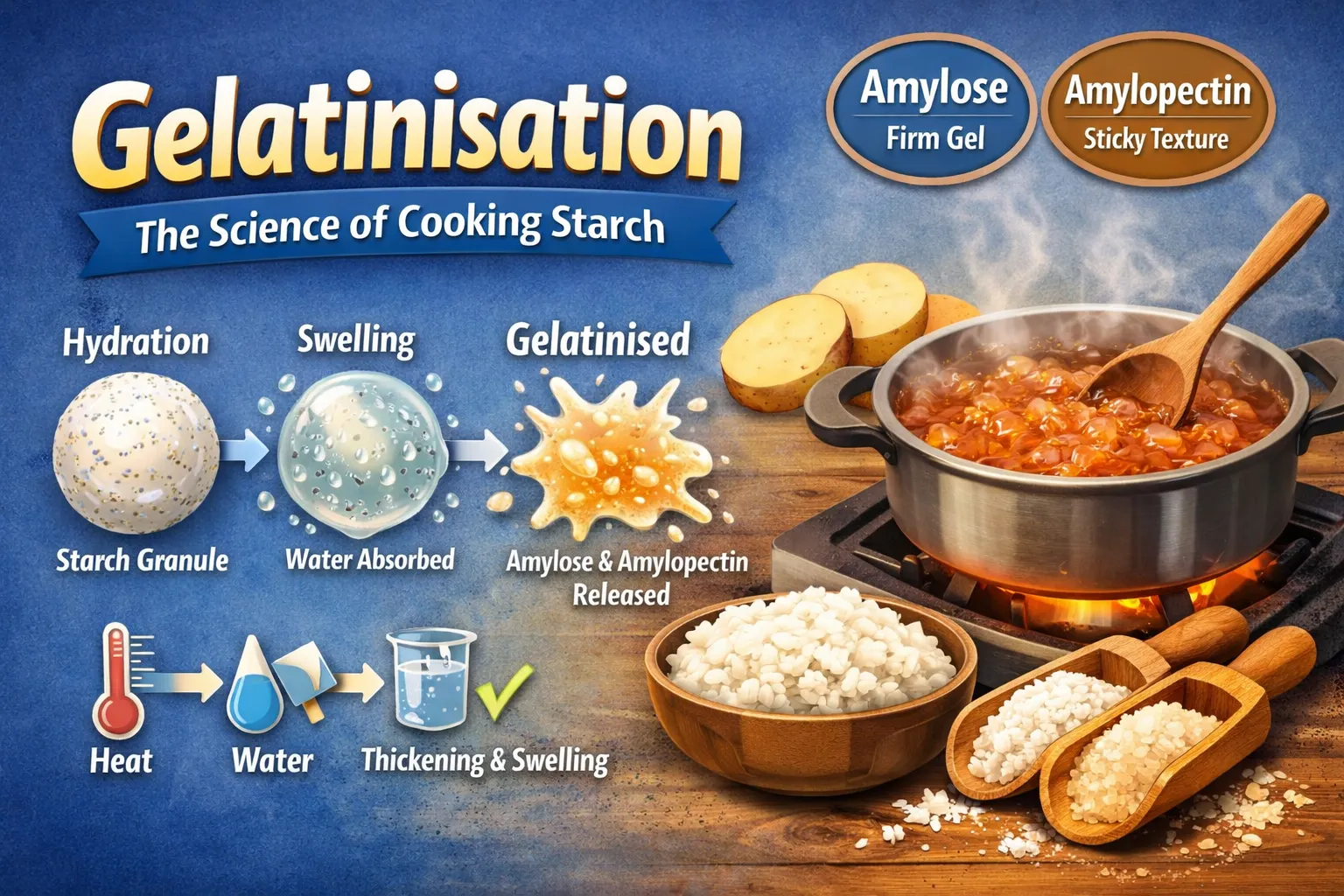
Gelatinisation: The Science and Secrets Behind Cooking Starches
Gelatinisation is the process that transforms starches into soft, thick, and digestible forms when heated in water. Simply put, it’s why rice becomes sticky, sauces thicken, and puddings become creamy. Understanding this is essential for anyone who cooks, bakes, or experiments with food textures, because controlling it allows you to achieve perfect consistency every time.
At its core, gelatinisation occurs when starch granules absorb water and swell under heat, eventually releasing molecules that thicken and stabilize your food. Knowing how and when this happens can help you prevent lumps, avoid gummy textures, and improve both taste and presentation.
What Is Gelatinisation?
Gelatinisation is a chemical and physical process where starch molecules absorb water and swell as they are heated. Starches, found in rice, potatoes, corn, wheat, and other grains, are made of two main molecules:
- Amylose: Linear chains that leak out during gelatinisation, forming a gel.
- Amylopectin: Branched chains that provide viscosity and stickiness.
When heat and water combine, the starch granules swell, burst, and release these molecules into the surrounding liquid, thickening it naturally.
Key Points :
- Occurs when starches reach their specific gelatinisation temperature.
- Requires sufficient water for granules to swell properly.
- Results in thicker, more digestible, and visually appealing textures.
Gelatinisation Temperatures of Common Starches
Different starches gelatinise at different temperatures. Knowing these helps you control cooking outcomes and avoid undercooked or gummy dishes.
| Starch Type | Gelatinisation Temperature |
|---|---|
| Cornstarch | 62–72°C (144–162°F) |
| Potato starch | 56–66°C (133–151°F) |
| Rice starch | 68–78°C (154–172°F) |
| Wheat flour | 52–63°C (126–145°F) |
| Tapioca starch | 52–65°C (126–149°F) |
The Role of Water in Gelatinisation
Water is essential. Without it, starch granules cannot swell, and your mixture may remain lumpy or undercooked.This occurs in three stages:
- Hydration: Starch granules absorb water but remain intact.
- Swelling: Heat causes granules to expand as water penetrates.
- Bursting & Gel Formation: Granules burst, releasing amylose and amylopectin, thickening the mixture.
💡 Pro Tip: Mix starch with cold water first to make a slurry before adding it to hot liquids. This prevents clumping and ensures smooth gelatinisation.
Factors Affecting Gelatinisation
Several factors influence how starch gelatinises:
- Type of Starch: Each starch has a unique gelatinisation temperature.
- Heat: Gradual heating prevents lumps.
- pH Levels: Acidic ingredients (like lemon juice) can slow gelatinisation.
- Sugar & Fat: Sugar competes for water, slowing thickening. Fats coat starch granules, delaying swelling.
Understanding these factors ensures you can control texture in sauces, desserts, and baked goods.
Practical Examples in Cooking
Gelatinisation is everywhere in the kitchen. Here’s how it shows up:
- Sauces & Gravies: Flour or cornstarch thickens liquids.
- Pasta & Rice: Starch absorbs water, making them soft and sticky.
- Puddings & Custards: Creamy texture is achieved through gelatinised starch.
- Bread & Cakes: Gelatinisation retains moisture and stabilizes structure.
By understanding gelatinisation, you can troubleshoot issues like lumpy sauces, sticky rice, or gummy baked goods.
How to Perfect Gelatinisation in Your Cooking
Follow these steps for smooth, perfect results:
- Choose the Right Starch: Cornstarch for clear sauces, potato starch for creamy textures, wheat flour for roux-based sauces.
- Control Heat: Slowly heat to the starch’s gelatinisation temperature.
- Mix Properly: Make a slurry with cold water to avoid lumps.
- Adjust Additives: Consider sugar, fat, and acid which can delay gelatinisation.
✅ With these tips, your sauces, puddings, and rice will have consistent, ideal textures every time.
Amylose vs. Amylopectin: The Science Behind Gelatinisation
Starches consist of amylose and amylopectin, and both play unique roles:
- Amylose: Helps create gels and firm structures.
- Amylopectin: Adds stickiness and viscosity.
Foods high in amylose, like corn starch, form firm gels. Foods high in amylopectin, like sticky rice or potatoes, form softer, more elastic textures.
Common Gelatinisation Problems and Fixes
| Problem | Cause | Solution |
|---|---|---|
| Lumpy sauce | Starch added directly to hot liquid | Make a slurry with cold water first, then whisk in. |
| Sauce too thin | Insufficient starch or undercooked | Add more starch and heat to gelatinisation temperature. |
| Sauce too thick or gummy | Too much starch | Reduce starch or add extra liquid. |
| Grainy pudding | Overheating after gelatinisation | Cook gently, avoid boiling after thickening. |
Health and Nutrition Insights
Gelatinisation affects digestibility:
- Makes carbohydrates easier to digest.
- Provides more readily available energy.
- Reduces resistant starch content, impacting blood sugar response.
Cooked starches, like rice, potatoes, and pasta, are softer, safer to eat, and more energy-efficient than raw starches.
FAQs About Gelatinisation
Q1: Can gelatinisation happen without heat?
No. Heat is required to break down starch granules and allow swelling and thickening.
Q2: Why does rice become sticky when cooked?
Rice contains amylopectin, which gelatinises when heated with water, giving the sticky texture.
Q3: How do I prevent lumps in sauces?
Mix starch with cold water to form a slurry before adding to hot liquids, then whisk continuously.
Q4: Does sugar affect gelatinisation?
Yes, sugar competes for water, slowing starch swelling. Adjust timing and heat accordingly.
Conclusion
Gelatinisation is the invisible magic behind creamy sauces, fluffy rice, and smooth puddings. By understanding starch types, water ratios, and proper heating, you can control texture, consistency, and digestibility in your cooking. Whether you’re a home cook or a professional chef, mastering gelatinisation ensures your dishes look, feel, and taste perfect every time.
Why www that-bites .org Foodies Is Becoming Every Food Lover’s Favourite Spot