
Benign Tumor and Malignant Tumor Difference: Everything You Need to Know
If you’re trying to understand the difference between a benign tumor and malignant tumor, you’re not alone. Many people get confused when a doctor mentions a “tumor,” because not all tumors are cancerous. The key difference lies in behavior, growth, and spread.
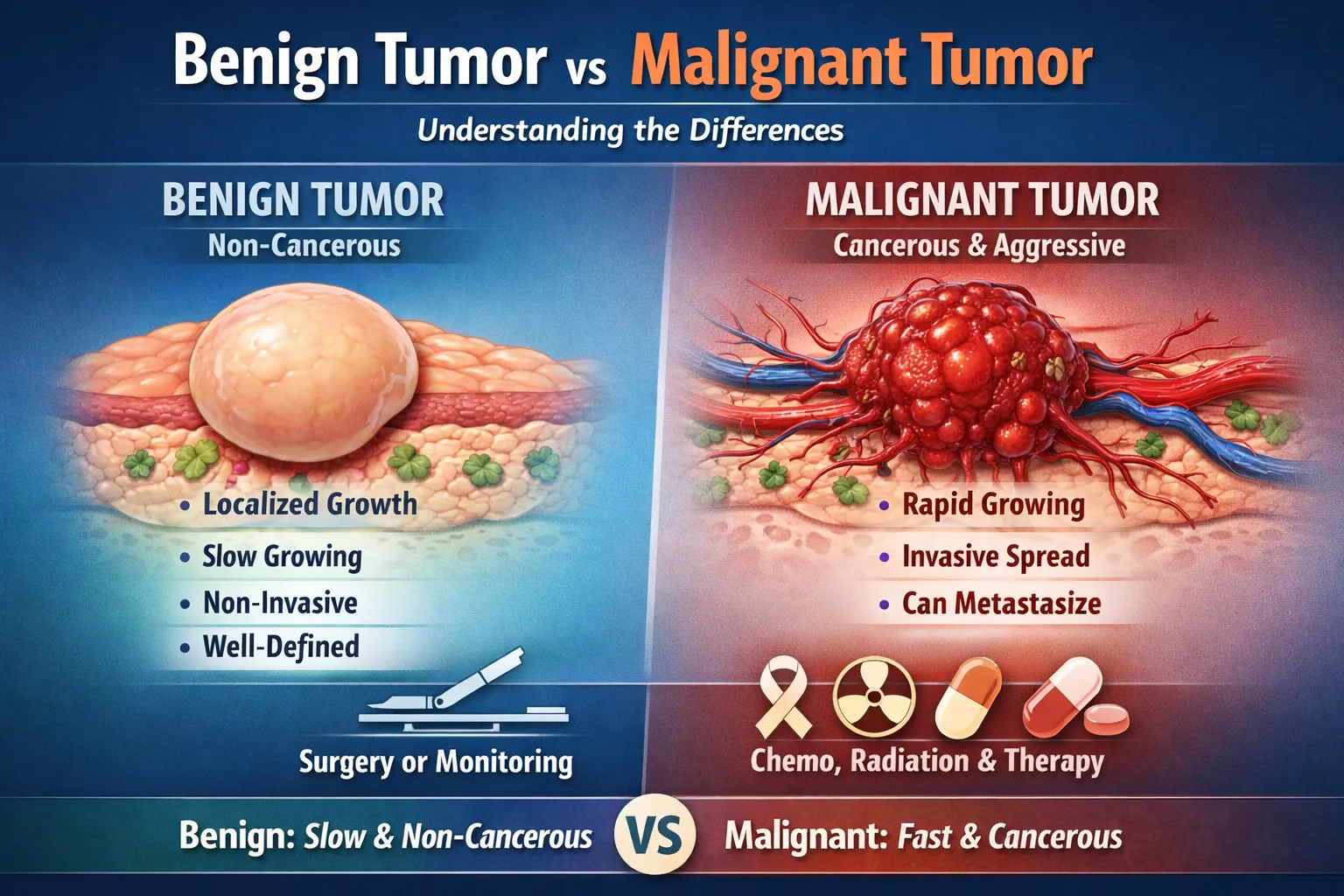
A benign tumor is generally non-cancerous, grows slowly, and remains localized. Malignant tumors, on the other hand, are cancerous, aggressive, and can spread to other parts of the body, making them more dangerous. Knowing these differences can help you understand treatment options, prognosis, and how to monitor your health effectively.
What is a Tumor?
A tumor, also called a neoplasm, is a lump or mass of abnormal cells that grow uncontrollably. Tumors can appear anywhere in the body, including organs, bones, and soft tissues.
- Tumors form when the normal cell cycle is disrupted.
- Some tumors are harmless, while others can be life-threatening.
- The type of tumor influences both treatment and outlook.
Benign Tumors Explained
A benign tumor is a non-cancerous growth. These tumors usually stay in one place, do not invade surrounding tissues, and rarely pose serious health risks. However, depending on their size and location, benign tumors can sometimes cause discomfort or pressure on organs.
Characteristics of Benign Tumors
- Slow growth: Typically expands gradually over months or years.
- Non-invasive: Does not spread to nearby tissues.
- Well-defined borders: Smooth edges make surgical removal easier.
- Low recurrence: Once removed, they rarely come back.
- Minimal health risk: Usually not life-threatening, but may cause symptoms depending on location.
Common Types of Benign Tumors
- Lipomas: Soft fatty lumps under the skin.
- Fibromas: Tumors in connective tissues.
- Adenomas: Glandular tissue tumors, such as thyroid or pituitary growths.
- Hemangiomas: Blood vessel tumors, often seen in infants.
Even though benign tumors are not cancerous, it’s important to monitor them for changes or pressure on organs.
Malignant Tumors Explained
A malignant tumor is cancerous. These tumors grow quickly, invade nearby tissues, and can spread (metastasize) to distant organs. Malignant tumors are considered dangerous and require timely intervention.
Characteristics of Malignant Tumors
- Rapid growth: Cells multiply uncontrollably, often outpacing normal tissue.
- Invasive: Penetrates and damages nearby tissues.
- Irregular borders: Uneven edges make surgery more complex.
- High recurrence: Can return even after treatment.
- Life-threatening: Untreated malignant tumors can cause organ failure or widespread health complications.
Common Types of Malignant Tumors
- Carcinomas: Cancer of epithelial tissues (skin, lungs, breasts).
- Sarcomas: Cancer of connective tissues (bones, muscles).
- Leukemias: Blood cancers affecting bone marrow.
- Lymphomas: Cancer of the lymphatic system.
Key Differences Between Benign and Malignant Tumors
| Feature | Benign Tumor | Malignant Tumor |
|---|---|---|
| Cancerous | No | Yes |
| Growth Rate | Slow | Fast |
| Spread (Metastasis) | Does not spread | Can spread to other body parts |
| Borders | Well-defined | Irregular |
| Recurrence | Rare | Common |
| Effect on Body | Usually mild | Can be life-threatening |
| Treatment | Observation or surgical removal | Surgery, chemotherapy, radiation, targeted therapy |
Understanding these differences helps in recognizing warning signs and seeking appropriate care.
Causes of Tumors
Tumors occur due to abnormal cell growth. While normal cells grow, divide, and die in a controlled manner, tumors form when this process is disrupted.
Causes of Benign Tumors
- Genetic predisposition
- Hormonal imbalances
- Chronic inflammation
Causes of Malignant Tumors
- Genetic mutations
- Exposure to carcinogens (tobacco, chemicals, radiation)
- Viral infections (HPV, Hepatitis B)
- Poor diet and lifestyle choices
Identifying risk factors can help in prevention and early detection.
Symptoms to Watch For
Benign Tumor Symptoms
- Slow-growing, painless lump
- Discomfort from pressure on organs or nerves
- Rare systemic symptoms like fatigue
Malignant Tumor Symptoms
- Rapidly enlarging mass
- Unexplained weight loss or fatigue
- Persistent pain or dysfunction
- Skin changes, bleeding, or unusual discharge
Any abnormal growth should be evaluated by a healthcare professional, even if it appears harmless.
Diagnosis of Tumors
Doctors use several tools to distinguish between benign and malignant tumors:
- Physical Exam: Checks size, texture, and location.
- Imaging Tests: MRI, CT scans, or ultrasounds provide a clear view.
- Biopsy: Tissue sample examined under a microscope—most accurate method.
- Blood Tests: Detect tumor markers or abnormalities.
Accurate diagnosis is essential for deciding treatment and prognosis.
Treatment Options
Benign Tumor Treatment
- Observation: Monitoring if the tumor causes no problems.
- Surgery: Removal if the tumor creates pressure or cosmetic concerns.
- Medication: Occasionally used for hormone-related tumors.
Malignant Tumor Treatment
- Surgery: Remove tumor and sometimes surrounding tissue.
- Chemotherapy: Drugs target rapidly growing cancer cells.
- Radiation Therapy: High-energy rays destroy cancer cells.
- Immunotherapy: Boosts the immune system to fight cancer.
- Targeted Therapy: Drugs attack cancer-specific cells without harming healthy tissue.
Early detection is crucial for effective treatment of malignant tumors.
Prognosis
- Benign Tumors: Excellent prognosis; rarely affect lifespan.
- Malignant Tumors: Prognosis depends on type, stage, and early intervention. Early detection improves survival rates significantly.
Prevention and Early Detection
- Maintain a healthy lifestyle: exercise, balanced diet, avoid smoking.
- Regular screenings: Mammograms, colonoscopies, Pap tests, or other age-appropriate exams.
- Monitor changes: Lumps, skin changes, or unusual symptoms.
- Seek medical attention promptly for rapid growth or persistent pain.
Awareness and prevention can greatly improve outcomes, especially for malignant tumors.
FAQs
1. Can benign tumors turn malignant?
Yes, while rare, some benign tumors can become malignant over time. This is why regular monitoring is important for certain types of benign growths.
2. How fast do malignant tumors grow?
Malignant tumors usually grow faster than benign tumors, but growth rate varies depending on tumor type and location. Aggressive cancers can double in size within weeks.
3. Do benign tumors require treatment?
Not always. Many benign tumors can be monitored, but surgery may be needed if they cause discomfort, pressure on organs, or cosmetic issues.
4. How are malignant tumors detected early?
Early detection is achieved through screenings, imaging, and biopsies. Paying attention to unusual lumps, weight loss, or persistent pain can also lead to earlier diagnosis.
5. Are malignant tumors life-threatening?
Yes, if untreated, malignant tumors can damage organs and spread to other parts of the body. Early treatment significantly improves survival chances.
6. What is the main difference between benign and malignant tumors?
The main difference is that benign tumors do not spread and are non-cancerous, while malignant tumors are cancerous and can invade nearby tissues and metastasize.
Summary: Benign Tumor and Malignant Tumor Difference
- Benign tumors: Slow-growing, non-cancerous, localized, rarely dangerous.
- Malignant tumors: Fast-growing, cancerous, invasive, can spread, and potentially life-threatening.
- Diagnosis: Requires imaging and biopsy for accurate differentiation.
- Treatment: Benign tumors may only need observation; malignant tumors require a combination of surgery, chemotherapy, radiation, or targeted therapy.
- Prevention: Healthy lifestyle, regular screenings, and awareness of symptoms.
Understanding the benign tumor and malignant tumor difference empowers you to take control of your health, recognize warning signs, and seek timely medical care.